Gabin Documentary: A Decade-Long Portrait of Rural France Hits Cannes 2026
TL;DR: Maxence Voiseux's debut feature documentary Gabin world-premiered at Cannes 2026's Directors' Fortnight on May 14, tracking a Northern French farm boy from age 8 to 18 over ten years of filming. Streaming audiences outside France will likely have to wait for a festival run to conclude before any OTT platform picks it up. International sales are being handled by Lightdox.
What Is Gabin and Why Are Streaming Audiences Talking About It
Viewers hoping to stream Gabin on Netflix, Prime Video, or Apple TV this month are out of luck — and that gap is entirely by design. The film only world-premiered on May 14, 2026, at Cannes' Directors' Fortnight, the same week its international sales deal with Lightdox was confirmed. French distribution rights belong to Arizona Distribution, meaning a domestic theatrical window in France will almost certainly precede any streaming release. For audiences in India, the US, the UK, and Spain — the core readership at Movie OTT — the earliest realistic OTT availability is late 2026 at the very soonest, more likely 2027. That wait, frustrating as it may feel, is proportional to how genuinely unusual this film is.
Why This Documentary Matters Beyond the Festival Circuit
Long-form documentary filmmaking — real long-form, not a six-part Netflix series stitched together in post — is a rare commercial bet in 2026. Most streaming platforms have conditioned audiences to expect observational docs packaged as episodic content. A single feature film that compresses ten years of a person's life into roughly 100 minutes runs against that grain entirely.
That makes Gabin an interesting market case. The closest recent comparison is probably Boyhood (2014), Richard Linklater's fiction film shot over twelve years with the same cast, which grossed over $25 million worldwide on an indie budget and became a genuine crossover hit. Gabin is non-fiction, which changes the commercial calculus — documentary features rarely replicate that kind of theatrical run — but the structural ambition is comparable.
The Directors' Fortnight sidebar at Cannes has a strong track record of launching docs that eventually find streaming homes. Flee (2021), the animated Afghan refugee documentary, premiered at Sundance but followed a similar festival-to-streaming pipeline, eventually landing on multiple platforms globally. Gabin is unlikely to replicate Flee's awards trajectory (that film was nominated for three Academy Awards simultaneously), but the subject matter — rural economic decline, generational obligation, youth identity — travels well across cultures.
For streaming platforms specifically, rural coming-of-age content has shown consistent audience appetite. Netflix's acquisition of Stutz (2022) and various rural European documentaries signals that platforms are not allergic to slow, place-specific storytelling. The question for Gabin is which platform sees the most value in a French-language, subtitled documentary about Artois farming culture. That answer will likely emerge by late 2026 after the festival circuit completes.
Background: The Filmmaker, the Subject, and Ten Years in Artois
Maxence Voiseux did not stumble into this story. He grew up near Artois, the rural region in Northern France where the film is set, and has described it in press materials as a place he once found "bleak and austere" before recognizing it as, in his words, "a genuine film set, its inhabitants as living, novelistic characters."
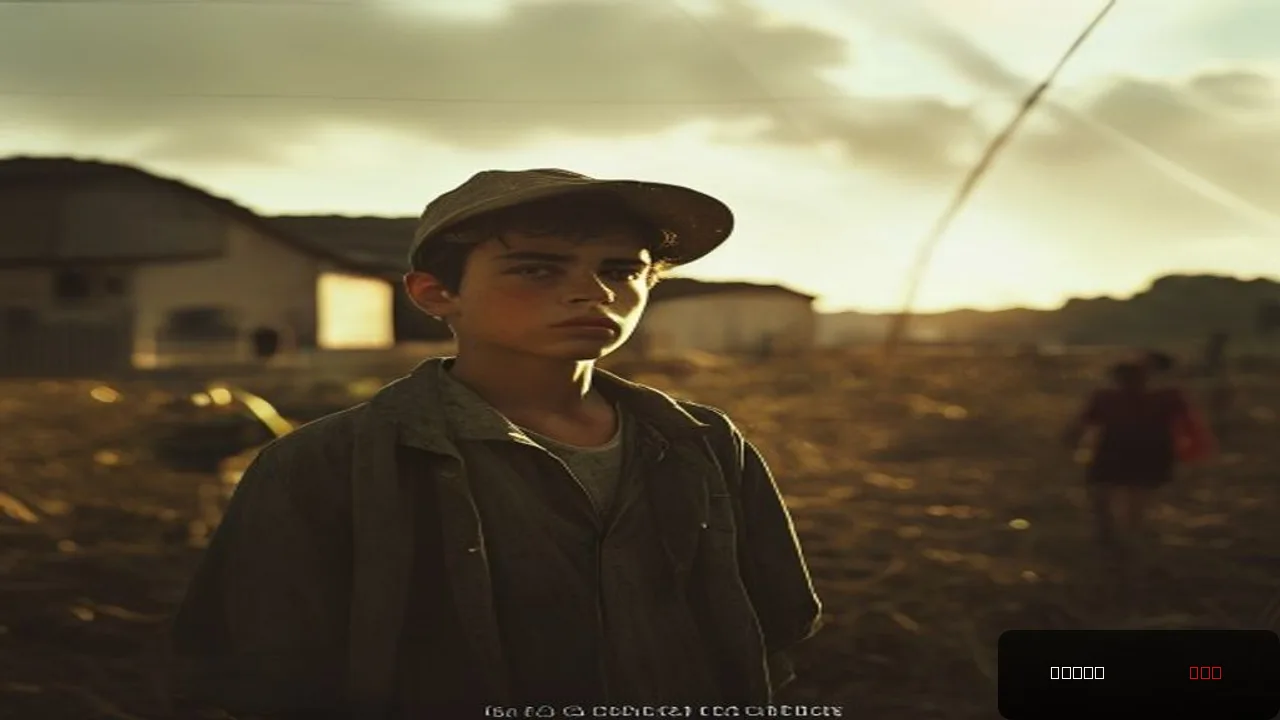
His connection to the Jourdel family — Gabin's family — predates the documentary by years. In 2014, while making his graduation short film Of Men and Beasts, Voiseux filmed a livestock market in Arras, Artois, where he first met Gabin's grandfather. That encounter led to The Heirs, a mid-length documentary about three brothers in the family. Gabin, the youngest child, was eight years old when Voiseux began following him specifically.
The film tracks Gabin from that age through to eighteen — from a boy absorbing his father's expectation that he will inherit and run the family butcher shop, to a young man quietly developing his own aspirations. According to AMA Film's production page for the documentary, the film is formatted as a DCP with French dialogue and English and German subtitles, running approximately 100 minutes.
Voiseux spent around 100 to 115 shooting days over the decade, but as he told The Hollywood Reporter, the on-camera time was only part of it. "The most important thing was the time I spent with Gabin," he said. "Some of those exchanges you can maybe feel in the movie, but you won't see them." By the time filming ended, Voiseux had become so embedded in the family's life that Gabin would introduce him as a cousin to simplify interactions with strangers.
The production team behind Gabin is a Franco-Swiss co-production: produced by Cécile Lestrade and Elise Hug of Alter Ego Production, co-produced by Ulla Lehmann of Ama Film and Palmyre Badinier of Rita Productions, in co-production with SWR/ARTE and RTS Radio Télévision Suisse. Cinematography was handled by François Chambe and Martin Roux, with editing by Pascale Hannoyer and Natali Barrey. As confirmed ahead of the premiere, Lightdox acquired international sales rights before the film even screened publicly.
Where to Watch Gabin: OTT Availability by Region
Honest answer: nowhere yet. Gabin is fresh off its world premiere as of May 14, 2026. Here is what we know and what we can reasonably project:
- France: Arizona Distribution holds domestic rights. A French theatrical release will likely come first, followed by a possible ARTE broadcast (ARTE is a co-producer, which typically guarantees a French-language TV window).
- Germany/Switzerland: SWR and RTS are co-producers, so German and Swiss broadcast windows on those networks are probable before any streaming release.
- United States / UK / India / Spain: No platform deals have been announced. Lightdox will be shopping the film to buyers throughout the 2026 festival season. MUBI is a realistic candidate given its appetite for European auteur documentary work. Netflix and Prime Video are possible but less certain for a single-feature French-language doc without a major awards campaign behind it.
We will update our Movie OTT streaming guide as deals are confirmed. Set a watchlist alert if you use our platform.
What Viewers Should Know Before Watching Gabin
What is Gabin about? It is a feature documentary following a real young man named Gabin, the youngest son of a farming family in Artois, Northern France, from age 8 to 18. The film focuses on the tension between his father's expectation that he will take over the family butcher shop and Gabin's own slowly emerging desire for a different life. It is not dramatized — everything on screen is real, filmed over a genuine decade.
How long did it take to make? Voiseux filmed over approximately ten years, accumulating around 100 to 115 shooting days. The preparation time between shoots — conversations, relationship-building, planning — was substantial and largely invisible in the final cut.
Did the subject consent to the film's final version? Yes, and this is one of the more striking details of the production. Before submitting the final cut to Cannes, Voiseux flew to Canada — where Gabin was living by that point — rented a small cinema, and screened the film for him privately. Gabin cried at the end. "He told me immediately that the movie was precise and so close to his heart," Voiseux recalled to The Hollywood Reporter.
Is this Voiseux's first film? It is his debut feature, but not his first documentary work. He made Of Men and Beasts (2014) as a graduation short and The Heirs as a mid-length documentary about the Jourdel family before committing to this decade-long project.
Will it have subtitles for English-speaking audiences? The film is in French with English and German subtitle tracks already prepared, according to production materials, which suggests it is packaged for international distribution from the outset.
Conclusion: A Film Worth the Wait
Gabin arrives at Cannes 2026 as something genuinely uncommon — a documentary built on patience rather than urgency, on trust rather than access. Voiseux's decade inside the Jourdel family produced a film that, by his own account, the subject himself recognized as true. That is not a small thing.
For streaming audiences at Movie OTT, the practical reality is a waiting game. Watch for MUBI, ARTE, or a specialist documentary platform to announce acquisition in the coming months. If the festival circuit treats Gabin well — and a Directors' Fortnight premiere is a strong starting point — a streaming deal should follow within twelve months. We will track it. In the meantime, audiences drawn to this kind of long-form observational documentary might revisit Flee (2021) or Dick Johnson Is Dead (2020) as useful reference points for what Gabin is attempting.