The Man I Love at Cannes: Ira Sachs' 15-Year Reckoning With 1980s Queer New York
TL;DR: A Competition entry about a Downtown Manhattan performance artist during the AIDS crisis, directed by Ira Sachs and starring Rami Malek. 28-day shoot, no U.S. release date yet. Most likely heading to Netflix in India, somewhere around August 2025. The real question: does personal grief translate to something viewers beyond the festival circuit actually want to watch?
Ira Sachs spent fifteen years thinking about this film before he made it.
That's not metaphorical. Starting in 2010, when Sachs and his longtime collaborator Mauricio Zacharias first began working together, they kept circling back to the same period, the same city, the same wound — the 1980s Downtown art scene, the friends he lost, the texture of a community that felt both vivid and gone. For a decade and a half, they wrote versions. They waited. They weren't ready. Then, sometime recently, they were.
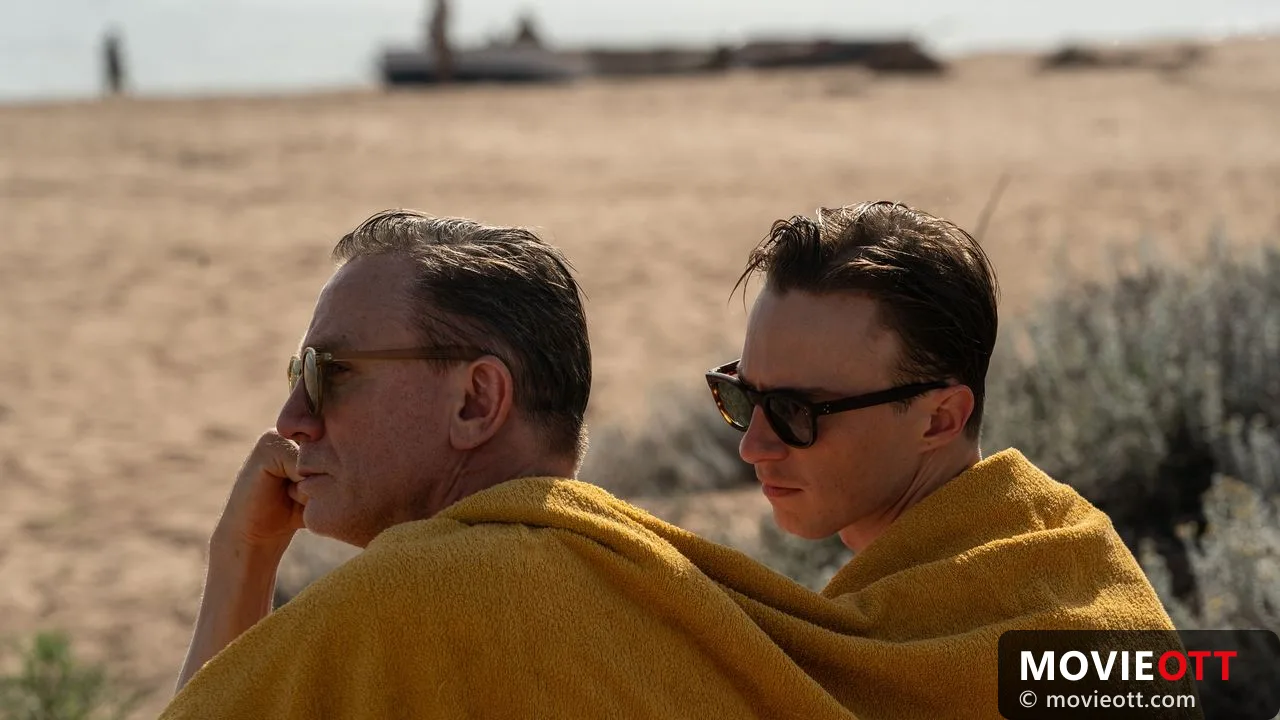
The result premiered at Cannes 2025 in Competition. It's called The Man I Love, and it stars Rami Malek as Jimmy George, a performance artist caught in what the festival synopsis delicately calls "an extraordinary moment between great illness and death when, still, all beauty and love is possible." Translation: the AIDS crisis. But Sachs doesn't want you to think of this as a period piece, and that insistence matters. It's either the film's greatest strength or its biggest gamble, depending on whether he's actually pulled it off.
What Ira Sachs Actually Said — And Why It Matters More Than The Plot
Here's the revealing bit. When Sachs sat down with Deadline at Cannes, he didn't talk about cinematography or casting choices. He talked about time, and about how a film changes between conception and completion.
"When I began the film, it felt like I was making some sort of biography about many of the artists that I was familiar with who had died at that time," he said. "When I finished the film, it felt more like an autobiography."
That's the whole movie in one sentence: the shift from documenting the dead to examining yourself. It's also a warning flag. Films this autobiographical, this rooted in a specific grief, often reward the already-converted while leaving everyone else politely unmoved. Sachs knows this, which is why he keeps pushing back when interviewers frame the work as nostalgia or period drama. "You speak about the film as if I made a film about the past, and I don't feel that way," he told Deadline. The continuity between the young gay man he was in 1980s New York and who he is now — that's what he's after.
Maurice Pialat's 1991 Van Gogh clearly haunted Sachs during development. Pialat's film wasn't a biopic; it was mood, texture, a dying man's daily life. If that's the DNA here, then The Man I Love probably isn't interested in plot mechanics or emotional beats in the traditional sense. It's interested in presence. That's either exactly what you want or exactly what you'll find impenetrable.
Cast, Crew, And The Actual Production Details You Need
Director: Ira Sachs
Screenplay: Ira Sachs and Mauricio Zacharias
Lead: Rami Malek as Jimmy George
Section: Official Competition
Shot: September 21 to October 29, 2025 — entirely in New York City, 28 days total
Runtime: Not officially confirmed at press time
The supporting cast carries real weight:
- Tom Sturridge — stage work that's been quietly excellent lately
- Rebecca Hall — consistently underused by mainstream Hollywood
- Ebon Moss-Bachrach — having an absurdly good year between The Bear and now
- Luther Ford, a rising name you'll see more of
Sales are split: WME holds U.S. rights; mk2 Films handles international. No wide theatrical date has been announced, though the Cannes Competition placement makes a specialty distributor (A24, Neon, Sony Pictures Classics) the eventual home. The 28-day production is lean. You don't shoot that fast unless you're running on instinct and rehearsal, which tracks with a script fifteen years in the making.
The Malek Problem (And Why It Matters)
Rami Malek just played Freddie Mercury. Bohemian Rhapsody grossed $216 million domestically, according to Box Office Mojo — an Oscar-winning, planet-sized performance. Now he's here, playing a queer Downtown artist in a Cannes art film.
The comparison will be inescapable. That's not a knock on Malek; it's structural. Every review will mention Mercury. Every think-piece will talk about the deliberate contrast. Malek's aware of this — he's acknowledged the pressure in interviews — but knowing and managing are different things. Most coverage treats this casting as a bold artistic pivot; the harder truth is that it echoes Sean Penn's trajectory from Milk (2008) to This Must Be the Place (2011), another Cannes Competition entry where a major star followed an Oscar-winning queer role with a smaller, stranger character study, and the result barely registered outside the Croisette. Penn's film opened to $141,000 domestically. That's the ghost in the room nobody's naming.
Where You'll Actually Watch This — And When
Here's what we know: The Man I Love isn't getting a wide theatrical rollout in India or most international markets. This is a Cannes prestige title with a niche audience profile. That means streaming.
The most likely home is Netflix India, which has aggressively acquired Competition-tier festival films with arthouse credentials. mk2 Films, the international sales company, has placed multiple titles on Netflix in recent cycles — including Jacques Audiard's Emilia Pérez, which mk2 sold internationally and which landed on the platform within months of its Cannes premiere last year, pulling strong viewership numbers across non-English-speaking markets. That pipeline makes Netflix the smart bet here, though Amazon Prime Video and MUBI remain possible alternatives.
Movie OTT's where-to-watch tracker will have confirmed India regional availability the moment mk2 announces a deal. That's usually 4-6 weeks after the festival jury ruling, so expect clarity around early June 2025. Limited theatrical runs (Mumbai and Delhi arthouse screens like PVR Director's Cut) aren't out of the question, especially if the film places in the jury prizes on May 23.
Hindi dubbing isn't coming. This is English-language, subtitled. The queer South Asian streaming audience — the community that found Sheer Qorma and Cobalt Blue on OTT — is probably this film's most engaged Indian demographic.
Why The Cannes Jury Decision Is The Only Real Test
Competition at Cannes 2025 is reportedly stacked. Multiple major titles are competing. That matters because placement in Competition ≠ guaranteed momentum.
Here's the structural reality: well-reviewed festival films without a major prize often disappear quietly into the streaming catalog by December. They find their audience eventually — a few thousand subscribers, a solid Letterboxd score — but without the PR engine of a prize or a theatrical release, they don't break through noise. Quiet death by algorithm.
What to watch for in the coming weeks:
- May 23, 2025: Cannes jury decision (Palme d'Or, jury prizes, screenplay award)
- Late May/Early June: mk2 announces international streaming deal (almost certainly Netflix India)
- June-August: U.S. theatrical acquisition confirmed, likely from specialty distributors
- September-October: Festival circuit amplification (Toronto, NYFF) to maintain momentum
Without a prize, this film follows the quiet path — good reviews, modest streaming numbers, cult appreciation over time. With even a jury prize, the entire trajectory shifts.
What Makes This Different From Sachs' Recent Work
His last two films built real critical momentum:
- Passages (2023) premiered at Sundance with frank sexuality and Franz Rogowski's performance. No significant U.S. box office, but it landed on year-end lists.
- Peter Hujar's Day (2024, Berlin) continued his excavation of New York's queer artistic history.
Both were well-regarded and modestly seen. That's Sachs' baseline — a filmmaker whose critical reputation outpaces his audience numbers. The question with The Man I Love isn't whether critics will appreciate it. The question is whether it has the emotional accessibility to reach beyond the people who already know Sachs' work.
I keep coming back to what Sachs said about the shift from biography to autobiography. That's a director's problem to solve — how to make something deeply personal feel necessary to someone who didn't live through it, who has no stake in the specific 1980s New York that haunts him. If he's managed that, this film could travel. If he hasn't, it's a beautiful artifact for the already-converted.
The India Release Timeline (What To Actually Expect)
Let's be direct: there's no theatrical release happening in India. The arthouse circuits in Mumbai and Delhi might pick up a limited run for a week or two if the film wins at Cannes, but that's best-case.
Streaming is everything. Netflix India, most likely. Expect it somewhere between August and October 2025, assuming mk2 finalizes the deal in early June. Movie OTT will have the exact date the moment it's announced — worth bookmarking if you're planning to watch.
No regional language dubbing. English audio, Hindi/English subtitles. The technical specs will be whatever mk2's standard international feed is — likely 4K HDR on Netflix's premium tier.
The Real Question Heading Into May 23
The Man I Love is being positioned as something that transcends its period setting — a present-tense emotional story about grief, desire, and community, just happening to be set in the 1980s. That may be true. The film's emotional core might be so specific to Sachs' experience that it becomes universal in the way the best personal art does.
Or — and this is equally possible — it's a well-made film that speaks primarily to people who already understand why this time and place matters, and leaves everyone else respectfully unmoved. We've seen this before. We'll see it again.
The jury will have an answer on May 23. The real test comes later, when a stranger in Mumbai opens Netflix at 11 p.m., scrolls past the thumbnail, and decides whether to click. That's the moment the film either travels or doesn't.
Until then, the smart move is to wait for the jury ruling, then check Movie OTT for confirmed India streaming availability. We'll have the regional breakdown the moment mk2 announces.
Watch the official trailer: