Kling AI's 'Minibots' Deal Signals a Shift in How Animated Features Get Made
TL;DR: At Cannes 2026, Kling AI announced it's producing "Minibots" — a full animated feature directed by Tony Bancroft ("Mulan") with a screenplay by Michael Ferris ("Terminator 3"). No release date yet, but the partnership suggests AI-assisted animation can now compete with traditional studio budgets. Where to watch and expected platforms inside.
Jon Erwin said something at the Cannes Film Market that stuck with me: "The normal cycle of time at a streamer is three years for that process. It's amazing how fast content can be made." He wasn't talking about "Minibots" — he was describing his own biblical epic "Moses" with Ben Kingsley, which moved from concept to broadcast-ready in about five months. But that timing felt like the real announcement hiding inside the afternoon Kling AI spent at the Palais des Festivals on May 19, 2026.
Because what Kling AI actually revealed that day wasn't just a new project. It was proof that AI-assisted animation can now compete for the same directors, writers, and audiences as traditional Hollywood.
What 'Minibots' Actually Is (And Why It Matters More Than You'd Think)
Here's what we know, confirmed by Variety:
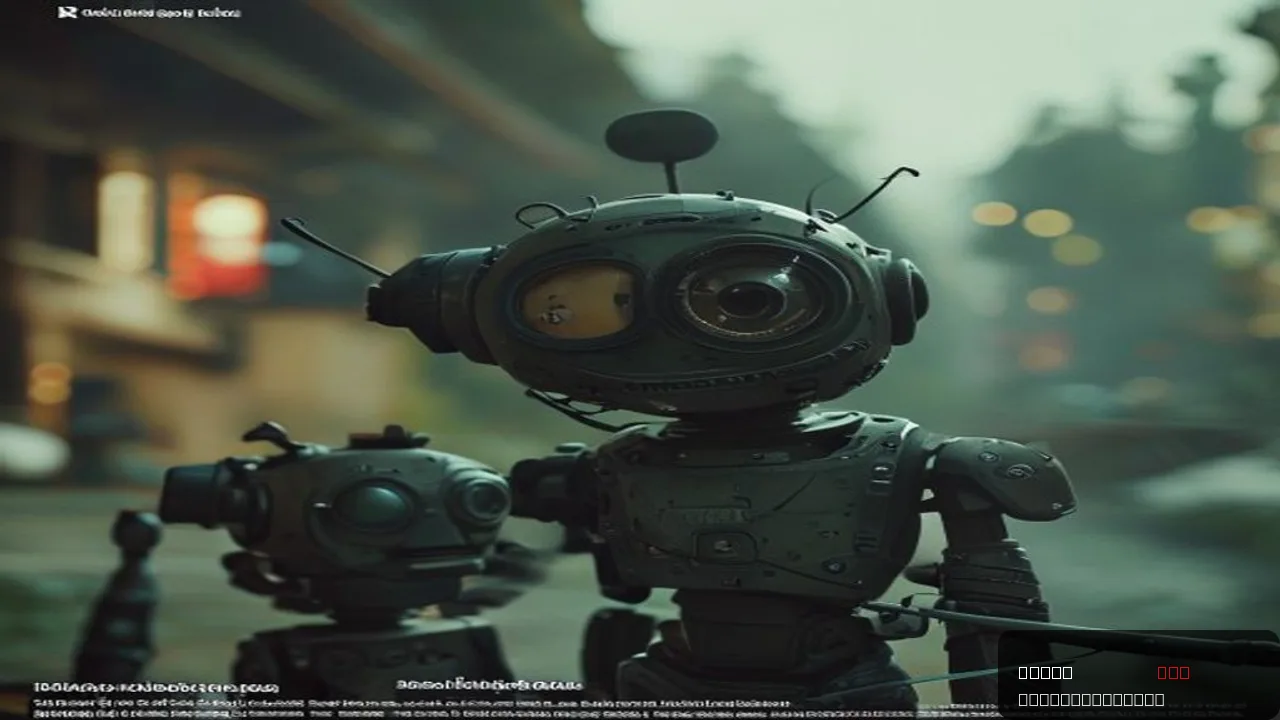
- Project: "Minibots," an animated feature film
- AI production partner: Kling AI (Kuaishou's video-generation platform)
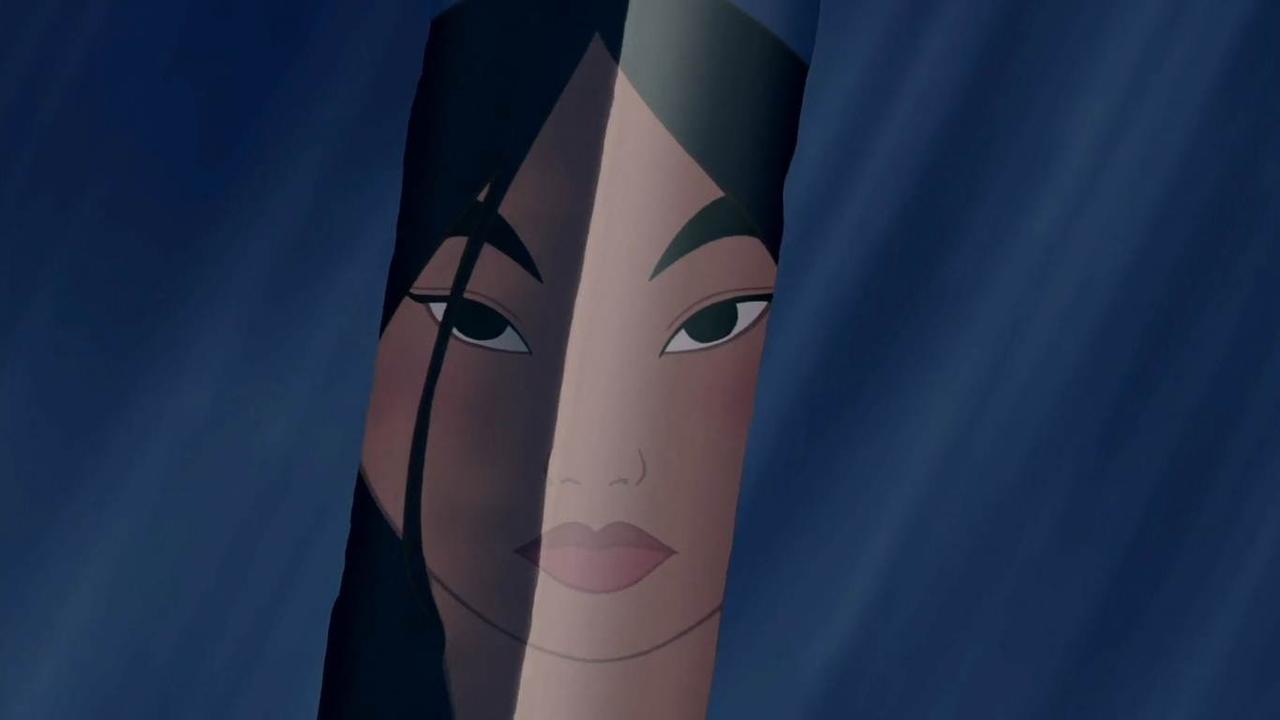
- Character design: Tony Bancroft — he co-directed Disney's "Mulan" in 1998
- Screenplay: Michael Ferris, who co-wrote "Terminator 3: Rise of the Machines"
- Producers: John Adams (Evolutionary Films) and BAFTA nominee Diane Shorthouse
- First announcement: AFM 2024
- Release date: Not confirmed
- Where to stream: Unknown at this stage
The project had been floating around since the American Film Market last November. But formalizing Kling AI as the production partner — and doing it publicly at Cannes — changes the conversation entirely. This isn't a proof-of-concept short or a director's passion project shot on a laptop. This is a feature-length animated film with a named Hollywood director, a produced screenplay, and AI generation woven into the core production pipeline.
What's striking is what it signals: Kling AI isn't trying to capture the indie animation market. It's going after the mid-tier studio space, the $40-to-$60-million animated features that used to take three years to produce.
The Real Competitive Threat (And Why Traditional Animation Studios Should Be Nervous)
Look, I need to be honest about what this actually means. When Wei Li, a Chinese animation director, told the Cannes panel that Kling AI cut his production time and budget by roughly one-third compared to prior animated features, that's not a marginal improvement. That's the kind of compression that makes traditional animation budgets look bloated.
Disney's "Mulan" (1998), the film that made Bancroft's reputation? Estimated $90 million budget, per Box Office Mojo. Nobody's suggesting "Minibots" approaches that. But the fact that Bancroft, a director used to working at that scale, is choosing to work with Kling AI on something leaner? That's the signal that matters.
Most coverage frames this as an AI-versus-artists story. The more interesting question is whether Bancroft's involvement quietly legitimizes AI-assisted pipelines for the generation of animators who came up at Disney, DreamWorks, and Pixar during the hand-drawn-to-CG transition of the late '90s. If he crosses that line publicly, others follow. That's not a tech story. That's a labor-market story.
Eekjun Yang, a South Korean director whose AI-assisted feature "Raphael" targets theatrical release in Korea, reframed the entire conversation at the panel. Via interpreter, he said: "Probably the biggest misconception is the idea that we're using AI just because we want to make films cheaper and faster." For a seven-person crew with no prior feature credits and no traditional investment, AI wasn't optional. It was the only viable path to a feature at all.
Bancroft has options. He picked this anyway.
The Numbers Behind Kling AI's Claims (And Whether They Hold Up)
Specific figures from the May 19 Cannes panel:
- Jon Erwin's "House of David" pulled more than 50 million viewers in its first season on Amazon Prime Video
- "Moses" went from concept to broadcast-ready in five months, with principal photography wrapped in one week using a crew of around 100
- South Korean director Yang estimated "Raphael" would have cost between $700,000 and $2 million with conventional animation, requiring a crew of 150 to 300. With Kling AI's tools, Yang's team numbered seven — a 95-percent-plus reduction in headcount that, if the finished film holds up visually, would represent the starkest cost-to-quality ratio shift in animated feature production since Pixar moved from shorts to "Toy Story" with a crew of 110 in 1995.
- Kling AI serves more than 60 million creators globally and 30,000-plus enterprises, per Tony Pu, head of creator community
- Wei Li's "Born of the Tide" cut both timeline and budget by roughly one-third
The five-month timeline for a broadcast-ready first episode is genuinely hard to square with traditional pipeline speed. That's the bet Kling AI is making: not that AI replaces skilled animators, but that it compresses iteration cycles to the point where you can move faster without sacrificing finish quality.
One caveat: Jon Erwin's AI-assisted theatrical feature "Young Washington" opens in the U.S. on July 3, 2026. If that film holds up to cinema-grade scrutiny, if the HDR and 4K resolution actually deliver, then "Minibots" gains a proof point. If it doesn't, the skeptics get louder.
Where 'Minibots' Will Actually Stream (Probably)
No Indian release date or OTT platform has been confirmed yet. The film is still in development, which means we're speculating based on patterns. That said, here's what usually happens with animated family features from Hollywood-affiliated producers:
Most likely for Indian audiences:
- Netflix India (if a global streaming deal gets signed)
- Disney+ Hotstar (given Bancroft's Disney lineage, though no formal connection exists)
- Amazon Prime Video India (possible, given Erwin's established relationship with the platform)
- Apple TV+ (they've been aggressive with premium animation acquisitions)
A theatrical run in India before an OTT window? Hard to say. Depends on the distributor and how the film lands at its first major festival screening. If it plays well at Annecy, Toronto, or a major market like SXSW, theatrical becomes likelier. If it's positioned as a prestige streaming exclusive from day one, you're probably looking at a direct-to-platform release.
Movie OTT tracks where animated features land across regions, and they'll have updated availability for "Minibots" as soon as a distribution deal gets announced. Hindi, Tamil, and Telugu dubs would be standard for any major animated feature targeting the Indian market, but those haven't been confirmed yet.
The Filmmaker Initiative That Could Matter More Than 'Minibots' Itself
Here's the thing nobody's talking about yet: Kling AI didn't just announce one film. They also launched what they're calling a "next-gen filmmaker initiative" at Cannes, a program offering qualifying filmmakers cash incentives and compute resources for productions that advance AI use in filmmaking.
That's the platform play. One film is proof of concept. A program that surfaces multiple projects faster than traditional development cycles? That's an ecosystem.
South Korean director Yang's point keeps echoing in my head, that for creators without prior credits or access to traditional funding, AI tools don't just speed things up. They make feature filmmaking possible at all. That's the wedge Kling AI is driving, and it's why the "Minibots" announcement matters beyond just one animated feature.
What We're Actually Waiting For Now
Two concrete things to watch. First, the teaser. "Minibots" has now been announced at two major markets, AFM 2024 and Cannes 2026, without any visual proof of concept. For an animated feature in early production, that's normal. But Kling AI was supposed to accelerate timelines. A concept reel or trailer at Annecy 2026 or Toronto 2026 would be the logical next beat to prove the acceleration claim actually works.
Second, Jon Erwin's "Young Washington" hits U.S. theaters on July 3, 2026. That's the real-world test. Does Kling AI's 4K HDR output hold up to cinema-grade scrutiny? If it does, "Minibots" gains credibility immediately. If it doesn't, if the AI artifacts are visible on a big screen, the skeptics get a very public data point.
For now, Movie OTT's streaming tracker has no confirmed distribution for "Minibots" across regions. Check back as announcements drop.
The Takeaway: This Is Just the Start
As of May 19, 2026, "Minibots" remains in development with no confirmed release date, runtime, or distribution deal. Kling AI is approaching its second anniversary as a platform. Tony Pu said at Cannes that "two years in AI is like six years in real life." Marketing language, sure, but not entirely wrong given the speed of iteration since the platform's launch.
The "Minibots" bet is real. Whether it pays off, whether the timeline compression actually delivers broadcast-quality animation without losing the artistry that Bancroft brings, is still the open question.
We'll know more once the first footage drops.