Kurdistan's $2 Million Film Fund Is the Industry's Best-Kept Secret
The Kurdistan Film Commission just launched a $2 million annual film fund at Cannes 2026, backed by Deputy Prime Minister H.E. Qubad Talabani. For Indian and global filmmakers exhausted by overused MENA locations, this semi-autonomous region in northern Iraq offers mountains, waterfalls, bazaars, and ancient ruins at a fraction of European production costs — and almost nobody's talking about it yet.
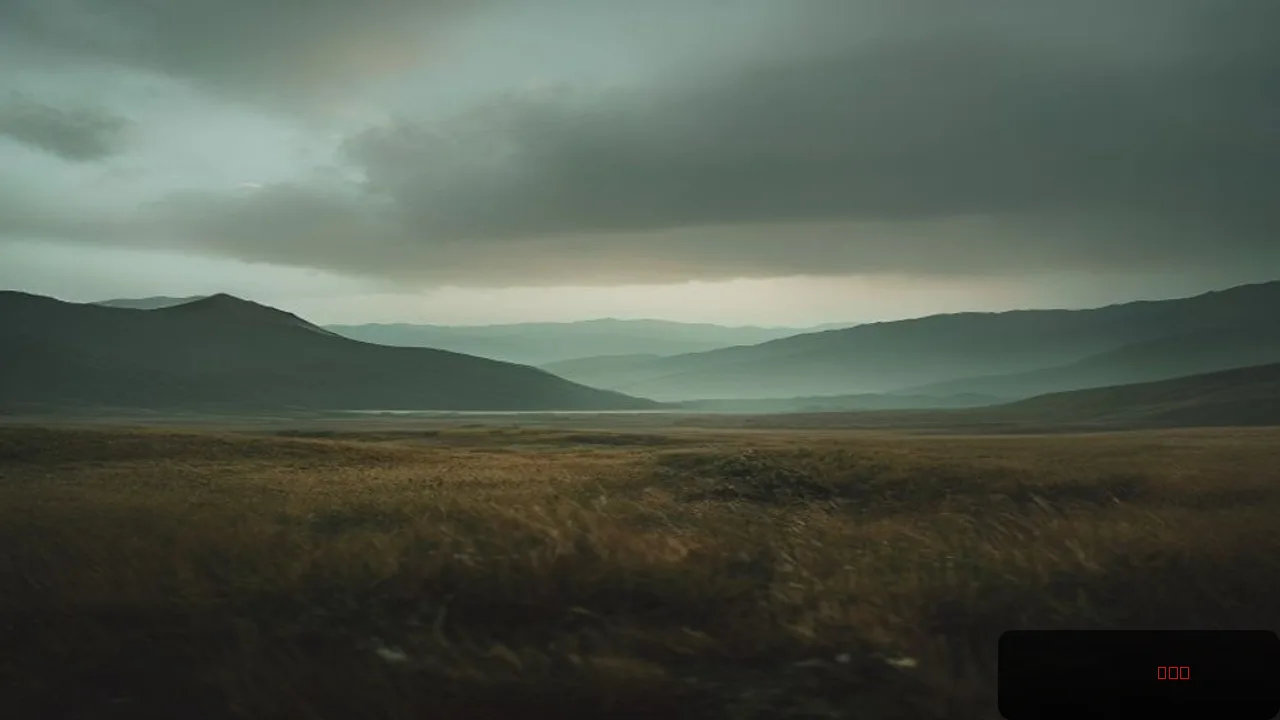
Bavi Yassin has a story she loves to tell. She takes visitors out to certain corners of the Kurdistan Region, and without fail, they stop walking and say: "This looks exactly like Ireland." In the heart of the Middle East. Green, rolling, impossibly lush. That reaction — half disbelief, half delight — captures everything the Kurdistan Film Commission is betting on right now.
Yassin, founder and chair of the commission, was at the Cannes Marché on Wednesday, May 13, 2026, alongside H.E. Qubad Talabani, Deputy Prime Minister of the Kurdistan Regional Government and president of the commission, for an event titled "Owning Our Story." The occasion: the official launch of the Kurdistan Film Fund, a $2 million annual financing vehicle designed to put Kurdish narratives at the center of global cinema. Not as backdrop. Not as conflict setting. As story.
What the Kurdistan Film Fund Actually Is — and Who Controls It
Here's what we know concretely. The Kurdistan Film Fund is valued at $2 million per year, announced at Cannes 2026 during the commission's second consecutive appearance at the world's most-watched film market. The fund sits under the Kurdistan Film Commission, which is headquartered in Sulaymaniyah (locally called "Suli"), the city widely regarded as Kurdistan's cultural capital.
The commission itself was initially called the Kurdistan Film Commission Slemani before expanding its remit region-wide. Key figures:
- H.E. Qubad Talabani — Deputy Prime Minister of the Kurdistan Regional Government, commission president
- Bavi Yassin — Founder and chair of the Kurdistan Film Commission
- John Rakich — President of the Location Managers Guild International (LMGI), who led a four-day scouting workshop in the region
- Andrea Keener — LMGI board member, senior location manager with credits on Killers of the Flower Moon, Ant-Man, and Captain America
Projects applying to the fund will be assessed on artistic merit, yes, but Yassin told The Hollywood Reporter that evaluations also weigh "international co-production potential, their ability to circulate, and their relevance to the local ecosystem." That's a notably sophisticated criteria framework — not just "tell a Kurdish story" but "build a Kurdish industry."
You can verify the commission's current standing and services through the Kurdistan Film Commission Slemani listing on the AFCI Global Directory, which details its location database and production support services.
Talabani and Yassin, in Their Own Words
Talabani's remarks at the "Owning Our Story" event were striking for how directly political they were — in the best sense. "We want to show the world that despite political differences, despite regional tensions, or war, that cinema can cross those boundaries, that storytelling can unite where politics divides," the Deputy Prime Minister told the Cannes audience. "This fund is not just an opportunity for Kurdistan. It's a signal to the region."
He went further, and I keep coming back to this line: "We have decided that today, Kurdistan stories will no longer be told by others on our behalf. We will tell them ourselves, on our terms, with the depth and accuracy that only we can provide."
Yassin's framing was more operational but equally pointed. "Kurdish films have always relied on external support, without a solid system of their own," she told The Hollywood Reporter. "The fund changes that by placing the Kurdish narrative at the center, wherever it is told in the world. It is not only about financing films — it is about creating ownership, continuity, and visibility for Kurdish stories on an international level."
Movie OTT tracks streaming availability for films out of emerging production regions like this, and what's notable is how thin the Kurdish cinema catalog currently is on major global platforms, which makes the fund's emphasis on "international circulation" all the more strategically necessary.
How This Lands for Indian Filmmakers and Audiences
Honestly, this is where things get genuinely interesting for the Indian market, and it's a dimension most Western coverage has completely missed.
Indian producers — particularly those making mid-budget action thrillers, war dramas, or diaspora stories — spend enormous sums flying crews to Georgia, Turkey, or Eastern Europe to approximate MENA aesthetics. Kurdistan offers something those locations can't: actual MENA geography, culture, and architectural texture, at costs that Yassin describes as "highly competitive" even without large cash rebate schemes. For Indian producers who watched War 2 and Pathaan burn through crores on Turkish and European location shoots, the calculus here is obvious: Kurdistan delivers comparable visual scale at a fraction of the line-item cost, with none of the permit headaches that have plagued recent Bollywood shoots in Morocco and Jordan.
Practically speaking, here's what Indian productions could access, according to the commission's location database (documented in detail at Artin Crown's breakdown of top filming locations in Kurdistan Region of Iraq):
- Hawraman Valley — a UNESCO World Heritage mountain landscape
- Erbil Citadel — one of the oldest continuously inhabited sites on Earth, with archaeological layers dating back roughly 6,000 years, making it older than the Pyramids of Giza
- Duhok and surroundings — where Kurdish-Swiss director Mano Khalil shot The Sparrow (2015) and The Neighbors (2021)
- Sulaymaniyah bazaars — dense, photogenic, completely unoverexposed on screen
- Waterfalls and river valleys — the ones that reportedly look like Ireland
For Indian audiences wondering where to find existing Kurdish cinema on streaming platforms: the catalog is sparse but growing. Films like Gulîstan, Land of Roses (2016, directed by Zaynê Akyol, 86 minutes, co-produced with the National Film Board of Canada) have screened at international festivals but aren't consistently available on Indian OTT platforms including Netflix India, Prime Video India, Hotstar, or SonyLIV. Movie OTT's where-to-watch tracker is worth bookmarking here — as the fund generates new productions over the next two to three years, availability will shift.
The cultural resonance angle for Indian audiences shouldn't be underestimated either. Stories of semi-autonomous governance, minority cultural preservation, and regional identity carry obvious parallels with Indian regional narratives. Not abstract at all.
The Filmmaking History Kurdistan Is Building On
Kurdish cinema has existed in the margins of international film culture for decades, produced largely through diaspora networks and European co-production funding. The semi-autonomous Kurdistan Region of Iraq — distinct from Kurdish communities in Turkey, Syria, and Iran — has been building its film infrastructure steadily since the region stabilized post-2003.
Sulaymaniyah has the highest concentration of audiovisual production activity in the region. No major Hollywood studio production has filmed there yet (that's documented, anyway), but the Location Managers Guild International's scouting trip to the Hawraman region signals that serious location professionals are now putting it on the map.
The commission's training record from the past year is worth noting. Among its programs:
- A five-day Kurdistan Producers Lab covering budgeting, financing, and marketing, run in collaboration with European Audiovisual Entrepreneurs (EAVE)
- A four-day location management workshop led by LMGI president John Rakich and Andrea Keener, whose credits span Killers of the Flower Moon to Scandal
This isn't a commission that launched a logo and a website. It's building crew infrastructure from the ground up. That matters if you're a producer considering actually shooting there.
For context on what Kurdish cinema looks like on screen, the tourism film Visit Kurdistan by Retro Media is a useful visual reference — it shows the landscape variety that Yassin talks about, and it's genuinely surprising how much tonal range the region offers within a compact geography.
The Editorial Take Nobody's Writing
Most coverage of this announcement frames it as a soft-power story: small region, big ambitions, feel-good Cannes moment. That reading is too easy.
The more interesting story is economic. Kurdistan is essentially making an argument that the global production industry has a MENA location problem — too many shoots defaulting to Morocco or Jordan to double for everywhere from Syria to Afghanistan, driving up costs and producing a kind of visual sameness that savvy audiences are starting to notice. Yassin said exactly this to The Hollywood Reporter, noting that location professionals have reached out specifically because they're "tired of the overused locations." That's not PR language. That's a real market gap.
The $2 million fund is small by international standards. What most write-ups won't say plainly: at $2 million annually, Kurdistan's fund is roughly one-hundredth the size of Saudi Arabia's reported $500 million film-sector commitment, yet it's arguably better positioned to produce culturally distinctive work, because the money isn't chasing blockbuster service production — it's seeding an indigenous film voice that doesn't exist yet on global platforms. Scale isn't the play here. Specificity is. Sequenced correctly — proof-of-concept films first, then location-service revenue from bigger productions — that's actually a smarter strategy than throwing rebate money at studio tentpoles that could shoot anywhere.
What to Watch for as the Fund Gets to Work
The Kurdistan Film Commission will be accepting project submissions against the new fund criteria through 2026, with Yassin indicating that scriptwriting workshops and documentary-focused training are planned for later this year. The "Suli Screens" free public screening program across Sulaymaniyah is also launching, which builds local audience culture alongside industry infrastructure.
For international co-producers, the window to engage early is genuinely now. First-mover co-production partnerships with the fund will carry credibility as the commission's profile grows. Hard to say if a major streaming platform will commit to a Kurdish original series in the next 18 months, but the groundwork being laid makes that outcome more plausible than it was a year ago. The part I am most curious about is whether Netflix or MUBI picks up one of the fund's first features for global distribution — that single acquisition would do more for Kurdistan's film credibility than a dozen Cannes panels.
Movie OTT will continue tracking any Kurdish productions that secure distribution deals on major platforms. As the fund's first slate of supported films moves toward completion — likely 2027 at the earliest for features — streaming availability will be the metric that determines whether this initiative translates from Cannes buzz into actual global viewership.