The Parables Project Is Filming in Morocco — But Where Will Anyone Actually Watch It?
TL;DR: The Parables Project is an independent faith-based film series shooting Episode 5 in Ouarzazate, Morocco, with a multinational cast retelling the Parable of the Ten Virgins. No streaming platform, release date, or distribution deal has been announced — which is the real story nobody's asking about.
Rain stopped. Cameras rolled. A faith-based film crew in the Moroccan desert took that as a sign.
That's how Howard Collett framed it in his May 20, 2026 production diary for The Parables Project, published in Meridian Magazine. And sure — there's nothing wrong with a good weather-miracle story. Film sets run on morale. But if you're actually evaluating this project from the outside, the bigger question isn't whether the clouds parted over Ouarzazate. It's whether this ambitious, multinational, independent production can actually reach a global audience once the desert dust settles.
Nobody in the production diary is asking that. So let's ask it.
What The Parables Project actually is (and what's still completely unclear)
The Parables Project is an independent film series dramatizing New Testament parables for modern audiences. Episode 5, currently in production, adapts the Parable of the Ten Virgins — titled The Ten Virgins in production materials.
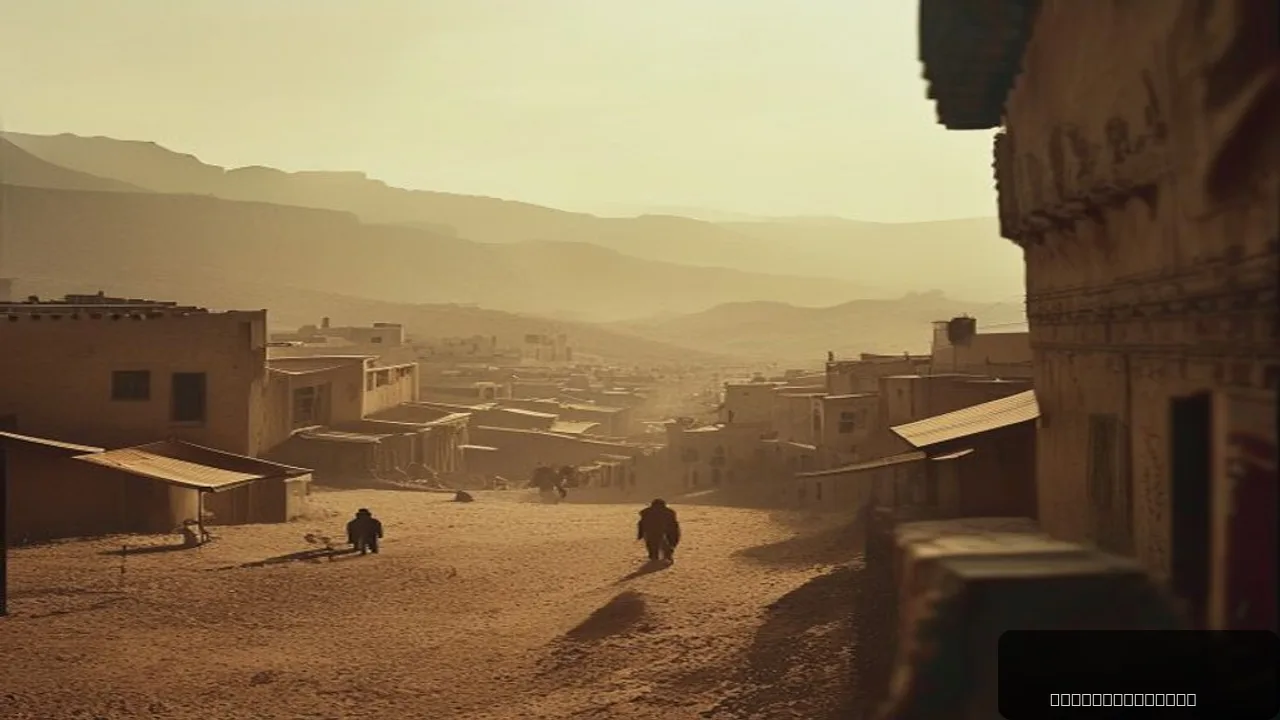
Principal photography is happening in Ouarzazate, Morocco, the same city where Gladiator, Game of Thrones, and Kingdom of Heaven shot their ancient world sequences. The production company is OZZ Films, a Moroccan outfit with real infrastructure in the region. Shooting locations include Fint Village and Oasis Studios.
The cast is genuinely international:
- Yael Kraitzer (Israel) as Talia
- Alliyah Mai Muri (UK) as Eliana
- Ali Boulemdarat (France) as Levi, a homeless father
- Yasmine Al-Bustami (USA) as Judith, Levi's wife
- Tarrick Benham (UK) as Peter, the King's servant
Here's what hasn't been announced: a global release date, a runtime, a streaming platform, or a distribution partner. That's not a minor detail. That's the whole ballgame.
Movie OTT's where-to-watch tracker currently has no listing for The Parables Project on any platform — which tells you exactly where this project stands in terms of actual distribution. It's still a production diary. Not a released film.
Why the craft choices matter — and why they're risky
What strikes me about Collett's Day 5 account is the scene structure he's describing. The homeless camp sequence — where Talia pauses to notice a child others walk past, leading to an unexpected encounter with a desperate father — reads less like religious pageant and more like character-driven drama with a genuine narrative turn.
That's not nothing. Faith-based films have suffered for decades from the visual grammar of low-budget television: flat lighting, awkward dialogue, performances that feel staged for a church basement rather than a camera. The choice to shoot in Morocco's natural landscape as a practical backdrop suggests the filmmakers understand that problem. They're not hiding behind green screens.
The international casting is either smart or risky — probably both. Using Israeli, British, French, and American actors for what's ostensibly set in ancient Judea could universalize the story, or it could create tonal inconsistency. Hard to say which without seeing an actual cut. The production's commitment to real locations over studio work at least suggests genuine ambition. But ambition and execution are different animals.
The faith-based film market they're entering — and its track record
The Parables Project is entering a specific corner of the streaming world: independent faith-based Biblical dramatization. The reference point everyone reaches for is The Chosen, the crowdfunded series that's now surpassed 500 million views across platforms, according to production figures. The Chosen succeeded partly because it built a direct-to-audience pipeline through its own app, then expanded to Angel Studios — bypassing traditional gatekeepers entirely.
Before The Chosen, this space was defined by productions like The Visual Bible series and the 2014 theatrical release Son of God, which earned $67.8 million worldwide against a reported $22 million budget. Respectable numbers. They still didn't establish a lasting franchise. Most coverage treats the faith-based boom as a rising tide that lifts all boats, but the more honest read is that The Chosen is the anomaly, not the proof of concept — Resurrection (2021), The Shift (2023), and a half-dozen other Bible-adjacent projects launched in its wake without replicating anything close to that audience pipeline, and several quietly disappeared from their host platforms within months.
The Parables Project's multinational cast suggests the filmmakers are aiming wider than the church-basement screening circuit. Yasmine Al-Bustami has credits in NCIS: Hawai'i. That's real TV experience. Whether that wider ambition is matched by an actual distribution strategy remains completely opaque. According to streaming data, no confirmation yet — which means the project is still in the pre-announcement phase.
What the director said — and what it actually tells us
Collett described the scene between Talia and the homeless family as "one of the most moving scenes we have filmed so far — a moment of compassion, sacrifice, and unexpected grace." He framed the thesis explicitly: "Those who are truly prepared for the Bridegroom are often the ones who still pause long enough to see the forgotten."
Clean thesis. Direct. But here's the thing — that statement reads perfectly in a production diary. It becomes the entire burden of proof once an audience actually watches the film. Collett's writing suggests genuine investment in the material rather than content-for-a-guaranteed-niche-market filmmaking. Investment doesn't guarantee execution, though.
OZZ Films hasn't issued any independent statement about scope or budget. No figures confirmed publicly. That opacity is standard for independent productions, but it makes any external assessment speculative at best. You're evaluating a production diary, not a film.
The India question — answered honestly
Here's the straightforward answer: there isn't really an India angle yet. Which is worth stating plainly instead of pretending otherwise.
Faith-based international content has found genuine traction on Indian OTT platforms when it carries strong production values and recognizable names. Netflix India, Amazon Prime Video India, SonyLIV, and ZEE5 have all acquired international religious and spiritual content. The Chosen is available through its own app in India and has been dubbed into Hindi, which expanded its reach far beyond English-speaking Christian audiences.
For The Parables Project to land in India, it would need:
- A formal acquisition deal with a major platform (Netflix, Prime, Hotstar, SonyLIV, or ZEE5)
- Hindi or regional language dubbing
- A distribution partner with Indian market experience
- Some promotional presence ahead of launch
None of those exist yet. The Christian population in India — approximately 28 million according to the 2011 Census — represents a real audience for this type of content, particularly in Kerala, Goa, and the northeastern states. But that audience alone isn't large enough to drive a platform acquisition deal. The project would need broader crossover appeal.
What needs to happen in the next six months
The Parables Project is still in active production. That means the window for distribution announcements, trailer releases, and festival submissions is still open — but it won't stay open forever.
Faith-based films aiming for theatrical or premium streaming release typically announce distribution by the time principal photography wraps. If this project is targeting a 2026 release (the production pace suggests that's possible), a trailer needs to drop within three to four months to build any real audience awareness.
Watch for these signals:
- An official trailer release
- A festival submission (Sundance, Tribeca, or faith-focused venues like the Movieguide Awards)
- Any streaming platform acquisition announcement
If the project lands on Angel Studios — which has become the default home for faith-based streaming content since Sound of Freedom earned $250 million worldwide in 2023 — that would be the most logical distribution fit. Angel Studios has the infrastructure and audience pipeline that independent faith productions need.
Movie OTT will track availability as soon as any platform deal is confirmed across regions.
So what's actually happening here?
The production diary for Episode 5 closes with the homeless family — Levi, Judith, and their children — joining the wedding feast. Symbolically tidy. Cinematically, the scene as described has real potential. A white horse, bread offered to a suspicious father, a servant named Peter — these images work in the hands of a confident director.
But right now, The Parables Project is a production diary. Not a released film. Not a confirmed streaming title. The gap between "cameras rolled in Morocco" and "audiences watching on their phones in Mumbai, Chicago, and London" is enormous. Nothing in the public record confirms it will be crossed.
The desert light is beautiful. The cast has range. The logistics work. Solid foundation. Everything else — distribution, release date, global reach — is still a question mark. Stay alert for trailer news. That's when the real story starts. We shall see.