Her Private Hell Review: Refn's Decade-Long Silence Results in a Visually Stunning Void
TL;DR: Nicolas Winding Refn returns after 10 years with Her Private Hell, a cyberpunk horror-thriller starring Sophie Thatcher and Havana Rose Liu that critics are calling hollow and narratively inert. US theatrical release: July 24, 2026 via Neon. Runtime: 109 minutes. Indian OTT availability unconfirmed; likely Netflix or Prime Video by October 2026.
Can a film be technically perfect and creatively dead at the same time?
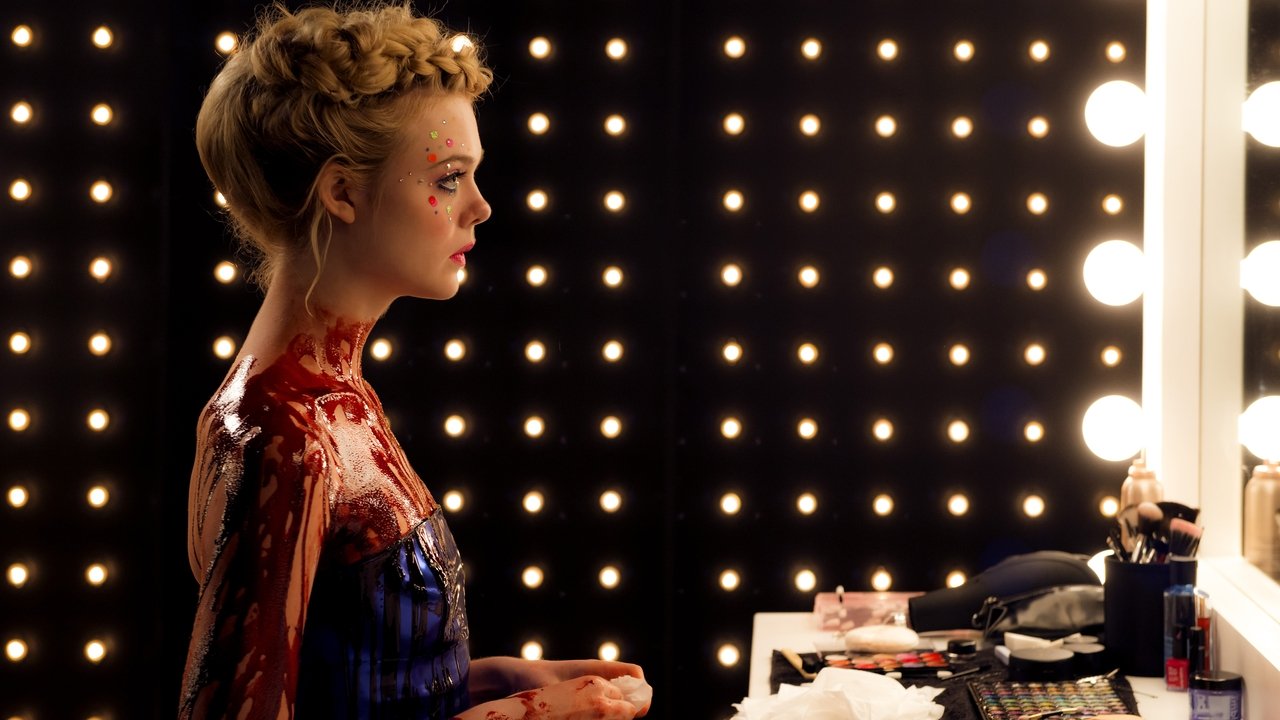
Her Private Hell answers that question with a resounding yes. Nicolas Winding Refn hasn't made a feature film since 2016's The Neon Demon, and the decade of silence between then and now appears to have been spent perfecting surfaces while ignoring everything underneath them. The cinematography is immaculate. The production design looks like it cost more than some countries' GDPs. Every actor has been dressed like they stepped out of a high-end fashion editorial. But the part that matters: there's almost nothing here to justify asking you to spend two hours watching it.
Collider's Therese Lacson put it plainly in her May 2026 review: "a torturous, shallow movie told through the male gaze that completely wastes its entire cast." She gave it a 1 out of 10. That's not a "divisive auteur work that critics will reassess in five years" score. That's a signal that the gap between intention and execution is genuinely vast.
What Her Private Hell Actually Is (And What It Costs to Watch)
Director: Nicolas Winding Refn. Starring: Sophie Thatcher, Havana Rose Liu, Charles Melton, Dougray Scott, Kristine Froseth. Distributed by: Neon. When: July 24, 2026 (US theatrical). How long: 109 minutes.
The premise, on paper, sounds workable. Sophie Thatcher plays Elle, a young woman searching for her estranged father (Dougray Scott) in a dystopian city perpetually shrouded by lethal mist. Her father has married Dominique (Havana Rose Liu), one of Elle's closest friends—a setup that should create actual tension, except the script doesn't know what to do with it. A serial killer called the Leather Man murders young women in increasingly theatrical ways. Charles Melton plays Private K, a soldier searching for his missing daughter. The machinery is there. The plot engine isn't.
What you actually get is a film that treats its female characters primarily as visual objects to photograph while they deliver exposition in hushed, underwritten dialogue. Kristine Froseth plays Hunter, a character so aggressively designed as pure fantasy (baby voice, constant flirtation, zero interior life) that she functions less as a person than as a symptom.
Why Refn's Signature Style Finally Failed Him
Here's what's tricky about judging a Nicolas Winding Refn film: his entire career is built on the premise that style and mood can carry narrative weight. In Drive (2011), Ryan Gosling's silence meant something—it communicated isolation and fractured masculinity. In The Neon Demon (2016), Refn was at least consciously critiquing the fashion industry's consumption of young women, even as the film itself indulged in that same consumption. There was an argument underneath the aesthetics.
Her Private Hell has no such argument. Most coverage frames this as a case of a great stylist losing his way, but the more uncomfortable read is that Refn never had the narrative instincts to match his visual ones, and Drive's tight screenplay (written by Hossein Amini, not Refn) was doing the heavy lifting all along. Once Refn started writing his own scripts, the decline was immediate and steep. The world here is pristine in a way that actively works against believability. Where Blade Runner gave its dystopia texture and decay, lived-in surfaces that felt real, Refn's version looks like everything just came from dry cleaning. The color palette is so controlled it feels suffocating rather than dreamlike. A catalog, not cinema. One extended fight sequence featuring Melton shows genuine kinetic energy, brief flashes of something actually happening on screen. Not enough for 109 minutes.
The decision to keep everything so sterile isn't obviously wrong aesthetically. But it produces a world that feels airless, and not in the intentional, claustrophobic way Refn probably intended.
The Wasted Cast Problem
You don't assemble Sophie Thatcher, Havana Rose Liu, and Charles Melton to throw them away on a script that doesn't know what these people are supposed to be.
Thatcher broke through in The Book of Boba Fett and has become one of the most interesting young performers in genre work. Liu announced herself as a genuine screen presence in Bottoms (2023). She has charisma, timing, the ability to make you watch her. Melton earned real critical attention for May December (2023). These aren't actors you hire for their faces alone.
Yet that's exactly what the script (co-written by Refn and Esti Giordani) reduces them to. Thatcher's Elle complains about her father and occasionally looks frightened, but there's no interiority, no arc that doesn't circle back to a man. Liu manages to find moments where Dominique registers as someone with actual stakes, which honestly feels like a minor miracle given how little the screenplay gives her to work with. Froseth's Hunter is perhaps the clearest example of the film's deeper problem: she's not a character, she's a male fantasy checklist that's been given a speaking part.
I keep thinking about how good these three could have been in a different film with a different script. That's the most frustrating thing about watching Her Private Hell—the potential sitting right there, completely unrealized.
What the Critics Actually Said
Lacson's review for Collider (May 20, 2026) didn't hold back. "Penned by Refn himself and Esti Giordani," she wrote, "I wouldn't have needed to look at the credits to know that this is a movie written by men and for men." A 1/10 from a major outlet ahead of theatrical release is a significant critical signal. It suggests the distance between what Refn intended and what he delivered might be unusually wide, even by the standards of divisive auteur cinema.
Movie OTT is tracking critical aggregation as reviews continue landing ahead of the July 24 opening, and the early picture isn't encouraging. Rotten Tomatoes and Metacritic scores will crystallize in the weeks ahead of release and likely determine whether Neon commits to a wider theatrical push or quietly pivots toward a faster streaming transition.
There's a moment in the film where a character dully remarks, "This movie's gonna be hell." It reads less like clever self-awareness and more like the script accidentally telling the truth.
Where Indian Viewers Can Actually Watch This (When They Can)
US theatrical: July 24, 2026 via Neon. Indian OTT: Not yet announced.
If you're waiting to stream this in India, here's the likely landscape:
- Netflix India is the most probable home. Neon has output deals across multiple platforms, and Netflix actively courts arthouse genre releases in the Indian market.
- Amazon Prime Video India is a secondary possibility, particularly if a bidding window opens after the theatrical window closes.
- Apple TV+ India has acquired Neon titles before, though it's a less likely primary destination.
- JioCinema and SonyLIV are unlikely given the film's niche positioning and near-zero mainstream commercial appeal.
Hindi, Tamil, or Telugu dubbed versions are almost certainly not happening. The audience for this film is too narrow. English subtitles will be standard. Movie OTT's where-to-watch tracker will have confirmed Indian streaming availability the moment a distribution deal gets announced.
For context: The Neon Demon took roughly three months to land on Indian streaming after its 2016 theatrical run. That film, despite its controversy, at least had a Cannes premiere and the residual heat of Drive's cult following to push distribution deals forward. Her Private Hell arrives with neither advantage and far worse early notices, so don't be surprised if the Indian OTT window stretches longer than expected. Probably October or November 2026 if a deal materializes at all.
The theatrical window in India is murky. Neon's Indian theatrical partnerships are inconsistent, and this film may skip cinemas entirely and go straight to OTT in the subcontinent.
Should You Actually Watch This?
No. Not unless you're a committed Refn completist who can find genuine pleasure in watching beautiful frames arranged in sequence, regardless of what's happening inside them.
The technical execution is undeniable. The world is extraordinary to look at. The cast is genuinely talented. But the film itself, the thing you'd actually be sitting through, doesn't justify the time. It doesn't work as horror (the Leather Man generates zero dread). It doesn't work as thriller (the plot mechanics are inert, the pacing glacial). It doesn't work as character study because there are no characters to study, only surfaces.
Compare it to The Neon Demon. That film had a coherent satirical target, the fashion industry's consumption of youth and beauty, and committed to making you uncomfortable. Her Private Hell has the aesthetic DNA of that film without any of its argumentative spine. It's Sin City fan fiction with a bigger budget and substantially less self-awareness.
What Comes Next
Refn's next project is unannounced. Whether Her Private Hell's reception, and it will be brutal, prompts a genuine creative rethink or simply another decade of silence remains to be seen. Hard to say if he even registers the criticism at this point.
Box office expectations should be modest. Neon specializes in limited-release arthouse fare, and Her Private Hell has no obvious crossover hooks. No franchise potential. No sequel setup. The film opens July 24, 2026. It will likely disappear from most US theaters within two weeks.
Keep an eye on Movie OTT's streaming availability tracker for Indian OTT release confirmation once deals are finalized. Until then, the wait is on, and honestly, you could spend those months watching films that actually have something to say.