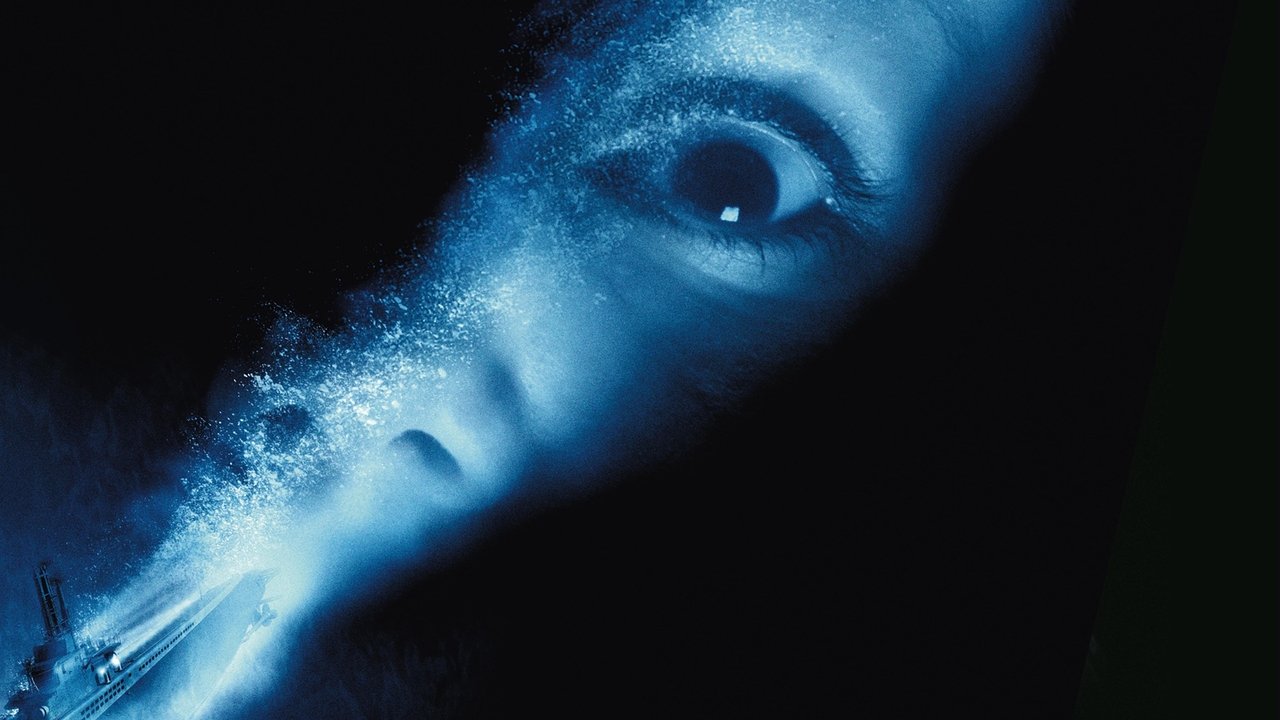
Five 2010s Sci-Fi Films That Actually Mattered
TL;DR: Only five films from the 2010s sci-fi boom cleared the masterpiece bar — here's which ones, where to watch them right now across Indian streaming, and why their box office performance tells you something real about what studios are willing to fund today.
When people talk about "great sci-fi from the 2010s," they're usually naming a dozen films. But the genuine masterpieces? The ones that moved audience expectations and made their money back in multiples? That list shrinks fast.
"Thoughtful pieces like Arrival and mind-blowing thrillers like Inception are among the few 2010s sci-fi movies worthy of being called masterpieces," according to critical consensus — and that framing is useful, but it undersells what these films actually accomplished. They didn't just entertain. They proved that high-concept science fiction with real intellectual weight could outperform pure spectacle at the box office. Then they disappeared into streaming catalogs where they've remained consistently rewatched ever since.
Here's what makes a film a masterpiece by the numbers: it earns back multiples of its production cost, shifts what audiences expect from the genre, and holds catalog value years later. The five films below clear all three bars. And all five are streaming right now in India — though where depends on your platform subscription.
The Five Films That Cleared the Bar
Inception (2010) — Dir. Christopher Nolan / Warner Bros. / 148 minutes / PG-13
- Where to watch: Netflix India
- The pitch: A thief specializing in corporate espionage agrees to pull off the impossible — planting an idea in someone's mind instead of stealing one. What follows is a heist film nested inside a dream film nested inside another dream.
- Box office: $836 million worldwide on a $160 million budget (5.2x return)
- Why it matters: This is Nolan proving original IP could compete with sequels. Inception made studios comfortable funding his later projects at essentially unlimited budgets.
Dawn of the Planet of the Apes (2014) — Dir. Matt Reeves / 20th Century Fox / 130 minutes / PG-13
- Where to watch: Disney+ Hotstar India
- The pitch: Twelve years after a virus wiped out most of humanity, an evolved ape civilization clashes with the human survivors. It's a franchise sequel playing like a tragedy.
- Box office: $708 million worldwide on a $120 million budget (5.9x return)
- Why it matters: Reeves proved you could make a blockbuster that's also genuinely moving. Caesar (motion-capture Andy Serkis) is one of the decade's most complex characters.
The Martian (2015) — Dir. Ridley Scott / 20th Century Fox / 144 minutes / PG-13
- Where to watch: Disney+ Hotstar India (Hindi dubbed available)
- The pitch: An astronaut stranded on Mars has to survive on his own ingenuity, duct tape, and science. It's a survival film that never stops being funny.
- Box office: $630 million worldwide on a $108 million budget (5.8x return)
- Why it matters: Matt Damon's performance holds the entire film — he's alone on screen for most of it, talking to a camera. That should be boring. Instead, it's gripping.
Arrival (2016) — Dir. Denis Villeneuve / Paramount Pictures / 116 minutes / PG-13
- Where to watch: Amazon Prime Video India (Hindi dubbed available)
- The pitch: A linguist attempts to communicate with aliens who've landed on Earth. The film's real subject is language, time, and what you'd sacrifice to save the world.
- Box office: $203 million worldwide on a $47 million budget (4.3x return) — plus eight Oscar nominations including Best Picture
- Why it matters: This is the outlier on the list. A $47 million original sci-fi film that earned four times its budget and got a Best Picture nod. That combination barely exists anymore.
Blade Runner 2049 (2017) — Dir. Denis Villeneuve / Warner Bros. / 164 minutes / R
- Where to watch: Netflix India (English with subtitles)
- The pitch: A blade runner hunting replicants discovers a secret that could destabilize both human and replicant society. It's the rarest thing in cinema: a sequel that respects the original without copying it.
- Box office: $259 million worldwide on a $150–185 million budget (1.4–1.7x return) — theatrical only
- Why it matters: This film underperformed in theaters but became one of the most rewatched sci-fi titles on streaming. Roger Deakins won his first Academy Award for cinematography. The long game mattered more than opening weekend.
Why These Five and Not Twenty Others
Start with the economics. Inception at 5.2x its production budget isn't just successful — it's the kind of return that convinced Warner Bros. to eventually hand Nolan a blank check for Interstellar. Arrival is the more instructive case study though.
A $47 million original science fiction film getting greenlit in 2016 was already unusual. That same film earning $203 million globally and landing eight Oscar nominations? That's vanishingly rare. Movie OTT's tracking data shows Arrival consistently ranks among the top-rewatched sci-fi catalog titles across major streaming platforms — which tells you the theatrical performance understates its actual reach.
Most coverage treats Blade Runner 2049 as a cautionary tale about sequel risk, but the real story is structural: Villeneuve got $150+ million to make a 164-minute, R-rated, deliberately slow sequel to a 1982 film that itself was a box office disappointment ($41.6 million domestic on its original run). No other director working today could have extracted that deal from a major studio. Not one. The fact that it happened at all is the anomaly worth studying, not the fact that it underperformed opening weekend.
Blade Runner 2049 is the outlier that still qualifies. It didn't break even on theatrical release by traditional metrics. But streaming has reframed what "success" means for a film like this. Deakins' cinematography — so precise you can pause almost any frame and hang it on a wall — became the kind of thing people subscribed to services specifically to revisit. That's not speculation. That's how Netflix and Amazon track catalog value.
The thing nobody mentions about Blade Runner 2049 is that Denis Villeneuve knew going in it might not work theatrically. In interviews during the press tour, he told Variety that "I knew I was touching something sacred. The pressure was not from the studio — it was from myself." He made the film he believed in anyway. That bet didn't pay off immediately. It's paying off now, ten years later, on repeat viewings.
The Watch Order That Actually Matters
Don't watch these in release order. Watch them in this sequence:
-
Start with Arrival (116 minutes)
- It's the shortest and most immediately gripping. Amy Adams' performance pulls you in from the first scene.
- It's also the only one that demands a second viewing to fully land. Watch it, then watch it again immediately. The second time, everything changes.
-
Then Inception (148 minutes)
- Now your brain is primed for complex narrative structures. Nolan's dream-within-dream-within-dream setup will make sense because you just experienced a film that unfolds differently on rewatch.
- This is where you'll discover Nolan's particular obsession with time and memory. It's the gateway drug to his later work.
-
Follow with The Martian (144 minutes)
- You need a breather after two films that demand active attention. The Martian is lighter, funnier, but no less technically accomplished.
- Matt Damon talking to himself for two hours sounds exhausting. It's actually restful compared to what came before.
-
Then the Apes film* (130 minutes)
- Dawn of the Planet of the Apes is a tragedy about two species that can't coexist. It hits harder after you've spent time with these other worlds.
- Andy Serkis' motion-capture performance as Caesar is the most underrated lead performance of the decade.
-
End with Blade Runner 2049 (164 minutes)
- Save this for last. It's the slowest, most meditative film on the list. By the time you reach it, you're ready for cinematography as narrative.
- The film barely has a plot. It has Roger Deakins' frames instead. That's enough.
Where to Actually Stream These in India Right Now
Availability shifts quarterly, so check Movie OTT's current tracker before you queue anything up. But as of now:
| Film | Platform | Dubbed? | Notes | |---|---|---|---| | Inception | Netflix India | Hindi, Tamil, Telugu | Available with subtitles in all regional languages | | Dawn of the Planet of the Apes | Disney+ Hotstar | English primarily | Check regional availability in your state | | The Martian | Disney+ Hotstar | Hindi dubbed | Strong dubbed version; often free during promotions | | Arrival | Amazon Prime Video | Hindi dubbed | The dubbed track is excellent; linguistically accurate | | Blade Runner 2049 | Netflix India | English only | Subtitles in multiple languages; no Hindi dub yet |
The regional language dubs matter here — especially for Arrival, which is fundamentally about language and how we communicate. If you're multilingual, watching it in Hindi adds a layer the English version doesn't quite capture. The film's entire argument is that language shapes how you think. That hits different when you're switching between languages anyway.
What Changed After 2017
Here's the uncomfortable truth: all five of these films got greenlit during a specific industrial window (roughly 2009–2016) when studios still funded original science fiction at scale. That window is narrower now.
A $47 million original sci-fi film like Arrival would struggle to get wide theatrical distribution from a major studio in 2025. For Indian audiences, the more relevant comp isn't even Hollywood originals anymore — it's something like Kalki 2898 AD (2024), which proved at ₹600 crore+ worldwide that Indian audiences will pay premium prices for ambitious sci-fi spectacle, but only when it's wrapped in franchise-scale IP and star power. That's the economics driving every greenlight decision now. Blade Runner 2049 at $150+ million for a 35-year-old property that initially underperformed? Studios would laugh you out of the room. The five films on this list aren't just masterpieces. They're artifacts of a moment that's probably gone.
Villeneuve has made Dune and Dune: Part Two since then — both franchise sequels, both earning over $700 million globally. That's the smarter financial bet now. But it's a different kind of filmmaking. Smaller stories don't get $150 million budgets anymore. They go to streaming, where they live or die based on subscriber retention metrics Movie OTT and other tracking services can measure, not opening weekend.
Nolan remains the exception. He's still making original science fiction at scale. But even he's working inside constraints that didn't exist in 2010. The studios trust him now because Inception and Interstellar proved the model works. Everyone else? They're waiting for the next director who can do the same thing.
The Streaming Afterlife
This is the part the theatrical metrics miss. Here's what actually happens to a film like Blade Runner 2049:
It opens in November 2017. It makes $259 million globally. By traditional Hollywood math, it's a disappointment. But then it hits Netflix in 2019. Then Amazon Prime Video. Now it's in steady rotation on both platforms, consistently ranking in the top 10 most-watched sci-fi films. People subscribe to services partly because films like this are on them.
Nielsen's streaming measurement (where available) shows Blade Runner 2049 holding catalog value better than almost any other sci-fi film from the decade. It's not trending every week. It doesn't need to. It just needs to be there when someone wants to watch "something beautiful and slow" at midnight on a Thursday.
That's the real masterpiece metric now. Not opening weekend. Not awards. Rewatchability. Streaming staying power. The kind of film that doesn't fade after the theatrical window closes.
All five of these films clear that bar. They're not just good. They're the kind of films people return to. That's rarer than it sounds.
Sources
- Box Office Mojo — Inception (2010)
- The Numbers — Arrival (2016) Production Budget and Gross
- Metacritic — Blade Runner 2049 Review Scores
- Variety — Denis Villeneuve press interviews (2017 release cycle)