Pawlikowski's Fatherland Brings Thomas Mann to Cannes 2026
TL;DR: Eight years after Cold War, Paweł Pawlikowski premieres Fatherland at Cannes 2026 — a black-and-white road drama starring Sandra Hüller and Hanns Zischler as Erika and Thomas Mann returning to postwar Germany. MUBI holds streaming rights across India, the US, the UK, Spain, and more than a dozen other territories.
Three years after Tár made Sandra Hüller the most talked-about actress on the festival circuit — and one year after she collected a César for Anatomy of a Fall — she's back in competition at Cannes, this time not as a conductor or a grieving wife but as Erika Mann, daughter of one of the 20th century's most celebrated literary figures. And she's brought Paweł Pawlikowski back with her.
That combination alone would be enough to make Fatherland one of the most anticipated films at the 79th Cannes Film Festival. But the context here is richer than just starpower. Pawlikowski hasn't directed a feature since Cold War in 2018, a film that won him the Best Director prize at Cannes and an Oscar nomination, shot in the same stark black-and-white that he's apparently not done with. Eight years is a long time. Long enough to wonder if he was ever coming back. He is. And from what's visible in the first-look clip that Deadline shared exclusively on May 13, 2026, it looks like the wait may have been worth it.
Who's in It, Who Made It, and Where You Can Watch
Fatherland (working title: 1949) is directed by Pawlikowski from a screenplay he co-wrote with Hendrik Handloegten, the German filmmaker best known for Babylon Berlin. The film was co-edited by Pawlikowski and Piotr Wójcik, and shot — again — by cinematographer Łukasz Żal, who lensed both Ida and Cold War. Composer Marcin Masecki handles the score.
The cast:
- Hanns Zischler as Thomas Mann, the Nobel Prize-winning novelist
- Sandra Hüller as Erika Mann, his daughter — actress, writer, and anti-fascist activist
- August Diehl (The Disappearance of Josef Mengele) in a supporting role
- Devid Striesow (Yella) and Anna Madeley (In Bruges) rounding out the ensemble
- Theo Trebs and Joanna Kulig also appearing (Kulig, notably, starred in Cold War)
Where to watch: MUBI holds rights across a substantial list of territories, according to Deadline's confirmed reporting. That includes:
- North America (US and Canada)
- United Kingdom and Ireland
- India
- Spain
- Latin America
- Italy, Austria, Benelux
- Australia and New Zealand
- Turkey
The Match Factory is handling international sales for territories outside MUBI's deal. The film is produced under a MUBI/Our Films arrangement, with Arte France Cinéma as co-producer.
No confirmed streaming date yet — the film is a world premiere in Cannes competition, so a wider release window is still forming. Keep an eye on Movie OTT's where-to-watch tracker for updates as MUBI schedules the rollout.
Why This Film Matters More Than Its Festival Pedigree Suggests
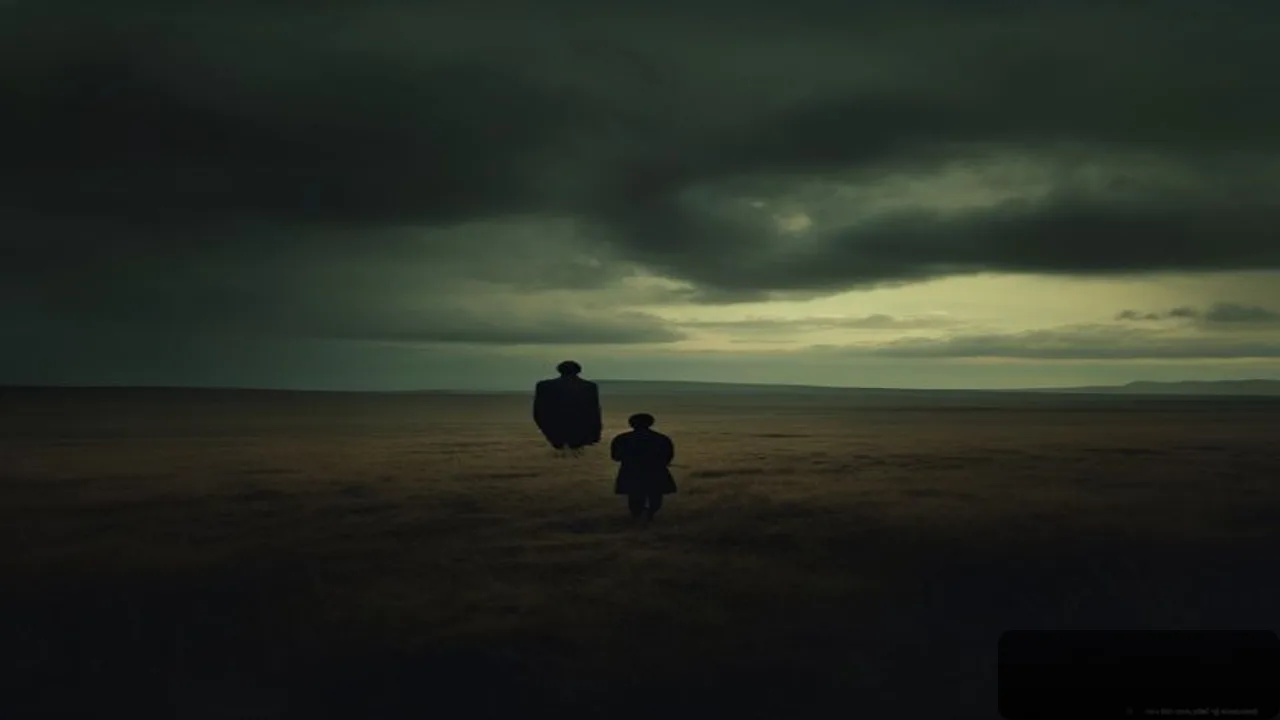
Here's the thing that gets lost when a Cannes competition slot generates headlines: the actual argument the film is making. Fatherland isn't a straightforward literary biopic. It's a road movie — a black Buick driving from American-controlled Frankfurt to Soviet-controlled Weimar in the summer of 1949, father and daughter trying to figure out what Germany even means to them after sixteen years of exile. That's a genuinely unusual premise for prestige drama, which tends to prefer drawing rooms and deathbeds over windshields and checkpoints.
Most write-ups are framing this as Pawlikowski's "return to form," but that misses what's actually different: Ida and Cold War were built around fictional characters moving through real history, while Fatherland reverses the equation entirely, placing documented historical figures inside a structure that openly admits to reshaping the facts. That's not a return — it's a gamble, and the kind of creative risk that either wins the Palme or leaves the jury cold.
The film arrives at a moment when MUBI has been aggressively acquiring exactly this kind of mid-budget, festival-first arthouse cinema, betting that a global subscriber base hungry for something smarter than the streaming mainstream will follow. Fatherland fits that thesis almost perfectly — it's got name recognition (Thomas Mann, Sandra Hüller post-Tár), a proven director, and thematic weight without being impenetrable.
Compared to something like Spencer (2021), which used a famous woman's psyche as the lens for a historical moment, Fatherland seems more interested in the friction between two people than in the mythology of one. Erika Mann was, by historical record, a fascinating and complicated figure — cabaret performer, war correspondent, her father's closest confidante and also, in some readings, the person who kept him honest about his political equivocations. That tension is the film's real engine.
Movie OTT has been tracking MUBI's expansion into Indian and Spanish markets specifically, and Fatherland represents exactly the kind of prestige acquisition that MUBI stakes its brand identity on.
What Pawlikowski Said About Taking Liberties With History
Pawlikowski was direct about the film's relationship to historical fact, and his director's statement — shared as part of the Cannes press materials — is worth reading carefully.
"It also brings together a dramatic historical moment with a very particular human story," Pawlikowski said. "But while the characters in Ida and Cold War were invented, at the centre of Fatherland, we have the historical figures of Thomas Mann and his wayward twins, Erika and Klaus, locked in a triangular family drama."
He went on to clarify the creative approach: "Trying to fuse the personal and the historical in a poignant, mutually enhancing way, we took some liberties with historical facts and their chronology, while trying to stay faithful to the emotional and intellectual truth of the matter."
That's a careful, honest thing to say publicly before a film debuts in competition. It signals that Fatherland isn't positioning itself as a documentary record — it's an interpretation, and Pawlikowski wants audiences to know that going in. For viewers who care about the real Erika Mann (and she's worth caring about — her life story is genuinely extraordinary, detailed in the Wikipedia entry for Fatherland (2026)), that distinction matters.
The Numbers Behind the Production
Specific budget figures haven't been publicly confirmed for Fatherland, but the production's shape gives some useful context. According to reporting from Wroclaw.pl, significant portions of the film were shot on location in Wrocław and Wałbrzych in Poland, as well as in Weimar, Germany — a production geography that suggests a modest but serious European co-production budget, likely in the range typical for MUBI/Arte co-productions (generally €5–12 million for this tier of project, though no official figure has been released).
Cold War, Pawlikowski's previous film, was made for approximately €4.7 million and grossed over $10 million worldwide in theatrical release, according to Box Office Mojo figures — a remarkable return for a black-and-white Polish-language art film that ran just 88 minutes. Ida (2013), his Oscar-winning breakthrough, similarly punched well above its budget in global receipts, earning roughly $3.8 million in the US alone on a production cost under €2 million.
The MUBI deal covering 14-plus territories is significant. MUBI doesn't disclose acquisition fees publicly, but deals of this scope for Cannes competition films from established directors have been reported in the $3–8 million range by trades covering similar acquisitions. The runtime has not been officially confirmed as of the premiere date.
How Fatherland Lands for Indian Audiences
MUBI India holds the rights. That's confirmed by Deadline's reporting. What it means practically: Indian audiences won't need to hunt for this one on grey-market platforms or wait for a delayed theatrical window. MUBI is available in India at approximately ₹499/month, and the platform has been building its Indian subscriber base steadily since its relaunch there.
The film's themes — exile, the question of belonging, the weight of a homeland you've left behind — carry a specific resonance for Indian diaspora audiences, particularly those with family histories of partition or migration. That's not a small demographic for MUBI India's likely subscriber profile.
The film is in German (and possibly some English, given Mann's years in American exile), so Indian viewers will be watching with subtitles. No regional language dub has been announced — and honestly, for a film like this, dubbing would feel wrong. The cadence of the language is part of the texture.
Movie OTT tracks streaming availability across MUBI, Netflix, Prime Video, JioCinema, and SonyLIV for Indian audiences. Once MUBI India sets a release date for Fatherland, that'll be the first place to confirm it.
No Indian theatrical release has been announced, though MUBI has occasionally partnered with select arthouse cinemas in Mumbai and Delhi for limited runs of its competition acquisitions.
What to Watch for as Fatherland Moves Through Awards Season
The part I'm most curious about is whether Sandra Hüller's performance as Erika Mann generates the kind of specific, character-driven conversation that Anatomy of a Fall did — or whether the film's formal austerity (black-and-white, Pawlikowski's characteristically sparse dialogue) makes it feel more like a director's film than an actor's showcase. Those aren't mutually exclusive, obviously. Ida proved that.
Watch for: the Palme d'Or jury's response (the competition at Cannes 2026 is reportedly strong), early critical aggregates forming on Metacritic and Rotten Tomatoes in the days following the premiere, and MUBI's announcement of a streaming debut date. If Fatherland lands a major prize in competition, MUBI will almost certainly accelerate its rollout. A September or October 2026 streaming premiere feels plausible for MUBI markets, with awards eligibility windows factoring into the timing.
Hard to say if it gets a US theatrical run first. MUBI has been doing hybrid releases. Worth watching.
What Comes Next for Pawlikowski and MUBI
Fatherland premieres in the Main Competition at Cannes on May 13, 2026. As of that date, it's a world premiere with no confirmed streaming date attached. The Match Factory is actively selling remaining international territories at the Cannes Market, so additional distribution announcements are likely in the weeks immediately following the festival.
For anyone tracking this across platforms and regions, Movie OTT will have updated streaming availability as MUBI and The Match Factory finalize their release calendar. The film is one of the most substantial arthouse acquisitions of 2026 so far — and given Pawlikowski's track record, dismissing it before the reviews land would be a mistake.
Should you watch it? Yes. Especially if Cold War or Ida meant anything to you.