Pedro Almodóvar at Cannes 2026: Bitter Christmas, Bold Politics, and Why Silence Is Not an Option
TL;DR: Pedro Almodóvar brought his new film Bitter Christmas to Cannes 2026, where it received a 6.5-minute standing ovation. The director used the press conference to call out political censorship, declare Europe must resist Trump's influence, and wore a "Free Palestine" pin — making the film's Cannes run one of the festival's most politically charged moments in years.
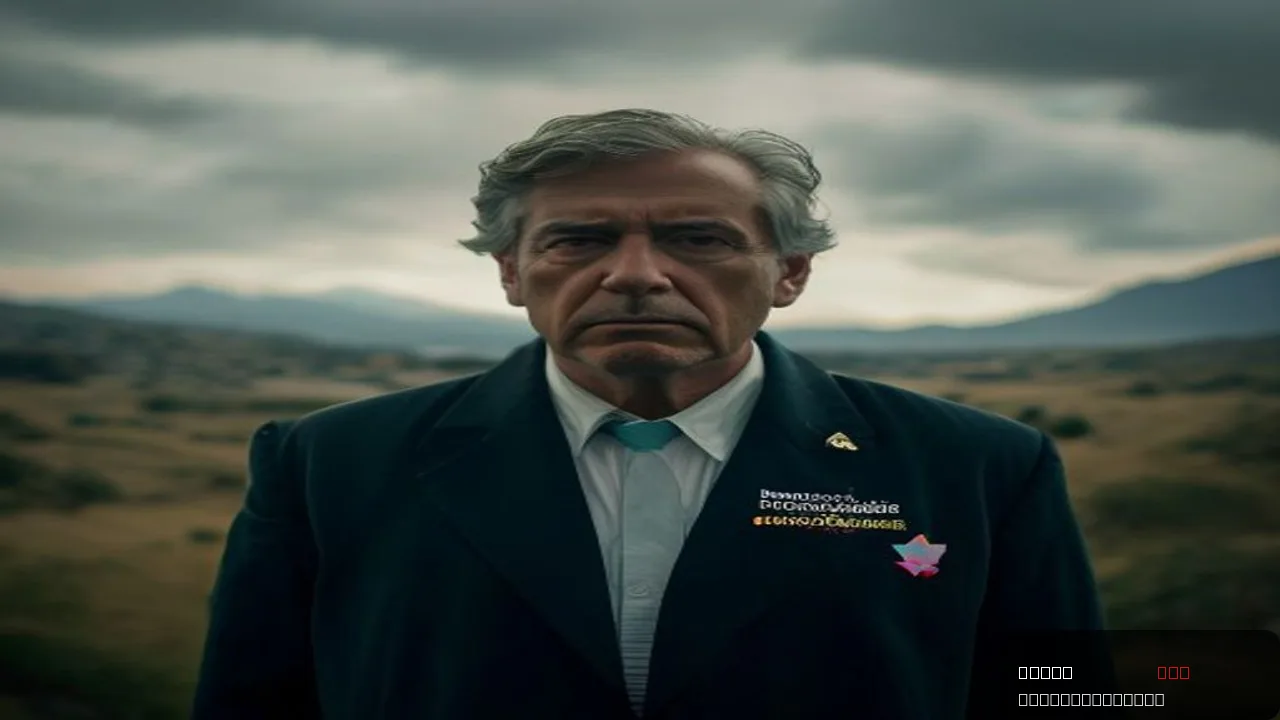
There's a particular kind of filmmaker who arrives at Cannes not just with a movie but with something to say — and Pedro Almodóvar, now in his eighth competition at the Croisette, has never pretended otherwise. The 76-year-old Spanish director walked into the press conference for Bitter Christmas wearing a small "Free Palestine" pin on his lapel. Quiet statement. Loud room. When a journalist asked about censorship in the current political climate, Almodóvar didn't pause to consider his phrasing. He said what he meant: "Europe must never be subjected to Trump." The international press erupted in applause.
That moment, reported by Variety on May 20, 2026, became the defining image of his Cannes appearance — not because it was surprising (Almodóvar has been one of cinema's most outspoken political voices for decades) but because of the context surrounding it. Cannes 2026 is unfolding at a moment when artists across the Western world are visibly calculating the cost of speaking up. Almodóvar, it seems, has already done that math. The answer was zero.
What We Know About Bitter Christmas and Its Cannes Debut
Director: Pedro Almodóvar. Film: Bitter Christmas (working English title). Competition: Official Selection, Cannes 2026. Premiere reception: A 6.5-minute standing ovation from the Cannes audience, per Variety's reporting.
Cast details remain limited in early coverage, but this is Almodóvar's eighth film in competition at Cannes — a record that places him among the most decorated directors in the festival's history. The film's runtime and full cast haven't been officially confirmed at press time. A wide theatrical release date has not been announced.
Key facts at a glance:
- Festival: Cannes Film Festival, May 2026
- Director: Pedro Almodóvar
- Standing ovation length: 6.5 minutes
- Competition appearances at Cannes: 8th time in competition
- Almodóvar's previous Cannes wins: Best Director for All About My Mother (1999); Best Screenplay for Volver (2006)
How Bitter Christmas Lands for Indian Audiences
Here's where it gets complicated for Indian viewers. Almodóvar's films don't typically arrive on Indian multiplexes with the same velocity as Hollywood blockbusters, but they do find their audience — eventually, and reliably, through streaming. His 2024 English-language debut The Room Next Door reached Netflix India after its theatrical run, and there's strong reason to expect Bitter Christmas will follow a similar path.
Netflix holds international distribution rights to several of Almodóvar's recent productions and remains the most likely home for this film in India. Spanish-language films with festival pedigree have a documented track record on the platform in India — Pain and Glory (2019), Parallel Mothers (2021), and The Room Next Door all found audiences on Netflix India among cinephiles and Spanish-cinema enthusiasts.
Movie OTT, which tracks streaming availability across regions including India, the US, the UK, and Spain, is the most practical starting point for Indian viewers wanting to know the moment Bitter Christmas lands on a domestic platform. As of now, no India streaming date has been confirmed.
Spanish audio with English subtitles is the standard for Almodóvar's releases on Indian streaming platforms. Hindi dubbing is not typically provided for his films, though this could change if Netflix India decides to invest in broader accessibility for this particular title. Tamil and Telugu tracks are unlikely. For audiences in India who've followed Almodóvar through Volver or All About My Mother, the wait will be familiar. Worth it, historically.
What Almodóvar Actually Said — and Why It Cuts Deeper Than a Soundbite
The press conference exchange is worth sitting with. Almodóvar was responding specifically to two converging censorship concerns: the political climate in the United States under Trump, and a controversy in France involving Canal+, whose leadership reportedly threatened to blacklist artists who signed an open letter opposing the company's major shareholder.
"Silence and fear is a symptom that things are going badly," Almodóvar told the press conference, according to Variety's reporting. "It's a serious sign democracy is crumbling. On the contrary, creators must speak out — the worst thing that could happen would be to remain silent or to be censored. We have a moral obligation to speak out."
He went further, calling on his fellow artists "to act as a shield against this madness." Before Cannes, speaking to the Los Angeles Times, he'd been equally direct about the United States: "The U.S. is not a democracy right now. Some people say it's maybe an imperfect democracy, but I really don't think the U.S. is a democracy right now. The heartbreaking and ironic thing is that democracy has given rise, through the proper, right voting mechanism, to this kind of totalitarian regime. And it's both a paradox and it's also incredibly sad."
Strong words. The kind most Hollywood directors won't say publicly — which is precisely Almodóvar's point.
The Director Who Has Always Known Where He Stands
Pedro Almodóvar's career is one of the most consistent artistic trajectories in world cinema. Emerging from Spain's post-Franco movida madrileña counterculture in the late 1970s and early 1980s, he built a filmography that has never once pretended to be apolitical. His early films (Pepi, Luci, Bom, 1980; What Have I Done to Deserve This?, 1984) were deliberately provocative, rooted in a Spain discovering its own freedoms after decades of dictatorship. That origin story explains a lot about why silence, for him, isn't a stylistic choice — it's a political one.
What most coverage of this Cannes moment misses: Bitter Christmas is Almodóvar's third film since the pandemic, and the first of those three to premiere at Cannes rather than Venice. After Parallel Mothers competed at Venice in 2021 and The Room Next Door won the Golden Lion there in 2024, the return to Cannes reads as a deliberate repositioning — a filmmaker choosing the festival with the louder political megaphone at exactly the moment he wants to use it.
His Cannes record speaks for itself:
- All About My Mother (1999) — Best Director, Cannes; Best Foreign Language Film, Academy Awards
- Talk to Her (2002) — Best Original Screenplay, Academy Awards
- Volver (2006) — Best Screenplay, Cannes (shared); Penélope Cruz won Best Actress
- Parallel Mothers (2021) — Venice Film Festival competition; Golden Globe nomination
- The Room Next Door (2024) — Golden Lion, Venice Film Festival; Almodóvar's first English-language feature
Bitter Christmas arrives as his eighth Cannes competition entry, a number that places him alongside directors like Michael Haneke and Ken Loach in terms of sustained festival presence. Movie OTT's streaming library carries availability data for most of his back catalogue across global platforms, which is useful if you're planning a proper retrospective before this one drops.
Films That Occupy the Same Emotional Territory
Bitter Christmas doesn't have a release date yet, but Almodóvar's recent work gives us a clear frame of reference. If you're trying to calibrate expectations:
| Film | Year | Reception | |---|---|---| | Pain and Glory | 2019 | Antonio Banderas won Best Actor at Cannes; RT score 96% | | Parallel Mothers | 2021 | Golden Globe nomination; strong arthouse theatrical run | | The Room Next Door | 2024 | Golden Lion at Venice; Almodóvar's English-language debut |
All three share a late-career Almodóvar quality: slower, more interior, less the baroque melodrama of his 1980s and 1990s peak, and more a filmmaker reckoning with mortality, memory, and — increasingly — political grief. Pain and Glory is probably the closest tonal cousin to what Bitter Christmas might be, given the 6.5-minute ovation suggests something emotionally substantial rather than formally experimental. I keep coming back to that long, quiet scene in Pain and Glory where Banderas's Salvador sits alone watching footage of his younger self, the camera refusing to cut away, trusting stillness the way few directors do anymore. If Bitter Christmas carries that same patience, the ovation makes sense.
Why the Politics and the Film Can't Be Separated in 2026
What's striking is how much Almodóvar's press conference comments and the existence of Bitter Christmas feel like two parts of the same argument. He's not just making a film and separately commenting on world events. The two things are continuous.
Think about the Canal+ situation he referenced — a French media conglomerate whose leadership threatened artists with professional consequences for political speech. That's not an abstract concern. For a filmmaker whose entire career was shaped by what it meant to create freely in a country that had only recently shed authoritarian rule, the sight of European media power being used to silence dissent is genuinely alarming, not just politically inconvenient.
The Oscar silence he called out before Cannes is the other half of this picture. Speaking to the Los Angeles Times, Almodóvar noted that the Academy Awards telecast this year was notably free of political protest — with the exception of Javier Bardem, who said "Free Palestine" from the stage. "People are obviously very frightened," Almodóvar said. Hard to argue with that read.
From a market perspective, the 6.5-minute standing ovation at Cannes is commercially significant. For films in the arthouse-festival circuit, Cannes momentum directly shapes distribution deals, awards-season positioning, and streaming licensing values. A strong ovation at this level typically translates to a faster, wider distribution agreement. Movie OTT will have the confirmed streaming territories as soon as they're announced, which is where to check first if you're in India, the UK, or the US.
The broader question — the one most Cannes coverage won't ask — is whether Bitter Christmas itself engages with the political themes Almodóvar is articulating in press. Or whether the film is more personal, more intimate, and the politics are what the director carries with him into every room he enters. Based on his recent filmography, probably both. That's the more interesting read.
What Comes Next for Bitter Christmas
Awards season is the obvious next chapter. A Cannes competition entry with this kind of reception will almost certainly be Spain's submission for the International Feature Film category at the 2027 Academy Awards (the 2026 submission window having already passed). Cannes jury deliberations conclude later in May; a prize here — even a screenplay award — would accelerate the film's theatrical rollout considerably.
Theatrical release in Spain will likely precede international distribution by several months. UK and US arthouse theatrical releases typically follow within six to twelve months of a Cannes premiere for Almodóvar's work. Streaming release on Netflix (the likely platform, based on his recent history) usually follows theatrical by three to four months in major territories.
For streaming availability across all regions as soon as it's confirmed, the Movie OTT where-to-watch tracker is the fastest way to know when and where Bitter Christmas is actually watchable — without having to sift through studio press releases.
Should you watch it? Yes. Almodóvar at Cannes, with a 6.5-minute standing ovation, making his most politically engaged film in years? That's not a question. That's a calendar event.