La Bola Negra Just Stopped Cannes Cold — and Penélope Cruz Had Everything to Do With It
TL;DR: The Black Ball (La Bola Negra), directed by Spanish duo Los Javis (Javier Ambrossi and Javier Calvo), premiered in competition at Cannes 2026 to a 16-minute standing ovation. Starring Penélope Cruz and Glenn Close, the queer historical epic opens theatrically in Spain on October 2, 2026. International streaming availability is still being confirmed, but Movie OTT is tracking platform announcements as they land.
Three years after Pedro Almodóvar's Strange Way of Life reminded the world that Spanish queer cinema could command global festival floors, another project rooted in Iberian identity and LGBTQ+ history has arrived — and it's doing so on a considerably grander scale. The Black Ball (La Bola Negra), the Cannes competition debut from filmmaking duo Los Javis, walked into the Palais des Festivals on May 21, 2026 and walked out with a 16-minute standing ovation. That's not a typo. Sixteen minutes.
What Los Javis Actually Made — and Why It's Not a Simple Awards Play
Director: Javier Ambrossi and Javier Calvo (collectively, Los Javis) Stars: Penélope Cruz, Glenn Close, Guitarricadelafuente, Miguel Bernardeau, Carlos González, Milo Quifes, Lola Dueñas Spanish theatrical release: October 2, 2026 via Elastica Films Co-producers: Movistar Plus+, Suma Content Films, El Deseo, Le Pacte International sales: Goodfellas
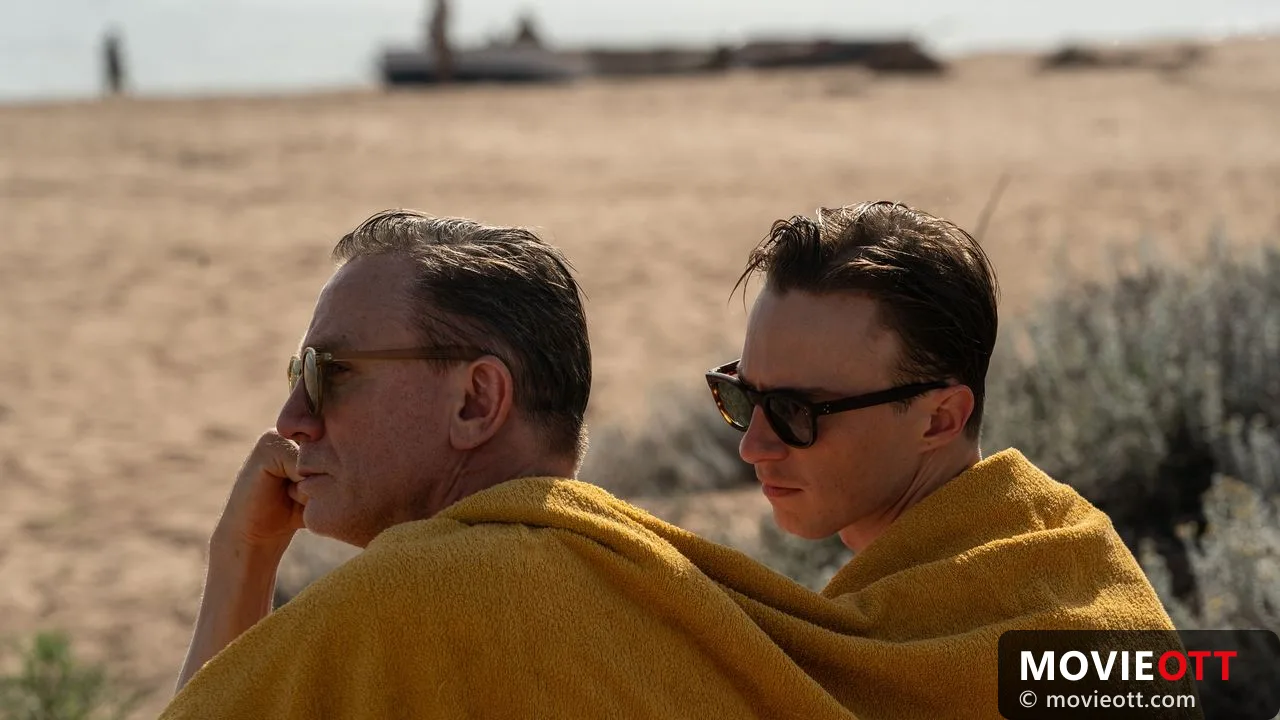
The Black Ball spans 85 years of Spanish history, threading together three storylines set in 1932, 1937, and 2017. At the center are three gay men whose lives echo each other across generations — desire, loss, the weight of what one era passes down to the next. The film's title is pulled from a specific historical practice: casting a black ball into a voting urn to deny a young gay man entry into a Granada social club. A rejection made literal. Made permanent.
The screenplay was co-written by Ambrossi, Calvo, and playwright Alberto Conejero, drawing on four surviving pages of an unfinished novel by Federico García Lorca — the poet and playwright murdered by Nationalist forces in 1936 — alongside Conejero's stage work La piedra oscura. The production filmed across 12 weeks in Castile and León, Cantabria, Andalusia, Madrid, and Greece, according to Variety's reporting on the premiere.
Penélope Cruz appears in what's described as an extended cameo. Glenn Close plays a supporting role. And Spanish singer-songwriter Guitarricadelafuente (real name Alberto Canteli) makes his screen debut here — a casting choice that's going to mean a lot to Spanish audiences who know his music. Canteli has over 7 million monthly Spotify listeners and sold out Madrid's WiZink Center in 2023; he's not an unknown being given a break, he's a genuine cultural figure crossing into cinema, which changes the marketing calculus for this film inside Spain entirely.
Why a 16-Minute Ovation Is Actually Significant Right Now
Cannes standing ovations get reported breathlessly every year, so it's fair to be a little skeptical. But 16 minutes is the number that matters. For context: Parasite received an eight-minute ovation in 2019 before winning the Palme d'Or. All of Us Strangers — Andrew Haigh's queer British love story — earned sustained applause at its Toronto premiere but wasn't in Cannes competition. The Black Ball is competing for both the Palme d'Or and the Queer Palm simultaneously, a dual candidacy that's relatively uncommon.
What's striking is that the film arrives at a moment when queer cinema at major festivals is increasingly being discussed in terms of "representation metrics" rather than artistic ambition. Los Javis built their reputation doing the opposite — Veneno, their HBO Max series about Spanish trans activist Cristina Ortiz, was emotionally rigorous in a way that made it genuinely uncomfortable at times, not just politically safe. La Mesías, their follow-up series, premiered at San Sebastián and became the first Spanish series selected for Sundance, then swept the Feroz and Forqué awards. These are filmmakers with a specific voice, not just a political position.
The film also represents the launch of Suma Content Films, the new cinema division of Los Javis' production company. So there's real institutional stakes here beyond the awards circuit. If The Black Ball performs, it validates an entire new production infrastructure.
Most coverage will frame this as a period-piece companion to Carol (2015) or Brokeback Mountain, and the multi-era emotional architecture invites that comparison — but that framing misses the point. The García Lorca connection isn't decorative literary prestige; it's the structural engine of the film, because the unfinished manuscript means the audience is watching a story that was literally silenced by political violence, now completed by queer filmmakers eighty-nine years later. That's not an adaptation. That's an act of reclamation, and no American comp captures it.
What Los Javis Said When the Applause Wouldn't Stop
The speech Los Javis gave during the standing ovation — while the audience was still clapping — is the part I keep coming back to, because it's rare for filmmakers to use that moment to say something this direct.
According to Variety's report from the premiere, Ambrossi and Calvo addressed the crowd in what was described as a visibly emotional moment: "Ninety years ago, Federico García Lorca was killed by fascism because he was gay. So, to everyone who thinks that we are gonna step back in our LGBT rights, I have bad news. Because we are here to stay. So, thank you. Cannes Festival, thank you. Long live Cannes. For the opportunity, thank you. May we all truly know that we are in the same fight."
That's not a standard acceptance speech. It's a statement. And given that the film draws directly on Lorca's unfinished writing — work he never got to complete because he was executed before he could — the speech lands differently than most festival-circuit rhetoric does. The filmmakers aren't just invoking Lorca's name as artistic credibility. They're arguing that the film itself is a continuation of something that was violently interrupted.
The Numbers Around This Film's Launch
A few verifiable figures worth anchoring to:
- The film earned a 16-minute standing ovation at its Cannes competition premiere on May 21, 2026, per Variety's on-the-ground coverage.
- Production spanned 12 weeks of principal photography across five regions.
- The film is the first production under Suma Content Films, the new cinema label from Los Javis' company.
- Spanish theatrical release is set for October 2, 2026, distributed domestically by Elastica Films.
- The Black Ball is in contention for the Palme d'Or (the festival's top prize) and the Queer Palm simultaneously — a dual candidacy that's relatively uncommon.
No official production budget has been publicly disclosed. International sales are being handled by Goodfellas, which typically positions films for arthouse theatrical distribution across Europe and North America before streaming deals are confirmed. Co-production financing comes from Movistar Plus+, El Deseo (Pedro Almodóvar's production company, which adds a meaningful industry endorsement), Le Pacte, and Suma Content Films.
Where Indian Audiences Can Actually Watch This — and When
This is the honest answer: not yet confirmed. No Indian OTT platform has announced rights as of this writing.
That said, the co-production structure gives some useful signals. Movistar Plus+ holds Spanish rights, and Le Pacte handles French distribution. For international streaming, the likely contenders for India would be:
- Netflix India — which has been aggressively acquiring Cannes competition titles and already has a relationship with Spanish-language prestige content (Money Heist, Elite)
- MUBI — the more probable home for an arthouse Spanish film of this profile, and MUBI has been expanding its Indian subscriber base
- Amazon Prime Video India — possible but less likely given their current acquisition focus
What won't happen quickly is a dubbed Hindi or regional-language version. Films of this type typically arrive on Indian platforms with Spanish audio and English or Hindi subtitles, if they arrive at all. The October 2 Spanish theatrical date means a streaming deal could be announced anywhere from November 2026 onward, depending on how the awards season plays out.
Movie OTT's where-to-watch tracker will have updated platform availability for Indian, UK, and US audiences as deals are confirmed — that's genuinely the fastest way to catch a streaming announcement for a film like this, where the rights picture is still forming.
For Indian cinephiles who follow Spanish cinema, the El Deseo co-production credit is a meaningful signal. Almodóvar's company doesn't attach to projects lightly, and their international network often accelerates streaming deals into markets like India.
What Comes Next for The Black Ball — and What Could Still Go Wrong
The Cannes jury deliberates through the end of May, with the Palme d'Or announced at the closing ceremony. The Black Ball is a real contender, not just a sentimental one. A Palme win would dramatically accelerate streaming acquisition interest and potentially open up wider theatrical runs in the US and UK before the Spanish October release date.
Even without a top prize, the Queer Palm is a distinct possibility — and that award has historically boosted a film's visibility with LGBTQ+ audience communities across streaming platforms.
What to watch for over the next 90 days:
- Cannes jury prize announcement (end of May 2026)
- US and UK distribution deal announcements — Goodfellas will be closing deals during and immediately after the festival
- Streaming platform acquisition news, particularly Netflix and MUBI
- Awards season positioning: if this film lands at Telluride or Toronto in September, it's on a full Oscar campaign trajectory
- Spain's submission for Best International Feature Film at the Academy Awards — The Black Ball is the obvious candidate
The one risk: films that peak at Cannes sometimes struggle to sustain momentum through the long gap before theatrical release. October 2 in Spain is five months away. That's a long time to keep press heat alive. Movie OTT will track distribution developments across all major regions as they're confirmed.
The bigger editorial story here, and the one I think most outlets will miss: Los Javis are the first Spanish filmmakers of their generation to compete at Cannes with a feature, and they've done it with a film that's structurally ambitious in a way their TV work (impressive as it is) couldn't fully accommodate. Veneno was five episodes. La Mesías was six. An 85-year triptych built on four pages of Lorca manuscript? Completely different muscle. Whether the jury agrees is another matter entirely, but the leap itself is the story.
The Cannes Run and What It Could Mean by October
The Black Ball is, right now, one of the most-discussed films at Cannes 2026. The 16-minute ovation will keep generating coverage through the jury deliberations. Penélope Cruz, who won Best Actress at Cannes for Volver in 2006, brings instant name recognition to international markets — even in an extended cameo role. Glenn Close's presence adds English-language marketing traction.
For audiences who want to follow this film's journey from festival to streaming, Movie OTT is the practical tool for tracking when and where it lands across Netflix, MUBI, Prime Video, and regional platforms in India, the US, the UK, and Spain. The October 2 Spanish theatrical date is confirmed. Everything after that is still in motion.
Should you watch this? Yes. Especially if Carol, Moonlight, or Almodóvar's recent work is in your rotation. This one's playing for keeps.