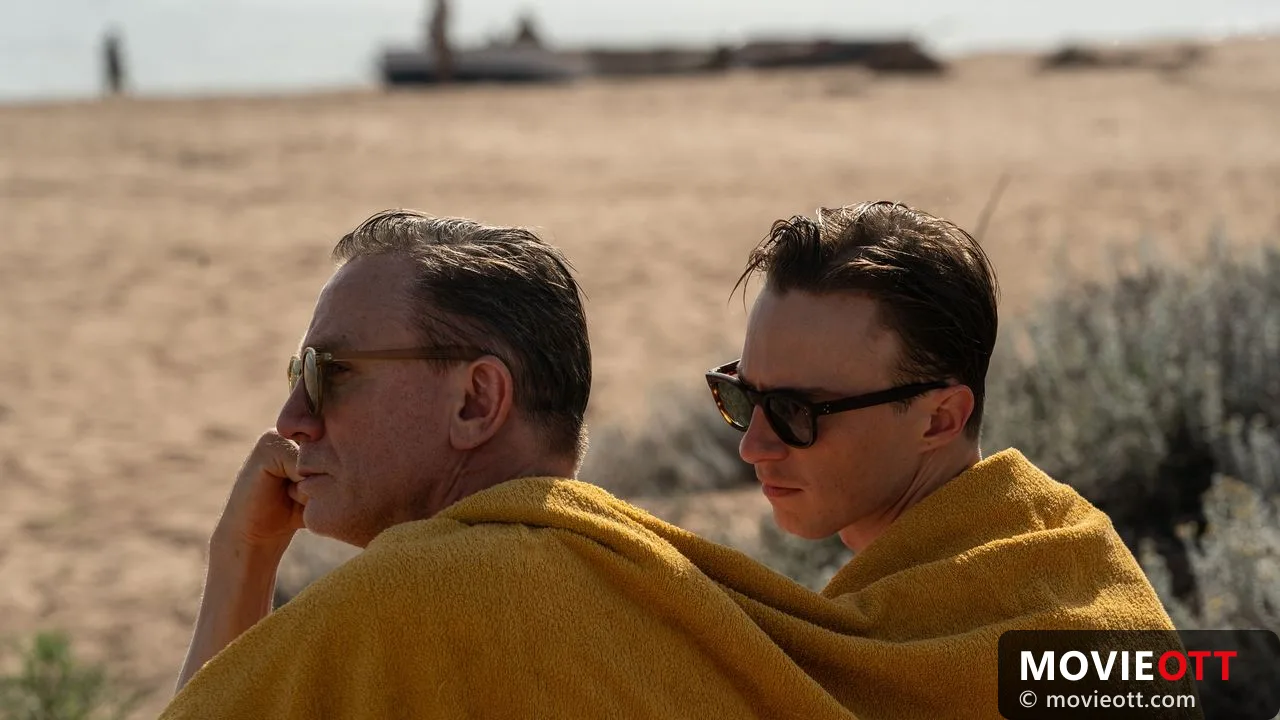
Rami Malek Almost Walked Away From The Man I Love. Here's Why He Changed His Mind.
TL;DR: Rami Malek stars in director Ira Sachs' new AIDS-era drama The Man I Love, which premiered at Cannes 2025 to an eight-minute standing ovation. Malek almost turned it down because of how recently he played Freddie Mercury. The film isn't confirmed for Indian streaming yet, but watch Movie OTT for availability updates.
Rami Malek spent years lobbying for a meeting with filmmaker Ira Sachs. Not through formal auditions. Through his representatives. Quietly. Persistently. The kind of actor who doesn't wait — he asks.
When the script for The Man I Love finally arrived, Malek's first instinct wasn't excitement. It was panic.
"When I read the script, I said, 'I can't do this. There's too many similarities. It could be problematic,'" Malek told reporters at Cannes on May 21, 2025, according to Variety. "There was a certain sense of fear. I had to address the fear."
The similarities were real. Both roles are queer men. Both involve performance. Both exist in an AIDS-defined historical moment. Both require singing. Malek had just won the Academy Award for Best Actor in 2019 for Bohemian Rhapsody — the role that reshaped how the industry sees him. Playing another artist who sings, in another period piece, felt like repeating himself. Or worse, getting trapped by one role.
But he went deeper into that fear instead of away from it.
What The Man I Love Actually Is (And Why It's Not Bohemian Rhapsody 2)
The film follows Jimmy, a theater performer in 1980s New York living with AIDS. That's the setup. Not the story.
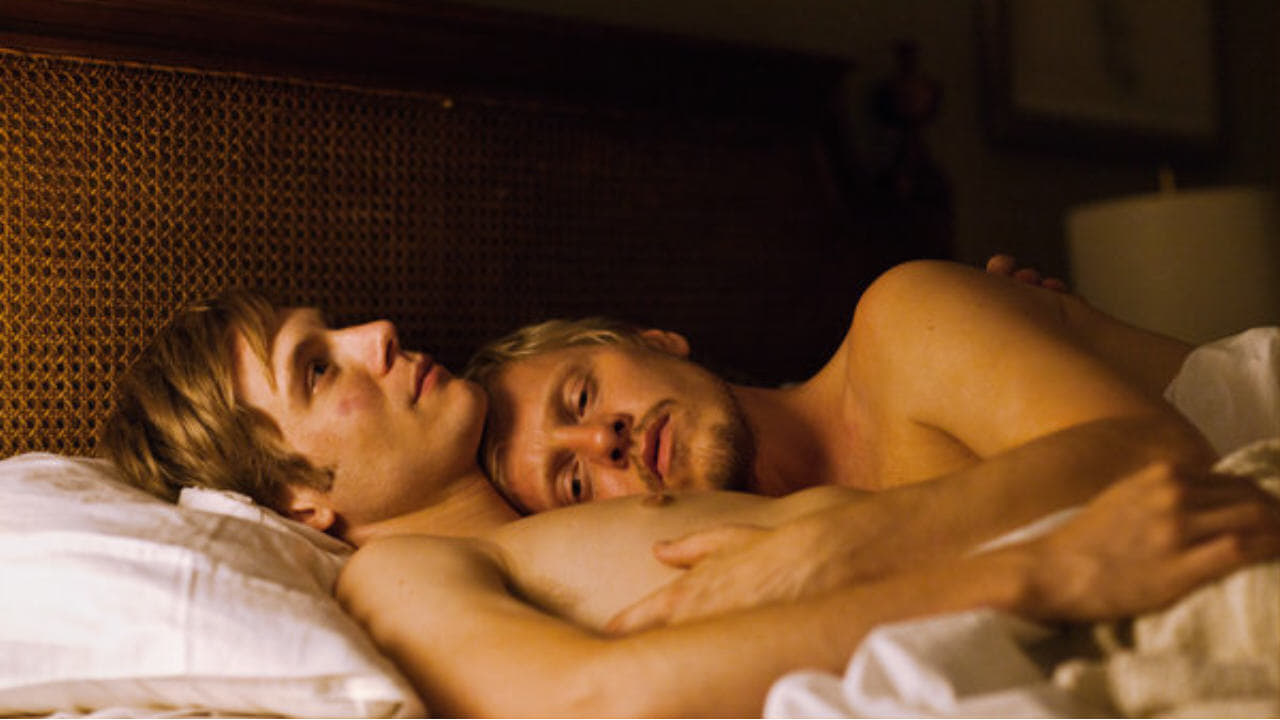
Director Ira Sachs and co-writer Mauricio Zacharias have called it a "musical fantasia of a city under duress," which immediately signals something different from the biopic machinery. Think Moonlight crossed with the intimate chamber energy of Sachs's own Keep the Lights On (2012). Picture downtown Manhattan theater in a time of crisis, scored with scrappy communal ambition and genuine intimacy. None of the stadium-filling mythology.
The Cannes premiere on May 21 drew that eight-minute standing ovation. Malek reportedly shed tears during it. That's either real emotion or the best acting anyone's seen all week (probably the first one).
Tom Sturridge and Luther Ford appear alongside Malek in what Sachs framed as an ensemble with a gravitational center. The film's in Cannes competition, which matters — that slot carries genuine prestige weight, not just festival attendance.
Streaming availability for India isn't locked yet. Movie OTT's tracker will have confirmation as soon as distribution deals are announced, likely within weeks of the festival closing.
The Distinction That Made the Role Possible
Here's what strikes me about the press conference: Malek and Sachs don't shy away from the overlap. They lean into it and then explain why it doesn't actually matter.
"We have a legend in Freddie, who really had a destination, whereas Jimmy is just searching for creativity and love and intimacy and joy," Malek said. Sachs tightened it further: "There was not this fantasy of globalization. It was a very local time."
The ambition runs in opposite directions. Freddie Mercury wanted to fill stadiums. Jimmy wants to impress the artist who lives next door. One reaches for the masses. The other reaches for connection, which is smaller and somehow more difficult to fake on screen.
Most of the press coverage frames The Man I Love as Malek's "brave return" to queer material, a redemption arc after the mixed critical reception Bohemian Rhapsody got for sanding down Mercury's sexuality. That framing misses the point. The braver choice here isn't the subject matter; it's the scale. Malek traded a $52 million Fox biopic engineered for global box office for a mid-budget Ira Sachs film that will never play 4,000 screens. That's not a comeback. That's a course correction, and it tells you more about where his career instincts actually sit than any press-conference quote can.
"There are a lot of artists in the world who don't get to that level, but still have an immense abundance of talent and skill, and a world to offer that just maybe is unseen by the masses," Malek said. That's not consolation. That's the film's thesis. And it's the thing that made the role feel genuinely different from Mercury once Malek sat with it.
Sachs on why he cast Malek: "You needed someone who had a certain kind of mystery, a certain kind of potential for the unexpected, but also truly a star quality. A star is someone who emits light and also asks to be seen." Light and visibility. That's the framework. It works for both Mercury and Jimmy, but how it works — the size of the room, the stakes of the moment — changes everything.
Who Ira Sachs Is (And Why His Films Matter)
You probably haven't heard of Ira Sachs unless you're deep in independent film. That's partly because he doesn't make movies designed for wide distribution. He makes films designed for being sat with, turned over, felt, remembered months later.
His filmography reads like a study in intimate scale:
- Keep the Lights On (2012) — semi-autobiographical gay relationship drama, raw and exposed
- Love Is Strange (2014) — John Lithgow and Alfred Molina as a married couple navigating displacement; criminally underseen
- Little Men (2016) — a friendship shadowed by economic pressure
- Frankie (2019) — Isabelle Huppert in a Portugal ensemble piece
- Passages (2023) — Franz Rogowski in a sexually charged love triangle that became one of the most talked-about films of the year
He's never received an Oscar nomination. The Man I Love could change that. Malek's Oscar history makes him a credible contender for a second nomination. And Sachs has the critical credibility — he just hasn't hit the Academy's specific wavelength. Yet.
When You'll Actually Be Able to Watch This
Nothing's confirmed for India streaming as of late May 2025.
Based on how comparable festival films move, here's what to expect:
- Netflix India — acquired several Cannes competition titles in recent cycles, particularly American independent drama
- MUBI India — strong track record with Sachs specifically (Passages distributed through MUBI in multiple markets)
- Amazon Prime Video India — less likely for this tone and subject matter, but possible
- Theatrical — limited release in Mumbai, Delhi, Bangalore likely, given festival pedigree
For the latest confirmed availability, Movie OTT aggregates streaming dates across Netflix, Prime Video, JioCinema, SonyLIV, Hotstar, and Zee5. Check there instead of refreshing five different apps.
Indian audiences have shown genuine appetite for AIDS-era drama, and the numbers back it up: Dallas Buyers Club trended in Netflix India's top 10 for three consecutive weeks after its 2020 platform addition, while Call Me By Your Name became MUBI India's most-watched title in its first month of availability there. The Normal Heart similarly found a durable second life on Hotstar. The Man I Love fits that lineage, and the singing element may drive additional interest, given how strongly musical narratives perform on Indian platforms.
English with English and Hindi subtitle options is most likely at launch. Regional language dubbing isn't typical for films of this type.
What Malek Said About Facing the Fear
The clearest moment from the press conference came when Malek simplified it: "If there's anything Freddie taught me, it was address the fear."
Not avoid it. Address it. Sit with it. Ask what it's actually protecting. Malek didn't sidestep the Mercury comparison — he walked straight through it. He asked himself: What am I afraid of? Is it the similarities? The singing? The historical moment? Then he picked the role anyway.
That kind of clarity, that willingness to name what scared him instead of pretending it didn't, usually shows on screen. It's the difference between an actor playing it safe and an actor actually committing.
The Awards Trajectory (And Why This Matters for Cannes Titles)
Cannes competition films that draw eight-minute standing ovations don't disappear. The Man I Love will almost certainly be positioned for awards consideration in fall 2025, with theatrical releases in the US and UK timed for late summer or autumn to qualify for the Oscars race.
Watch for:
- US distributor announcement within weeks of Cannes closing
- UK and international distribution deals to follow shortly after
- Trailer release tied to distribution announcement
- Possible Toronto or Venice platform screenings to build momentum into awards season
The film's Cannes premiere is basically the opening bell. Everything that follows — distribution, marketing, awards strategy — traces back to that eight-minute applause. It either becomes real momentum or it doesn't. But the festival already validated something. That matters.
Should You Actually Watch This?
Yes. Especially if Passages or Moonlight rewarded you, if you found something alive in their slowness, their refusal to rush emotional moments. The kind of slow-burn pacing that worked for Moonlight across its three chapters, where Barry Jenkins trusted silence to carry weight, seems to be what Sachs is after here with a different instrument.
Malek clearly committed to this role with clear eyes about the risk. When an actor does that, when they walk through the fear instead of around it, it usually translates. The standing ovation suggests it did.