Why Rami Malek Almost Walked Away From The Man I Love — and Why He Was Right to Change His Mind
TL;DR: Rami Malek nearly turned down Ira Sachs's new AIDS-era drama over fears it would look like a Bohemian Rhapsody retread. He didn't. The film got a 7-minute standing ovation at Cannes 2026 and is now in serious Palme d'Or contention. Whether it reaches streaming audiences in India — and which platform gets it — remains the bigger question.
Here's the instinct that almost killed this film: an actor who's won an Oscar for playing a real musician sees a script about a fictional musician facing his last performance, set during the AIDS crisis, and thinks: I've done this. Rami Malek had that thought. He said it out loud at Cannes on Thursday.
"At first when I read the script I said, 'No, I can't do this. There's too many similarities. It could be problematic,'" Malek told the press conference for The Man I Love, according to The Hollywood Reporter. The fear wasn't irrational. Bohemian Rhapsody made him famous and earned him $910 million at the global box office. Circling back to another musician-in-crisis story — especially one dealing with AIDS, grief, and mortality — looked like playing it safe, or worse, like repetition.
What's interesting isn't that he had the fear. It's that he worked through it. And what he found on the other side was actually a completely different kind of role.
What Malek Actually Figured Out at the Press Conference
The detail that lands hardest: Malek didn't frame this as artistic courage. He framed it as anxiety management.
"There's a certain sense of fear," he said at Cannes. "And I started to really think about what I was afraid of. Was it the similarities? Was it the singing? Was it obviously what was going on in the period?… And I knew I had to address the fear. If there's anything Freddie taught me, it was 'Address the fear.'"
That's either the most polished press-tour answer in recent festival memory, or it's a genuinely honest thing a person said out loud. Probably somewhere between the two — but the texture of it, the fact that he traced the logic instead of just swallowing the anxiety, reads as more human than the usual "I just connected with the character" boilerplate.
Director Ira Sachs backed him up directly: "With Rami, you never know if he's going to jump over the counter… There's a danger there." That kind of unpredictability is exactly what a film about an artist facing mortality needs.
Jimmy Isn't Freddie — and That's the Whole Point
Here's the distinction Malek made that matters: "Jimmy is just searching for creativity and love and intimacy and joy and pleasure in every moment, and he can sing. Does he sing as well as Freddie? No."
That's intentional. Jimmy isn't an icon. He's one of thousands of talented artists who died during the AIDS crisis before anyone outside their immediate community knew his name. The film is a portrait of the unknown artist, not the legend — and that's a harder, more interesting acting problem. It requires vulnerability instead of greatness.
Most coverage is treating this as a redemption arc for Malek after a string of forgettable blockbuster roles (No Time to Die, Amsterdam), but the more honest read is that it's a test of whether prestige AIDS dramas still have a theatrical audience at all, given that It's a Sin (2021) proved the story works better as long-form television and The Normal Heart only reached wide viewership because HBO put it on cable for free. By explicitly lowering Jimmy's talent relative to Freddie's, Malek gives himself room to play fear and uncertainty. If it works on screen the way it apparently worked at Cannes — a 7-minute standing ovation — the Freddie Mercury shadow dissolves entirely.
The Cast, Setting, and What We Know So Far
Director: Ira Sachs. Lead: Rami Malek. Co-star: Tom Sturridge. World premiere: Cannes Film Festival, May 2026.
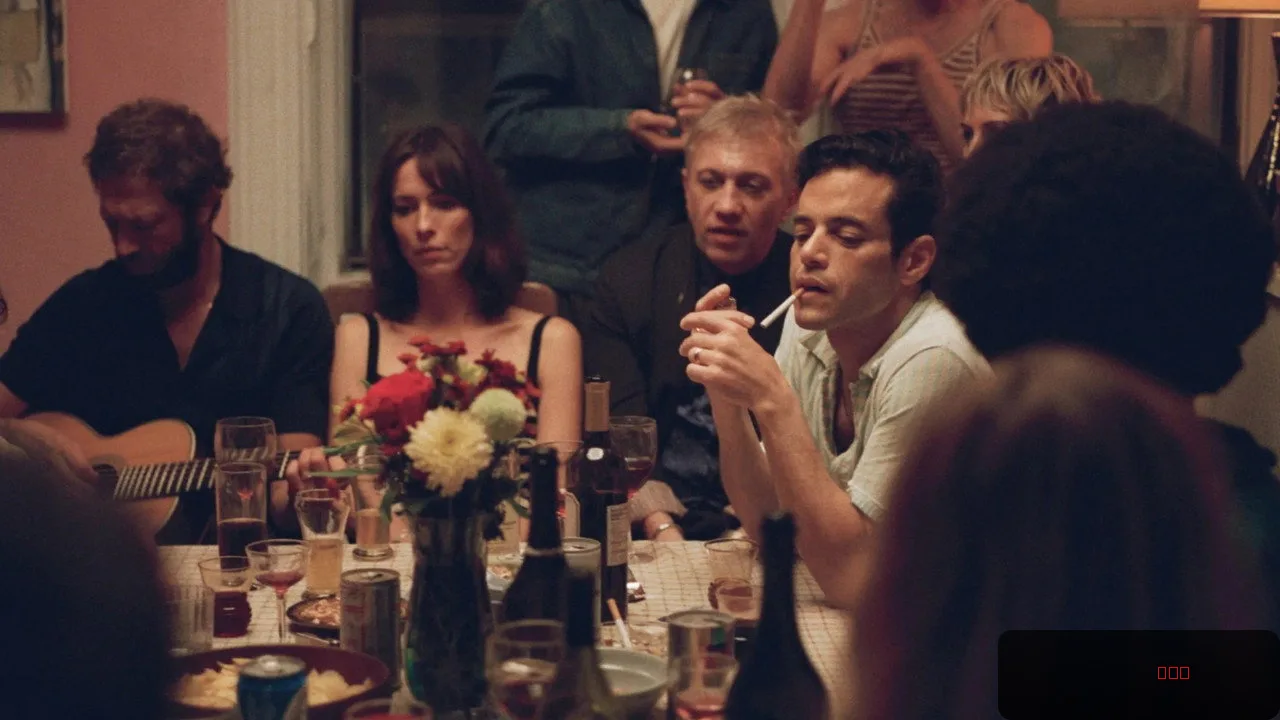
The film is set in late 1980s New York at the height of the AIDS crisis. Malek plays Jimmy, a gay performance artist preparing for what he understands may be his final stage show. It's a period piece about downtown queer art communities, mortality, and what it means to create when time is running out.
Key specs:
- Setting: Downtown New York, late 1980s
- Genre: Drama / Period piece
- Subject matter: AIDS crisis, performance art, mortality and creativity
- Festival status: Cannes 2026 Competition selection
- Awards buzz: Malek's performance is already in early Oscar conversation
- Where to watch: Not yet confirmed — distribution deals still being finalized
No runtime or streaming platform has been announced yet. Movie OTT is tracking confirmed deals across regions as they're announced, which is worth bookmarking if you want early notification of where this lands in India, the UK, the US, or elsewhere.
Ira Sachs: The Filmmaker Who Waited 15 Years to Tell This Story
Ira Sachs isn't a household name the way Baz Luhrmann is. He's a filmmaker's filmmaker — precise, emotionally intelligent, interested in desire and mortality in ways that don't condescend. His filmography includes Love Is Strange (2014) and Frankie (2019, with Isabelle Huppert), both quiet films that earned significant critical respect without breaking into mainstream awareness.
The Man I Love is his most personal project yet. He co-wrote it with his longtime partner Mauricio Zacharias, and both men lived through the AIDS crisis firsthand. Sachs was a member of ACT UP — the AIDS Coalition to Unleash Power — the group that chained themselves to the New York Stock Exchange in 1989 to protest AZT pricing. "The motto of ACT UP is 'Silence Equals Death,'" he said at the press conference.
He and Zacharias waited 15 years and made six other films before they felt ready to tell this one. That kind of deliberate patience is either admirable discipline or the sort of thing that only makes sense in retrospect, after you know the film turned out to be good. But the track record suggests it wasn't caution — it was precision. Sachs knows how to build intimacy on screen.
The Standing Ovation: What It Actually Tells Us (and Doesn't)
Seven minutes of applause at the Palais. That's real. That happened.
Here's what it doesn't guarantee: that audiences beyond the festival circuit will care. Cannes crowds have given standing ovations to films that struggled to find distributors, and to films that absolutely deserved to win. Remember Club Zero getting booed and cheered in equal measure at Cannes 2023, then vanishing from the conversation within weeks? A 7-minute ovation is a data point, not a verdict. It tells you the premiere crowd connected with something. It doesn't tell you if that something translates to a Netflix algorithm recommendation in Mumbai or Manchester.
What it does do is change the distribution calculus. A Palme d'Or win — or even a strong placement — essentially guarantees theatrical release in France, the UK, and the US, with streaming deals following within the standard window (usually 45 days for theatrical, then OTT). That's when we'll know where Indian audiences can watch it.
For now: the film's in serious contention. The jury will announce the winner before Cannes closes. Watch for a distributor announcement in the weeks after the festival, then a trailer, then an awards-season theatrical run likely starting in autumn 2026.
Where This Lands for Indian Audiences: The Honest Answer
No India theatrical release has been confirmed. No streaming platform deal has been announced.
That said, the pattern for Cannes Competition films with major star power — and Rami Malek is, post-Bohemian Rhapsody, genuinely famous in India — typically involves one of the major streamers picking up rights within weeks of the premiere. Netflix has historically been aggressive about Cannes acquisitions (they paid a reported $15 million for Emilia Pérez rights in 2024 before it had even screened for press). Amazon Prime Video and MUBI are realistic contenders for a film of this type.
What to expect:
- Most likely: Netflix India or MUBI (which has a strong art-house catalogue and active Indian subscribers)
- Possible: Amazon Prime Video India, which has acquired festival films before
- Unlikely: Hotstar/Disney+, JioCinema, SonyLIV, Zee5 — this isn't their content profile
- Format: English-language OTT release with subtitles, probably no Hindi/Tamil/Telugu dub
Indian audiences who followed Malek through Mr. Robot (four seasons of Elliot Alderson) or Bohemian Rhapsody will find this a significant tonal shift. The AIDS crisis hasn't been widely covered in Indian mainstream cinema, so context may need some orienting. But the emotional core — an artist facing his last performance — is portable enough. Check Movie OTT for the latest streaming availability across India as deals get finalized.
If You Liked Philadelphia or The Normal Heart, This One's For You
Those are the actual reference points here, not Bohemian Rhapsody. Philadelphia (1993) and The Normal Heart (2014) both occupy similar emotional territory: grief, rage, art as survival, the specific texture of loss during the AIDS crisis. The Man I Love is coming from the same place — a story about what happens when your community is dying and you keep making art anyway.
The difference: The Man I Love is fictional. Jimmy isn't Tom Hanks's character or Mark Ruffalo's. He's a nobody. An artist nobody's ever heard of. And that, I think, is what Sachs and Zacharias understood after 15 years of thinking about it: the story that matters isn't about the famous person. It's about the thousands of talented people who died before they got famous.
What Comes Next: Awards Season, Distribution, and the Real Test
The Palme d'Or voting happens before Cannes closes. If The Man I Love wins or places, the distribution picture changes immediately. If it doesn't — well, it can still find a distributor, but the timeline becomes less certain.
Here's what to watch for:
- Cannes jury announcement (before the festival ends)
- Distributor deal (usually announced within 1–2 weeks of the premiere)
- Trailer release (timed to the distributor announcement)
- Awards-season run (theatrical release likely in autumn 2026)
- Streaming window (typically 45 days of theatrical exclusivity, then OTT)
Malek's performance is already being discussed in Oscar terms. Sachs has never been closer to mainstream awards attention. This is the film that changes both their trajectories — if it reaches people.
And that last part is the one nobody controls. A 7-minute ovation in Cannes doesn't guarantee the Netflix homepage in India. Distribution, marketing, platform algorithms — those are the variables that decide whether a film stays a festival story or becomes something wider. We shall see.
The Verdict: It Looks Like a Serious Film About Something That Matters
The Man I Love appears to be exactly what Sachs and Zacharias spent 15 years planning to make: a film about grief and creativity and mortality, made by people who lived through the period, starring an actor brave enough to distinguish his character from the icon he played before.
The standing ovation happened. The jury will vote. A distributor will eventually pick it up. And somewhere in the next 12 months, if you're checking Movie OTT for release updates, you'll find out where to watch it.
Worth your time. Worth the wait. Just might take a bit longer to reach you than it did to reach Cannes.