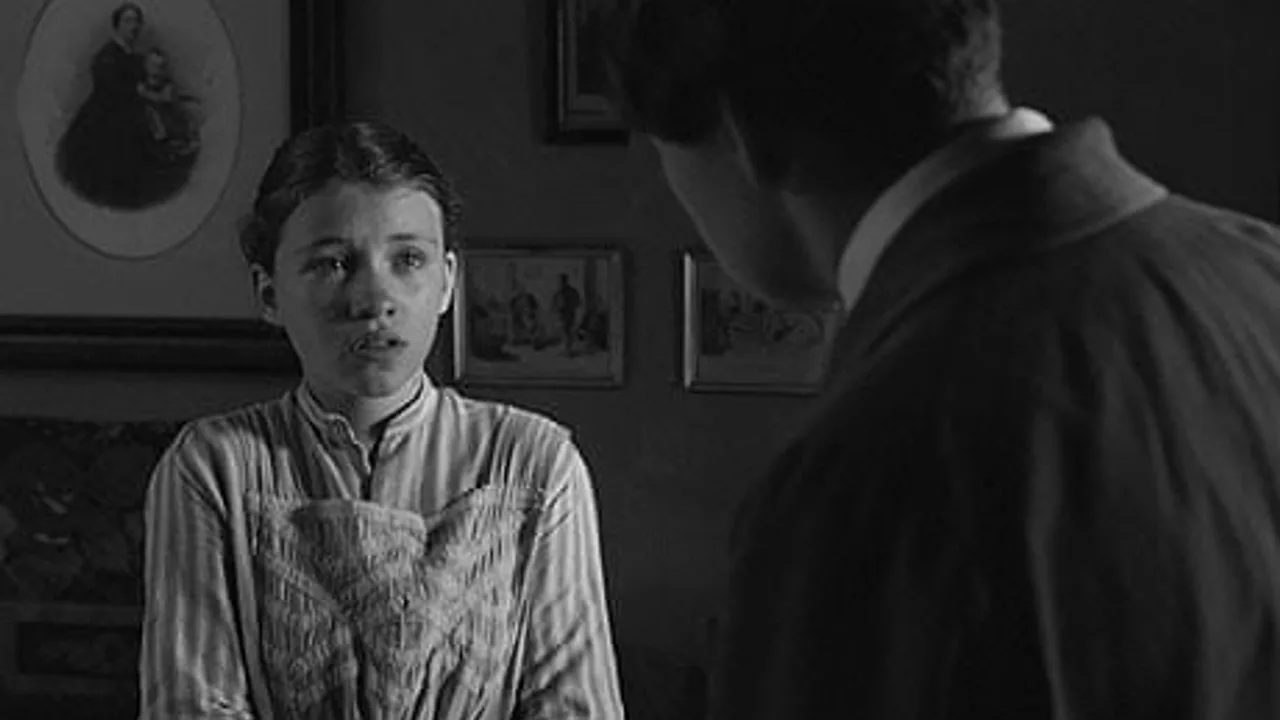
Iron Ribbon: The 1920s Paris Trial That Could Define the Next Prestige Crime Drama Wave
A UK independent feature about a real Polish actress's murder trial in Jazz Age Paris is heading into production this fall, led by Sarah Gadon and Tom Hughes. The project, announced at Cannes in May 2026, centers on one of the strangest, most overlooked legal spectacles of the 1920s: the acquittal of Stanisława "Stasia" Umińska on a mercy killing charge. No streaming deal is locked yet. No release date exists. But the crew assembled here is serious enough that this film will matter when it arrives.
TL;DR: Iron Ribbon is a prestige British indie heading to cameras in late 2026, led by Sarah Gadon (Stasia Umińska) and Tom Hughes (artist Jan Zyznowski). Director Jarek Marszewski, cinematographer Michał Sobociński, and BAFTA-winning editor John Wilson suggest a film aiming for the festival circuit and awards consideration. Distribution is TBD, but the thematic resemblance to Alias Grace and I, Tonya—plus the international cast and period scope—makes this exactly the kind of project Netflix and A24 hunt for at Cannes. Check Movie OTT for streaming availability once deals confirm.
What We Know About the Cast and Crew
Here's the lineup, per Deadline's May 8, 2026 reporting:
- Sarah Gadon as Stasia Umińska (the accused actress)
- Tom Hughes as Jan Zyznowski (her lover, an artist)
- Robert Kazinsky as prosecutor Donat Guigne
- Tamer Hassan as Arnold Szyfman
- Lee Knight as Tuwim
Behind the camera: director Jarek Marszewski (Bikini Blue), screenwriter Adam Howes (Foxhole), cinematographer Michał Sobociński (Chopin! Chopin!), composer Edmund Butt (Yellowstone). Sound design by Oscar-winning Glenn Freemantle (Gravity). Editing by BAFTA-nominated John Wilson (Billy Elliot). Location management by Elliott Meddings, who worked on Skyfall.
This isn't a vanity project assembled around a catchy premise. This is a crew that has won serious awards and worked on serious films.
Sarah Gadon Is the Right Actress for a Role This Demanding
Gadon's performance in Alias Grace (2017, Netflix/CBC) demonstrated something crucial: the ability to sustain psychological complexity across a long narrative arc without ever resolving whether her character is victim, perpetrator, or something in between. She played Grace Marks, a woman accused of murder decades earlier, reconstructing her past under interrogation. There's a moment in episode three where Gadon shifts from docile compliance to something colder mid-sentence, and you can't tell if it's calculation or trauma surfacing. The miniseries won a Canadian Screen Award and reached millions internationally through Netflix distribution. She's worked repeatedly with directors like David Cronenberg and Atom Egoyan — filmmakers who don't cast casually.
What's striking is that Gadon doesn't default to likability. She lets her characters sit in moral ambiguity. That's precisely what Stasia Umińska's story demands. A woman from outside the dominant cultural establishment, caught inside a legal system built to condemn her — and somehow walking free anyway. Gadon's already proven she can inhabit that space.
Tom Hughes, for his part, brought genuine depth to Prince Albert in Victoria (ITV, 2016–2019), playing a man whose interior life was often larger than what the script allowed him to show. He's good at characters whose absence shapes the story more than their presence. Jan Zyznowski — the man Stasia allegedly killed out of mercy or love or cruelty, depending on who's testifying — needs an actor like Hughes. Someone who can be dead and still matter.
The 1920s Paris Trial That Nobody Talks About
Stasia Umińska was a Polish actress living in Paris when her lover, the artist Jan Zyznowski, became terminally ill. She was accused of killing him. The trial that followed became one of the earliest high-profile "mercy killing" cases in European legal history. She was acquitted.
That sentence doesn't capture it. The case gripped Paris. The newspapers couldn't get enough of it. A foreign woman, an actress (meaning already suspect in 1920s bourgeois eyes), defending herself against a charge that could have destroyed her — and winning. Producer Daniella Gonella described Umińska as "an ambitious actress at the center of a sensational case," a woman whose acquittal left her legacy suspended between victim and icon.
Here's the thing nobody mentions in the initial coverage: it's rare for a British independent production to center an entire film on a Polish woman's experience in interwar France. Most coverage has framed this as a period crime drama, full stop. The more interesting question is whether a film built around a Polish protagonist, set in France, financed from Britain, and directed by a filmmaker of Polish descent can find commercial footing without a nationality to anchor its marketing around. That specificity is either the project's greatest commercial risk or its most distinctive asset. Hard to say which until you see what Marszewski does with it.
Why This Story Works Now (And Why Prestige True-Crime Keeps Winning)
The prestige true-crime drama has deep roots — Reversal of Fortune, Monster, I, Tonya. But streaming changed everything. Long-form television proved that audiences will follow European institutional drama at scale (The Crown), and that a morally unresolved portrait of a woman accused of violence can sustain mass viewership (Alias Grace).
Iron Ribbon sits at that exact intersection. The 1920s Paris setting gives it visual scope. Michał Sobociński's cinematography work on Chopin! Chopin! showed he could render historical texture without flattening it into costume drama. Edmund Butt's score work suggests atmosphere, not bombast.
But the real hook is the mercy killing angle. Legal and ethical debates around euthanasia and consent have returned to public discourse across Europe and North America. A 1920s case that turned on similar questions — was it love, was it cruelty, was it mercy, was it murder? — carries contemporary weight. This is the kind of project that arrives at TIFF or Sundance and exits with a multi-territory streaming deal.
What Sarah Gadon's Career Tells Us About Where Iron Ribbon Is Headed
Alias Grace was available on Netflix India and built a dedicated audience there. That matters. Indian streaming audiences have shown consistent appetite for European prestige drama, particularly when it's subtitled. Sarah Gadon's prior work — Enemy, available on various platforms depending on region — suggests the kind of actress who travels well across territories and language tracks.
The honest answer for now: Iron Ribbon has no confirmed Indian release window, no confirmed platform, and no confirmed language tracks beyond English. Principal photography hasn't started. What you can do today:
- Watch Sarah Gadon's prior work: Alias Grace (check Movie OTT for current streaming availability in your region)
- Watch Tom Hughes in Victoria: Available across multiple platforms; regional availability varies
- Follow Cannes market developments: Distribution announcements from May–June 2026 will determine which platform acquires Indian rights
The case itself — a woman from outside the establishment caught inside a legal system stacked against her — has thematic resonance that travels. For Indian audiences, the more relevant comp isn't Alias Grace but Talvar (2015), which grossed ₹30.28 crore domestically and proved that a procedural built on genuine moral uncertainty, where the audience never fully knows who to believe, can find a substantial theatrical and streaming audience in India without star power carrying the load. The Verdict — State vs Nanavati works as a reference point too, though its tone runs broader.
The Production Timeline and What Comes Next
Late 2026 is the target production start. That means a festival run is realistically targeting late 2027 or early 2028 — TIFF, Venice, or Sundance. A theatrical release in major markets would likely precede any streaming window by 60 to 90 days, per current industry norms. Trailer drops typically follow a confirmed distribution deal by several months.
The next concrete milestone is whether Iron Ribbon exits the Cannes market with a distribution partner attached. A deal with Netflix, A24, or a major UK broadcaster like the BBC or Channel 4 would dramatically change the project's trajectory and visibility. That announcement would signal platform investment and international ambition.
After that — watch for awards-circuit positioning. The crew assembled here (Freemantle, Wilson, Butt, Sobociński) suggests a film that will compete seriously in craft categories. Sound mixing, cinematography, editing, original score. These are the Oscar races that reward meticulous period work.
The Verdict Before It's Even Shot
Iron Ribbon doesn't exist yet in any form audiences can access. That's the honest starting point. But the architecture around it — the cast, the crew, the source material, the timing — is stronger than most films that do exist.
Gadon in particular is the right actress for a role this psychologically demanding. And Marszewski's background suggests he won't flatten Umińska's story into a simple redemption narrative. The screenplay by Adam Howes speaks to characters caught between institutional power and personal desperation. That framing maps neatly onto Umińska's situation.
Should you watch it? Yes, when it arrives. Put it on your watchlist now. The comparable viewing experience — that slow-burn, morally unresolved quality that made Alias Grace so compelling — is exactly what this project is aiming for. Whether it achieves it depends on what happens between now and late 2026.
For streaming availability updates across all regions as the distribution picture develops, Movie OTT will have the current information. Check back when Cannes announcements drop.