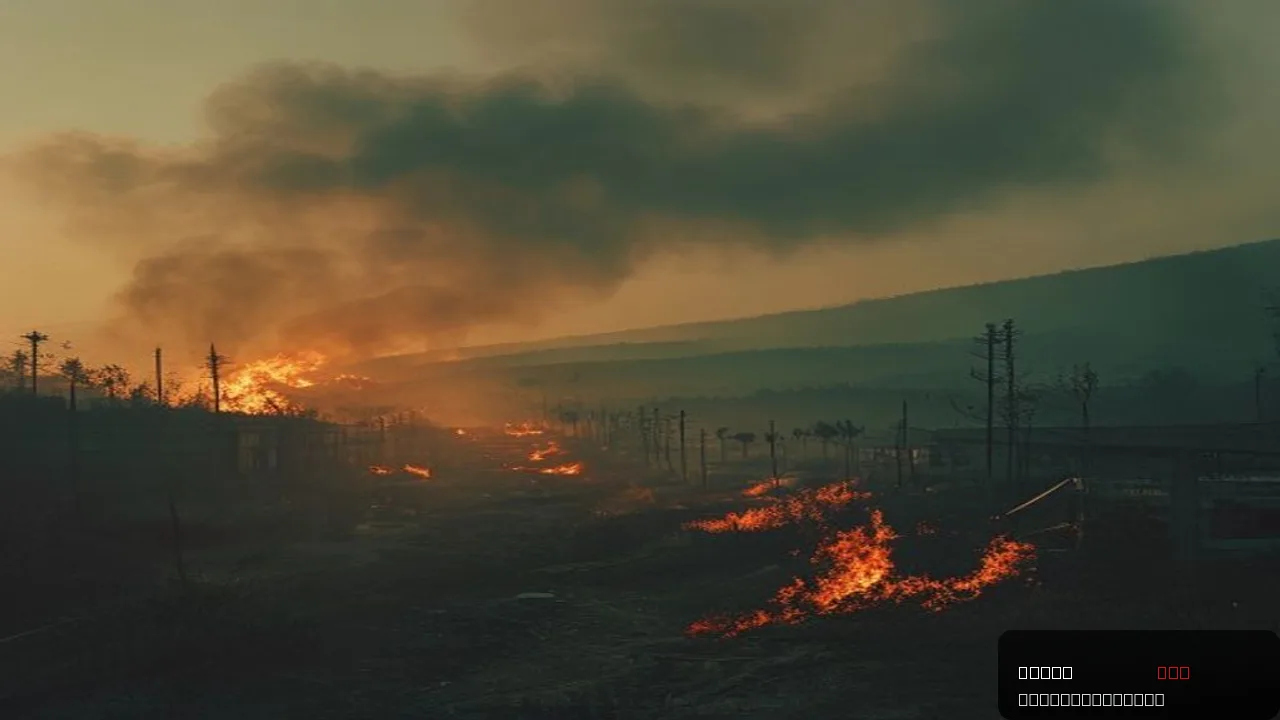
Sandy Fire in Simi Valley: 184 Acres Burning, Zero Containment, and What's at Stake
The Sandy Fire broke out in Simi Valley, California at 10:50 a.m. on May 18, 2026, and by midday it had torched over 184 acres with zero containment. Evacuation orders are active. Over 200 firefighters are on scene. Three air tankers and six helicopters are running aerial suppression operations. This isn't a slow burn — this is the kind of fire where every hour matters.
What makes this particular fire worth watching beyond the immediate danger to residents is where it's burning. Simi Valley sits squarely in Hollywood's 30-Mile Studio Zone, the geographic boundary that defines production feasibility for film and television shoots across Southern California. That detail matters less than human safety right now, but it matters.
The Fire on the Ground: What's Happening and Where
The blaze ignited south of Simi Valley, a city of roughly 126,000 residents in Ventura County, about 40 miles northwest of downtown Los Angeles. By late morning, the Ventura County Fire Department confirmed the fire had consumed more than 184 acres with no containment progress.
Evacuation orders are in place for parts of Simi Valley itself. Evacuation warnings (a step below mandatory orders, but don't let the softer language fool you) extend into parts of Thousand Oaks. If you're in the affected area, here's where to go:
- Temporary evacuation point: Rancho Santa Susana Community Park, 5005 Los Angeles Avenue
- Small animal shelter: Simi Valley Animal Shelter, 670 W Los Angeles Avenue
- Large animal shelter: Ventura County Fairgrounds, 10 E Harbor Blvd
Simi Valley Unified School District kept students indoors due to hazardous air quality. No student injuries reported, which is one of the few unambiguous pieces of good news in an otherwise bleak update.
The accelerant is Santa Ana winds gusting from the east at up to 25 mph. That's not unusual for May in Southern California, but it doesn't slow the fire down. It does the opposite.
Why Firefighters Are Calling This "Aggressive Aerial Suppression"
The Ventura County Fire Department's language matters here. They said firefighters are "being supported by three air tankers and six helicopters conducting aggressive aerial suppression operations in coordination with ground crews." That's not standard deployment language. That's what incident commanders say when ground crews alone can't contain the spread.
Air tankers cost thousands per hour to operate. You don't call three of them simultaneously unless things are moving fast. The 0% containment figure, paired with the wind conditions and the acres already burned, tells you the fire department is treating this as a serious threat to life and property. They're right to.
The next 12 to 24 hours are critical. Everything depends on whether those Santa Ana gusts shift direction or intensity.
A Filming Location Under Threat
Here's what the straight news coverage tends to skip: Simi Valley has been one of the most economically reliable filming locations in greater Los Angeles for decades. Not the most famous, but deeply embedded in the production infrastructure.
The list of movies and TV shows that have used Simi Valley as a shooting location is longer than most people realize:
- Films: Poltergeist (1982), Captain America: The First Avenger (2011), Once Upon a Time in Hollywood (2019), Everything Everywhere All at Once (2022)
- Television: Little House on the Prairie, Veep, The Rookie, 9-1-1: Lone Star, The Last Thing He Told Me
I keep coming back to the fact that so many of those titles are still actively streaming right now. Audiences in Mumbai watching The Rookie on Netflix India or in London catching Everything Everywhere All at Once on a streaming service are watching streets that may be under evacuation orders at this exact moment. That's not a metaphor. Just the way media works.
Movie OTT tracks where these films and shows are currently available across global streaming platforms, and you'll find several Simi Valley-shot productions in active streaming windows across Netflix, Disney+, Prime Video, and Apple TV+ in multiple regions right now. The fire doesn't affect what's already been filmed and released, but it does raise a quiet question: What's at stake if those familiar locations don't survive the next 48 hours?
The 30-Mile Zone and Why It Matters to Production Economics
The 30-Mile Studio Zone isn't just bureaucratic designation. It's the economic spine of Southern California film production. It's the reason studios can shoot a movie in the same geographic area as their offices without triggering additional union travel allowances and per-diem costs that eat into budgets.
Simi Valley offered something the expensive, congested centers like Burbank and Culver City couldn't: open terrain, suburban streets, and visual flexibility. Think about that sequence in Once Upon a Time in Hollywood where Brad Pitt's stunt double drives out past the Spahn Ranch set — Tarantino picked those roads because they looked like 1969 without a single digital fix. A production could shoot a period Western in the morning and a contemporary crime drama in the afternoon. Different visual identity, same location, same day. That kind of practical efficiency made Simi Valley quietly indispensable.
The concern right now isn't whether future productions can rebook Simi Valley (they can). The concern is whether structures — homes, businesses, possibly some of those familiar filming locations — survive the next couple of days intact.
What Happens When a Major Filming Location Burns
Most coverage frames fires like these as isolated local emergencies; the more uncomfortable question is whether Southern California's production geography is entering a permanent state of attrition that no amount of tax incentives can offset. Each fire season, another piece of the 30-Mile Zone burns or gets threatened. Productions relocate to Atlanta, Vancouver, or Albuquerque. Studios cite cost savings, but the fire risk calculus is quietly part of that math too.
Simi Valley isn't new to major wildfires. The 2003 Simi Fire alone scorched over 108,000 acres across Ventura and Los Angeles counties, destroyed 38 homes, and forced the evacuation of thousands — and that was before the region's population density had climbed to current levels. What's changed is the frequency. A 184-acre fire with 0% containment and 25 mph wind gusts in mid-May used to be unusual. It's starting to feel like the template now. Deadline reported that the Sandy Fire had already burned structures by midday, though specific counts weren't confirmed.
Once containment is achieved and the damage assessment phase begins, we'll know which filming locations survived. Productions with Simi Valley locations already penciled into pre-production schedules will be watching the damage reports closely. Insurance adjusters won't be far behind. That's when the industry impact becomes concrete.
For now? Watching and waiting.
For Viewers Globally: Why This Fire Matters to Your Streaming Queue
If you're in India, the UK, or Spain and wondering why a California wildfire is showing up in entertainment coverage, the connection is direct. Several titles that filmed in Simi Valley are currently streaming across major platforms in your region:
- Netflix India / Netflix Global: Everything Everywhere All at Once has streaming availability in multiple regions
- Disney+ Hotstar (India): Marvel back-catalogue including Captain America: The First Avenger
- Amazon Prime Video: The Rookie has had Prime availability across the UK and India
- Apple TV+ / Peacock / Hulu (US): The Last Thing He Told Me is in active streaming windows
The fire doesn't affect what's already in the can. Those titles are locked down — you can still watch them. But if you're mid-binge on a show using Simi Valley's streets as visual backdrop, there's something quietly unsettling about knowing those same streets are currently under evacuation orders.
For audiences in India specifically, understand that Hollywood's location infrastructure directly affects international productions streaming on Hotstar, JioCinema, and SonyLIV. Production delays caused by fire-related location damage can push release windows back by months. That cascades across global licensing agreements and streaming schedules.
The Timeline: What Comes Next
As of May 18, 2026, the Sandy Fire remains at 0% containment with over 184 acres burned. Evacuation orders stay active. The Ventura County Fire Department's aerial suppression operation is ongoing. No timeline for containment has been publicly announced.
Watch for two things in the coming days:
- Containment updates. Once the fire is 25% contained, momentum typically shifts. Until then, things can escalate quickly.
- Production schedule impacts. Any studio with active Simi Valley location permits will likely issue schedule updates within 48 hours if the fire threatens their shooting timeline.
For real-time evacuation updates and containment figures, Ventura County's official emergency management resources remain the authoritative source. Movie OTT's entertainment tracker will flag any streaming or release-window impacts tied to production delays connected to the Sandy Fire and Southern California's broader fire season.
We'll know more soon. We'll know exactly what was lost once the assessment begins. Until then, the fire's still burning, containment's still zero, and the only thing anyone can control is who gets to safety and when. We shall see what's left.