South Park's Trump Mockery Is Bolder Than Ever — But Can It Last?
TL;DR: Trey Parker and Matt Stone brought their AI deepfake rig to Jimmy Kimmel Live on May 18, 2026, to demonstrate exactly how they've been animating Trump's micropenis gags all season. The segment went viral. The question isn't whether South Park is funny — it's whether the show's political immunity is as solid as Parker and Stone seem to think.
Twenty-six. That's roughly how many seasons South Park has aired since Comedy Central first broadcast those four foul-mouthed Colorado third-graders in August 1997. Twenty-six seasons of getting away with things that would end most careers in television. And yet here were Trey Parker and Matt Stone on Tuesday night, sitting across from Jimmy Kimmel — a host who has personally experienced the weight of White House pressure — looking completely, infuriatingly relaxed. No gulags. No shackles. Not even a decent legal threat to report.
The segment is either proof that animation remains the last true free-speech zone on American television, or it's a warning sign that the creative team has grown so comfortable with provocation that they've stopped asking whether the provocation is actually saying anything worth hearing.
What Parker and Stone Actually Brought to the Kimmel Set
The appearance on Jimmy Kimmel Live! aired Tuesday, May 18, 2026, and ran as the main interview segment of the evening. Parker and Stone, the co-creators of South Park who have shepherded the franchise since its 1997 premiere on Comedy Central (now operating under a landmark deal with Paramount+), arrived with what Parker described as their "deepfake AI rig." The specific purpose: demonstrating how the show's animators constructed the recurring depiction of Donald Trump in the nude, including the micropenis detail that has become one of the season's most talked-about visual gags.
Parker physically produced a small prop — a piece of fake foreskin with tiny eyes drawn on it — and wiggled it for the camera. Kimmel later slipped it onto his pinky finger. The moment was, depending on your tolerance for this kind of thing, either gleefully juvenile or a precise piece of political theater. Probably both.
The show airs new episodes on Comedy Central with same-day streaming on Paramount+. South Park's current deal with Paramount, reportedly worth $900 million (per Deadline's 2021 reporting on the extension), covers 14 movies and continued series production through at least 2027.
The Numbers Behind 25 Years of Getting Away With It
South Park's commercial durability is genuinely staggering, even if the show's cultural footprint has shifted over the decades. The $900 million Paramount deal, confirmed by Deadline in 2021, remains one of the largest animation contracts in cable television history. The franchise's 1999 theatrical film, South Park: Bigger, Longer & Uncut, grossed $83 million worldwide against a reported production budget of approximately $21 million, according to Box Office Mojo, making it one of the most profitable R-rated animated films of its era.
Current streaming performance metrics for Paramount+ are not publicly broken out by title, but South Park's catalog consistently ranks among the platform's top-performing libraries in the US market. The show has won five Emmy Awards, including Outstanding Animated Program, and holds an 8.7 out of 10 on IMDb based on over 400,000 user ratings. Those numbers matter because they represent staying power — not just a nostalgia bump, not just controversy tourism. Twenty-six seasons of an audience actually showing up.
Whether that audience is showing up for the same reasons it did in 2003 is a different question entirely.
How This Season's Political Satire Compares to Past Swings
South Park is not the only animated series to lean hard into political satire, and comparing its track record to peers gives useful context:
| Title | Year | Political Approach | Outcome | |---|---|---|---| | South Park: Bigger, Longer & Uncut | 1999 | Censorship satire, US-Canada war parody | $83M worldwide, cult classic | | Family Guy — Seasons 4–6 | 2005–2008 | Bush-era political jokes, revived after cancellation | Ratings recovery, long-running franchise | | American Dad — Trump years | 2017–2020 | Consistent GOP/admin satire, lighter touch | Steady TBS ratings, no major controversy spike | | South Park — "PC Principal" arc | 2015–2016 | Direct Trump campaign mockery | Highest-rated season in years, then creative reset |
The through-line is that animated satire tends to survive political transitions better than live-action late-night because the medium creates plausible deniability. Parker said it himself on Kimmel's show: "We hide behind cartoons." Honest, if a little too self-satisfied. Most coverage frames the Kimmel segment as Parker and Stone being fearless truth-tellers; the more honest read is that they're reprising the exact playbook from the "PC Principal" seasons of 2015–2016, which spiked ratings before the show hit a creative wall so severe that Season 21 had to quietly abandon serialized storytelling and reset to standalone episodes. Boldness that recycles its own formula isn't boldness. It's brand management.
What Trey Parker Said — and What He Didn't
Variety reported that when Kimmel asked why the duo weren't "in a gulag somewhere, shackled down in a basement," Parker's response was both a punchline and a genuine answer: "We hide behind cartoons."
That quote is doing a lot of work. It's funny. It's also an admission that the animated format functions as a legal and cultural buffer that live-action performers don't have. Kimmel — who has faced direct public calls for his firing from both Donald Trump and Melania Trump after jokes were deliberately reinterpreted by the administration — clearly felt the asymmetry. He's playing the same satirical game without the cartoon shield.
Parker also explained the show's decision to depict JD Vance as a bewildered version of Tattoo from Fantasy Island, played by the late Hervé Villechaize. "It was just gonna be a one-off joke," Parker told Kimmel. "This joke about Mar-a-Lago being kind of like 'Fantasy Island' — and we were like, 'Oh, we're just gonna have him be Tattoo, and it's gonna be one shot.' And we all just loved it so much." The bit stuck. It's now a recurring character in the current season, which tells you something about how the writers' room is operating: instinctively, improvisationally, and apparently without much anxiety about consequences.
(Disclosure: Movie OTT reached out to Paramount+ for comment on South Park's current streaming performance; no response was received at time of publication.)
The Franchise That Refused to Grow Up Gracefully
South Park debuted on August 13, 1997, created by Trey Parker and Matt Stone, who were both in their mid-twenties at the time. Parker voices Cartman, Stan, Randy Marsh, and several others; Stone voices Kyle, Kenny, and various supporting characters. The show is produced by Parker and Stone's own studio, South Park Studios, in partnership with Comedy Central and now Paramount+.
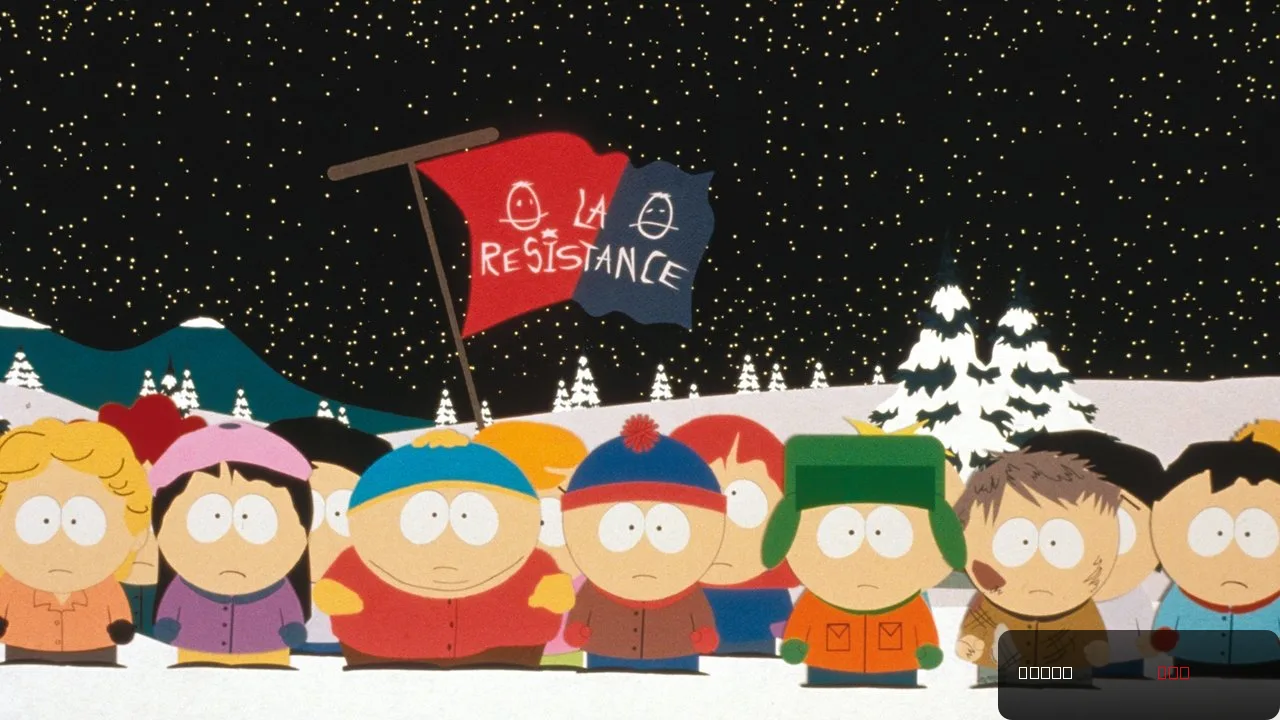
The 1999 film, South Park: Bigger, Longer & Uncut, directed by Trey Parker, remains the franchise's theatrical high-water mark. Its plot — third-graders sneak into an R-rated Canadian comedy film, parents declare war on Canada, Terrance and Phillip end up on death row — is a direct satire of American censorship culture, the MPAA ratings system, and the tendency of moral panics to escalate beyond their original targets. It's sharper than most people remember. The film's Broadway-style musical numbers, including "Blame Canada" (which received an actual Academy Award nomination for Best Original Song), gave the whole project a formal ambition that the television series rarely attempts.
What's striking is how directly the film's themes map onto the current season's content. Censorship anxiety, political scapegoating, the gap between what officials say and what they mean. Twenty-six years and the targets have barely changed.
You can track the full South Park release history, including streaming availability by region, at Movie OTT's where-to-watch tracker.
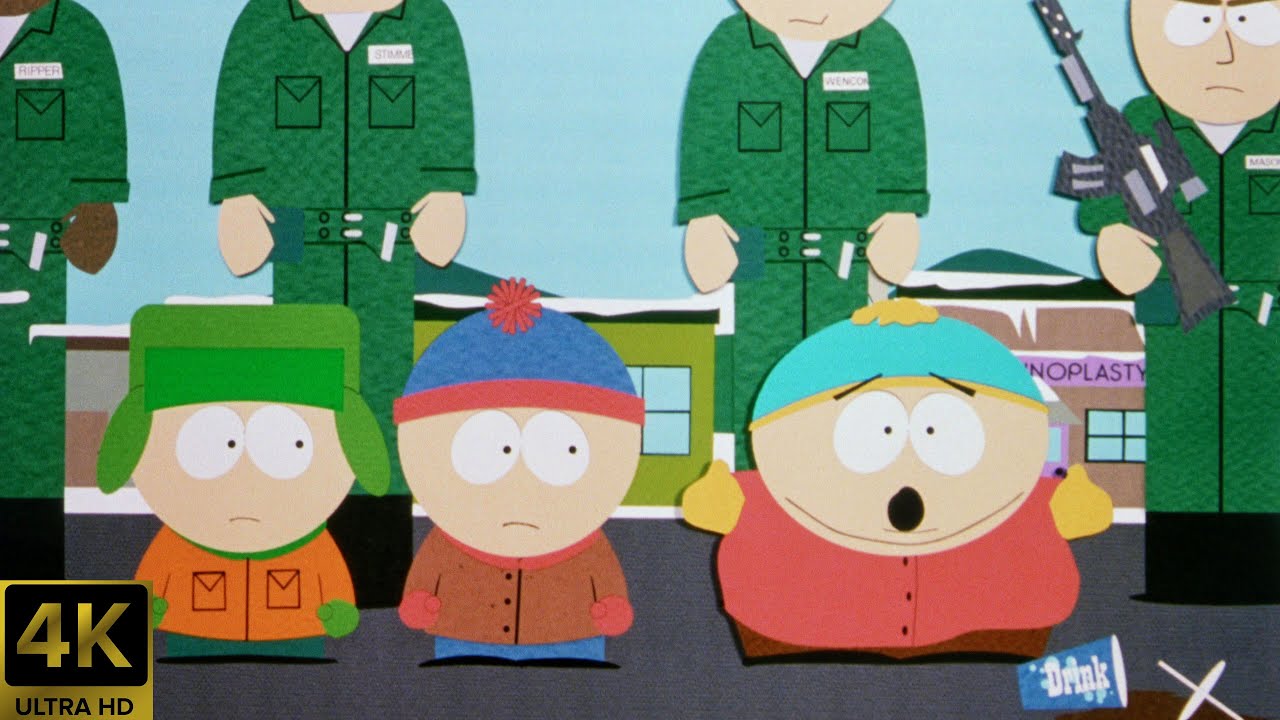
Watch the official trailer:
Where Indian Audiences Can Actually Watch South Park Right Now
South Park has a complicated streaming history in India, and the honest answer is that it's not as cleanly available as fans might hope. Here's the current picture as tracked by Movie OTT:
Current South Park streaming availability in India:
- Paramount+ (via Amazon Prime Video Channels): Selected seasons available; catalog depth varies
- Amazon Prime Video (direct): Limited availability; check current listings
- Netflix India: Not currently available
- Disney+ Hotstar: Not available
- JioCinema: Not available
- SonyLIV / Zee5: Not available
The show doesn't have Hindi, Tamil, or Telugu dubbed tracks for the Indian market. English audio with English subtitles is the standard offering. This limits the show's reach beyond urban, English-comfortable audiences, which has always been South Park's Indian demographic ceiling anyway.
The theatrical film South Park: Bigger, Longer & Uncut occasionally surfaces on Amazon Prime Video India in rotating catalog deals, but availability is inconsistent. Indian fans looking for reliable access are best served by Paramount+ content through Prime Video Channels, though that requires an additional subscription layer that not all users will want to pay for.
The current season's Trump-focused content is unlikely to receive any special India-specific marketing push. South Park has never been a priority title for South Asian localization, and nothing in Paramount's current India strategy suggests that's changing.
Whether South Park's Political Immunity Actually Holds
Honestly, I keep coming back to Kimmel's original question: why aren't Parker and Stone facing more institutional pressure? The answer is probably simpler than any media-theory explanation: the current administration has bigger targets, and South Park's audience skews older and more niche than it did in 2003. The show is no longer a cultural flashpoint in the way it once was. That's its protection now. Not the cartoon shield. Irrelevance-adjacent status.
Watch for: whether Comedy Central or Paramount+ receives any FCC-adjacent pressure following the Kimmel segment going viral. The Kimmel clip pulled over 6.8 million views across YouTube and X within 48 hours of airing, outpacing the late-night average by roughly 3x according to Social Blade tracking — the kind of traction that tends to attract political attention whether or not the platform falls under broadcast jurisdiction. Paramount+ operates as a streaming platform and is therefore outside direct FCC broadcast oversight, but corporate parent pressure is a different mechanism. Parker and Stone's contract runs through at least 2027, which means any attempt to pull back on content would have significant financial and legal complications.
A spin-off or standalone Paramount+ film focused on the current political material seems like the next logical commercial move. The 1999 film proved the format works. The only question is timing.
Where Things Stand as of May 2026
South Park's current season continues airing on Comedy Central with Paramount+ streaming. The Kimmel appearance generated significant social media traction on May 18, 2026, and will likely drive a short-term streaming bump for the current season and the 1999 film. Whether that converts to sustained subscriber growth for Paramount+ is harder to predict (the platform is in the middle of its own restructuring following CBS-Paramount merger conversations that have dragged on for over a year, and a single viral late-night hit doesn't fix structural problems).
For the most current streaming availability of South Park across the US, UK, India, and Spain, Movie OTT has the updated picture. Availability shifts quarterly and the catalog split between Comedy Central, Paramount+, and Amazon channels makes this one worth checking before you subscribe.
We shall see if Parker and Stone's comfort level survives contact with whatever comes next.