Strawberries Is a Quietly Radical Film That Almost Trips Over Its Own Ambitions
TL;DR: Laïla Marrakchi's Cannes Un Certain Regard entry Strawberries follows Moroccan women picking strawberries in southern Spain for €35 a day under brutal conditions. It's a morally demanding, visually striking drama starring Nisrin Erradi — runtime 101 minutes. Where to watch is still TBD, but MUBI is the likely home. The real question isn't whether it's important. It is. It's whether importance alone carries a film across the finish line.
What Strawberries Actually Is: Cast, Director, and the Film You Need to Know About
Moroccan-French director Laïla Marrakchi — best known for Marock (2005) and Rock the Casbah (2013) — premiered Strawberries at Cannes 2026 in the Un Certain Regard section, a festival program that specializes in bold, unconventional work. She co-wrote the screenplay with Delphine Agut. It's a four-country co-production (France, Morocco, Spain, Belgium), with cinematography by Tristan Galand, who shot the acclaimed Souleymane's Story just two years earlier.
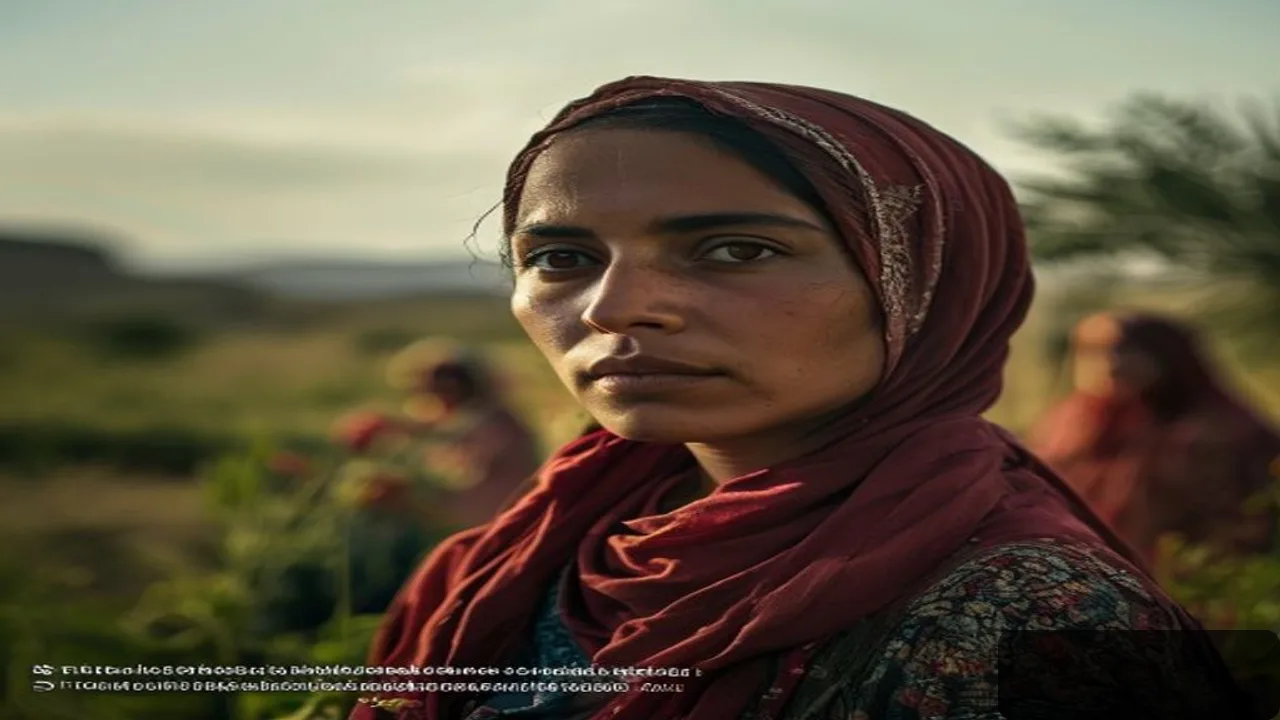
Lead actress Nisrin Erradi, recognizable from Everybody Loves Touda, plays Hasna, a former taekwondo gold medalist who arrives in Spain's Huelva province to pick strawberries. That wage figure — €35 a day — is not inflated for dramatic effect. That's what seasonal agricultural workers actually earn in those plastic-covered greenhouses.
The ensemble cast anchors the film's moral weight:
- Nisrin Erradi as Hasna — the protagonist you won't necessarily root for
- Hajar Graigaa as Meriem, whose vulnerability drives the film's most harrowing moment
- Hind Braik as Zineb, the dormitory container's thin thread of levity
- Fatima Attif as Khadija, the older worker whose experience counts for nothing
- Itsaso Arana as Pilar, a Spanish human rights lawyer (and the film's most obvious structural weakness)
- Paco Mora as Iván, the farm owner — menace requires no announcement
Runtime: 101 minutes. World sales handled by Lucky Number, Paris. Edited by Jean-François Elie and Nicolas Chaudeurge. Score by Clara De Asís.
Why This Film Arrives Now — and What It's Up Against in the Festival Circuit
Here's the uncomfortable truth that Variety critic Jay Weissberg landed: migrant labor dramas have become a reliable festival genre. Souleymane's Story, Io Capitano, Atlantics — all excellent. All covering adjacent territory. The risk isn't that Strawberries feels irrelevant. It's that audiences trained on this circuit have seen the greenhouse, the dormitory container, the indifferent bureaucrat before.
Most coverage frames Strawberries as a necessary corrective, another voice added to the chorus. The more honest assessment: Boris Lojkine's Souleymane's Story already won the Un Certain Regard Jury Prize in 2024 with a structurally tighter film about migrant precarity, and Matteo Garrone's Io Capitano earned an Oscar nomination the same year. Marrakchi is entering a conversation where the bar has been set high and recently, and her screenplay's unevenness (particularly the Pilar subplot) puts her at a disadvantage against those predecessors.
What makes Marrakchi's film different — and what makes it genuinely unnerving — is that her protagonist isn't the noble sufferer the genre typically hands us. Hasna makes a catastrophic moral choice early on. She witnesses violence about to happen to a coworker and chooses to look away. Chooses her €35 over solidarity. The film doesn't absolve her quickly enough for audiences expecting the redemption arc template. That's a bold structural gamble. Whether it fully pays off is another question entirely.
I kept thinking about that moment — not because it's shocking, but because it's the film's actual subject. Not "brave women fight exploitation." Rather: "How do oppressive systems deform people? Make them complicit? Strip away what makes them recognize each other?" The €35 figure hanging over everything isn't just a statistic. It's the price at which a person might decide to look away.
Where to Watch — and Why the Streaming Landscape Is Fragmented Right Now
Honest answer: we don't know yet, and it matters where you live.
MUBI is the most logical home for Strawberries internationally. They've distributed films like Atlantics and Io Capitano to arthouse audiences across North America, Europe, and parts of Asia. Netflix has shown interest in Moroccan-language content (Riad in the Desert, various originals) but typically prioritizes broader commercial hooks over festival dramas. Amazon Prime Video rarely acquires this register of film.
For readers tracking streaming availability across regions as deals close — and they typically close within weeks of a Cannes premiere — Movie OTT monitors where films land across MUBI, Netflix, Prime, and regional platforms. Check there once distribution announcements start coming through summer 2026.
The theatrical vs. streaming split is real here. A limited run in France, Spain, and Morocco seems likely before any streaming window opens. Festival-circuit arthouse titles from this region rarely get wide theatrical distribution in North America or the UK. What usually happens: festival premiere in May, limited theatrical run (maybe 50–150 screens across core markets), then migration to a streamer by fall or winter.
The Opening Sequence You'll Actually Remember
Marrakchi's best directorial instinct lands immediately. "The excellent opening successfully crams in a lot of information without feeling artificial: close-ups of a succession of inspected hands shot from above convey the idea that these women are interchangeable labor, nothing more," according to Variety's Cannes coverage.
Those hands. Anonymous. Replaceable. Inspected like produce. That's where the film is most confident in what it's trying to say. The opening doesn't sermonize. It shows you the system's logic in visual terms — and then the rest of the film follows Hasna as that system eats away at her capacity for empathy.
Erradi's performance carries the entire weight of this architecture. Weissberg noted her "compellingly flinty performance," which is a backhanded compliment to the screenplay that's also, honestly, fair. The actress makes you believe in Hasna's capacity for both cruelty and regret. The script doesn't always earn that complexity.
What the Director Has Actually Said About Her Intentions
Marrakchi hasn't provided extensive on-record statements in the Cannes press cycle, but the film's structural choices are explicit enough. She's spoken previously about her desire to complicate victim narratives in stories about North African women — to avoid making them symbols of oppression rather than actual people with contradictions, compromises, and moral failures.
That's harder to pull off than it sounds. It requires trusting the audience to sit with someone they don't particularly like, to understand her without excusing her, to recognize that survival calculus can corrupt moral instincts in ways that don't get neatly resolved. The film mostly pulls this off. Not always.
For Indian Audiences: Where This Fits in the Streaming Conversation
Most Indian viewers won't encounter Strawberries on a mainstream platform anytime soon. That's not a failure of Indian taste. It's a distribution reality.
Arabic and Spanish-language arthouse cinema from the European festival circuit reaches Indian audiences primarily through MUBI India, which has a growing subscriber base in metro cities among people who actually seek out international cinema. If Lucky Number closes a deal with MUBI — and the film's profile makes that plausible — Indian viewers could access it within six to nine months of the Cannes premiere.
Netflix India carries some Moroccan content but licenses commercial titles rather than festival dramas of this register. Amazon Prime Video India isn't an active buyer. SonyLIV, ZEE5, and JioCinema don't maintain significant acquisition pipelines for North African French-language co-productions.
Where Indian audiences do have a clear entry point is thematic. Seasonal migrant labor, the exploitation of workers in foreign agricultural industries, the specific vulnerability of women far from home without legal protections — these aren't abstract issues for Indian viewers. The Huelva strawberry farms map uncomfortably well onto documented conditions for Indian migrant workers in Gulf countries and Southeast Asian sectors. The film's emotional core travels even when distribution doesn't.
Movie OTT tracks OTT availability across Netflix, Prime Video, MUBI, Hotstar, JioCinema, SonyLIV, and ZEE5 for Indian users. Check there for the most current picture on when and where Strawberries becomes accessible.
The Marketing Problem Nobody's Mentioned Yet
Here's what's going to happen when distributors start selling this film: they'll frame it as a heroic story of Moroccan women fighting back against exploitation. That's not quite what Marrakchi made.
The film is actually something more uncomfortable. It's a story about how oppressive systems don't just victimize people — they deform them. Make them complicit. Strip away the solidarity that might protect them. Hasna isn't a hero who makes one bad decision. She's a person whom €35 a day has made capable of abandoning someone to violence. That's the film's real subject.
Most reviews will frame this as a social-issue drama with a flawed protagonist. The more interesting read is that Marrakchi is examining moral corruption under pressure, how survival calculus eats away at the things that make you human. Whether that argument lands with enough force to overcome the screenplay's structural imbalances (the Spanish lawyer who functions as a walking cliché, the other workers' collective abandonment of Meriem that goes largely unexplored) is genuinely uncertain.
The film earns its place in Un Certain Regard. Whether it earns a spot on your watchlist depends on your tolerance for morally demanding cinema that doesn't fully deliver on its own ambitions.
What Comes Next: Festival Season and Distribution
Watch for any prize recognition when the Un Certain Regard jury announces awards before the festival closes. A jury prize or acting award for Erradi would significantly boost the film's distribution prospects and streaming deal value.
The logical next stops are Toronto (September 2026), San Sebastián (the Spain connection makes that natural), and possibly Marrakech given Marrakchi's roots. Each festival brings fresh acquisition interest from distributors and streamers.
The Spanish reception is worth watching specifically. A film set in Huelva, co-produced with Spanish funding, depicting Spanish agricultural exploitation — it'll face an interesting domestic reception from both audiences who may not want to confront it and critics who'll likely champion it.
Distribution deals typically close within weeks of a Cannes premiere for titles with this profile. Expect announcements by summer 2026. For the latest streaming availability across all regions — including when and whether MUBI, Netflix, or a regional platform picks this up for India, the US, the UK, or Spain — Movie OTT's where-to-watch tracker will have the current picture as deals are confirmed.