The Best Sci-Fi Shows From the 2000s — And Where to Actually Watch Them
If you're hunting for Battlestar Galactica on Indian streaming right now, here's the truth: it's not there. Not on Netflix, not on Prime Video, not on Hotstar. The decade that gave us Firefly, Samurai Jack, and The Clone Wars — arguably the richest run of science fiction television ever made — remains scattered across platforms in a way that makes building a watchlist genuinely frustrating. Some shows are buried under regional licensing. Others are split across multiple services depending on whether you're in Delhi or Dublin. A few are completely absent.
This matters because these shows still hold up. They're not museum pieces. They're better than most of what's been made since.
Here's how to find them, why they endure, and what you're actually missing if you skip them.
Where These Shows Live Right Now (And Where They Don't)
Let's get specific, because vague doesn't help you.
In India as of 2026:
- Firefly (Fox/Disney, 2002) — Disney+ Hotstar. All 14 episodes. English only, no Hindi dub. Start here if you want a single-season masterpiece.
- Battlestar Galactica (Syfy, 2004–2009) — Nowhere. You can rent episodes on Prime Video (roughly ₹120–150 each) or wait for a licensing deal that may never come.
- Samurai Jack (Cartoon Network, 2001–2017) — Seasons 1–4 on JioCinema. Season 5 (the dark, TV-14 revival from Adult Swim) isn't available anywhere in India yet.
- Star Wars: The Clone Wars (Cartoon Network/Disney, 2008–2020) — Disney+ Hotstar, all 7 seasons, with Hindi, Tamil, and Telugu dubs. This is the only show from the decade that's fully accessible to Indian viewers.
- X-Men: Evolution (Marvel Animation, 2000–2003) — Partial availability on Disney+ Hotstar, with regional language options for some seasons.
- The Venture Bros (Adult Swim, 2003–2018) — Absent from Indian platforms entirely.
The gaps are real. Movie OTT's tracking tool aggregates availability across Netflix, Prime Video, Hotstar, JioCinema, SonyLIV, and Zee5 in one place—worth bookmarking if you're serious about finding these older titles.
What strikes me is how few people know Battlestar Galactica even exists in the streaming age. The show currently sits at 8.7/10 on IMDb based on over 200,000 ratings. It won a Peabody Award in 2006. And it's essentially unavailable in one of the world's largest streaming markets.
Why These Specific Shows Changed Everything
Firefly came first, 2002, and it came from Joss Whedon, the guy who'd already figured out ensemble writing on Buffy the Vampire Slayer. Fox gave him one season. Fourteen episodes. The premise alone was enough: a ragtag crew of smugglers on a spacecraft in a post-civil-war universe where Chinese and American cultures had merged. Nathan Fillion as Captain Malcolm Reynolds. Gina Torres, Morena Baccarin, Alan Tudyk, Adam Baldwin filling out the rest. No weak links.
The cancellation stung because these weren't forgettable characters. The relationships between them — Reynolds and Inara, Kaylee and Simon, the constant friction between duty and loyalty — were the show's real engine, not the world-building. The theatrical film that followed, Serenity (2005), grossed $38.9 million worldwide against a $39 million budget, basically breaking even. Not a celebration at Universal. But the DVD sales afterward were extraordinary.
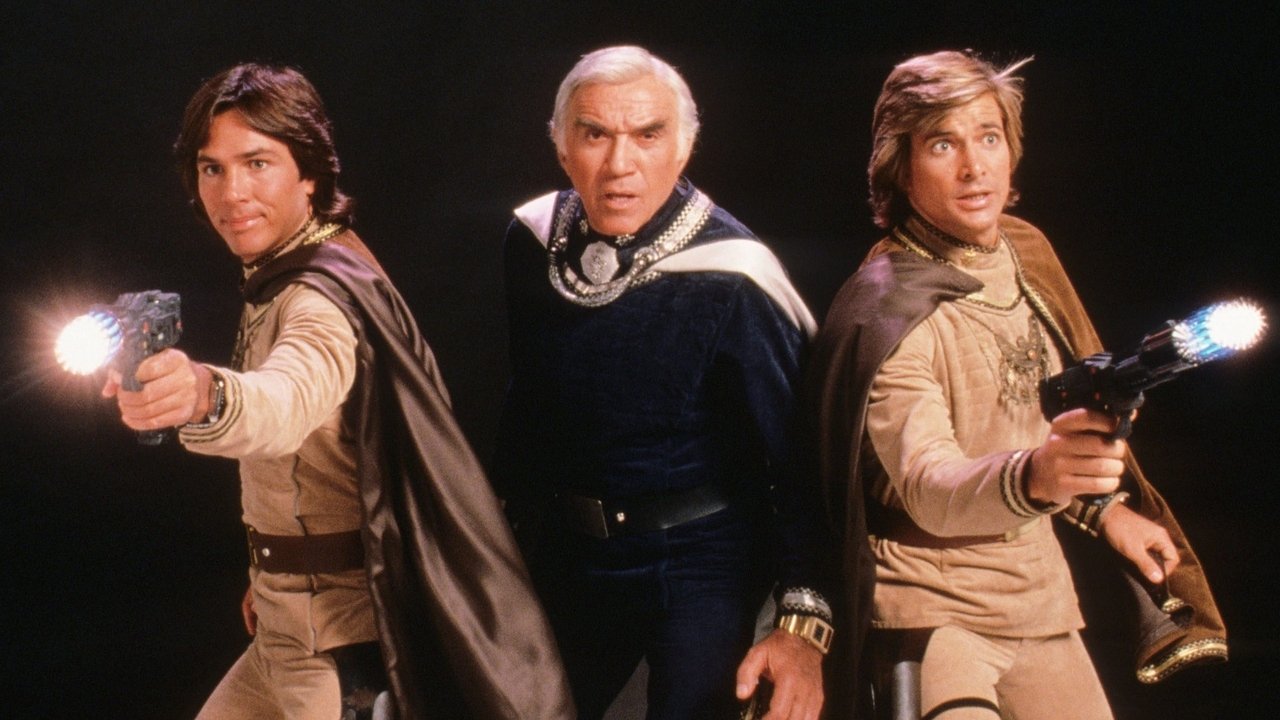
Battlestar Galactica went the opposite direction. Ronald D. Moore took the 1978 original and made it cold, political, theologically uncomfortable. The show was about a fleet of humans hunted across space by robots they'd created, and it used that setup to ask questions about faith, identity, and whether survival justified any cost. Moore had spent years on Star Trek: The Next Generation and Deep Space Nine, and BSG reflected everything he'd learned about serialized storytelling and everything he hated about episodic television that reset every week.
The result: a show that ran 2004–2009 and never stopped asking hard questions. It won a Peabody. It spawned a prequel miniseries (Caprica), a spinoff (Blood & Chrome), and enough fan devotion that Peacock has been developing a reboot for years (though production hasn't actually started). Most coverage of BSG frames it as a post-9/11 allegory, and that's not wrong, but the more interesting claim is that it's the first American television drama to treat theology as a structural element rather than a character quirk — the Cylon monotheism vs. Colonial polytheism isn't window dressing, it's the architecture of every major conflict in the show, and nothing on television since has committed to that kind of worldbuilding with the same rigor.
Samurai Jack was something else entirely. Genndy Tartakovsky directed it, and if you've never really watched it — I mean really watched it, not just background cartoon noise — the first thing that hits you is the patience. Long stretches of silence. Tracking shots through dystopian landscapes. Almost meditative pacing for a show that aired on Cartoon Network Saturday mornings. The story followed a samurai displaced in time, hunting for a way home while battling a demonic shapeshifter across increasingly surreal worlds.
The 2017 revival, Season 5, came back on Adult Swim after a 13-year gap. Tartakovsky told Animation Magazine he had "unfinished business" with the character. Season 5 Episode 1, "XCII," opens with no dialogue for several minutes — just Jack, older and bearded now, wandering a wasteland. The upgrade to TV-14 rating meant darker storytelling, actual violence, emotional weight that the original network censorship couldn't allow.
The Clone Wars was the most immediately accessible of the bunch. It debuted October 3, 2008, on Cartoon Network as a companion to the live-action Star Wars films. Seven seasons eventually ran through 2020, and it's the only property from the 2000s wave that's actively extended into the present — its characters feed directly into The Bad Batch, Tales of the Jedi, and Ahsoka. For Indian audiences, it's fully dubbed and easily found.
The Streaming Paradox: Why Accessibility Actually Got Worse
Here's what nobody talks about: these shows had better visibility before streaming existed.
In 2005, if you wanted to watch Firefly, you rented the DVD box set. One place. One transaction. You could find it at any video rental store in any country. Now? It's trapped in Disney+ Hotstar's algorithm, probably buried under Marvel shows and Star Wars content, with no reason for the platform to surface it unless you know to search for it by name.
Battlestar Galactica isn't anywhere. Samurai Jack Season 5 is region-locked. The Venture Bros has fallen off the map entirely (it was on Max in the US for a while, then wasn't). Consider that Firefly's DVD box set sold over 500,000 copies in its first year after cancellation — those numbers helped greenlight the Serenity film — and yet the show now sits unsurfaced on a platform that has no financial incentive to recommend a cancelled 2002 Fox series over its own originals.
This is what happens when IP gets split across studios and licensing agreements become incompatible. It's not a streaming innovation. It's a licensing failure dressed up as market strategy.
Movie OTT exists because of this exact problem — the site aggregates where-to-watch data across platforms so you don't have to check each one individually. It's imperfect, but it's the only tool that works if you're serious about tracking availability.
How to Actually Watch Them (And Why Each One's Worth the Effort)
Start with The Clone Wars if you want something fully accessible. Seven seasons, all dubbed, all on Hotstar. It's also the most obviously excellent entry point — Star Wars brand recognition means you know what you're getting into. The show improves dramatically in Season 3 onward, so give it three episodes before deciding.
Then move to Firefly on Hotstar if you want something complete. Fourteen episodes is a weekend. The emotional payoff is enormous for the runtime. (Fair warning: it ends on an unresolved cliffhanger, which is why the Serenity film exists, and why fans have never stopped wanting more.)
Samurai Jack Seasons 1–4 on JioCinema are pure visual storytelling — less dialogue, more atmosphere. Watch them in order. Each season builds on the last. The show trains you how to watch it, if that makes sense. By Season 4, you understand what Tartakovsky's doing with silence and color and pacing.
Battlestar Galactica is harder to access, but if you find a way — whether that's a Prime Video rental or waiting for a Hotstar announcement — commit to the miniseries first (2003, three hours), then start Season 1 proper. The miniseries isn't optional; it's setup. The show doesn't work without it.
What's Actually Happening With Reboots and Revivals
Battlestar Galactica reboot news surfaces every year and goes nowhere. Sam Esmail (Mr. Robot) was announced as showrunner for a Peacock version, and then... silence. I'm not sure why these projects stall. Development hell, probably. Changing priorities. A new executive.
Firefly revival conversations happen periodically, but Disney owns the IP now, and Whedon's public standing has complicated everything. Any genuine return is unlikely in the near term.
The Clone Wars is the only 2000s show still actively extended. The universe keeps expanding on Disney+, feeding directly into new series. For Indian audiences, this means the Clone Wars world is the most practically available corner of the entire 2000s sci-fi landscape. Everything's dubbed. Everything's current. Everything's connected.
The Thing Nobody Mentions: Why This Decade Mattered
The 2000s were when television learned that sci-fi could be serious. Not serious in a dry, educational way — serious the way The Sopranos was serious, where character and theme mattered more than plot mechanics.
Battlestar Galactica was explicitly building on the template that The Wire and The Sopranos had created: serialized storytelling where every episode assumes you've watched the previous one, where mythology builds cumulatively, where a character's arc takes seasons to complete.
Firefly took that lesson in the opposite direction — it proved that warmth and humor and genuine affection for your characters could coexist with real stakes and emotional weight.
Samurai Jack showed that animation wasn't a limitation; it was a tool. Tartakovsky's visual language was doing things that live-action couldn't touch. The kind of slow-burn pacing that worked for Terrence Malick or Andrei Tarkovsky, transplanted into a Saturday morning cartoon. Absurd on paper. Gorgeous in practice.
By 2010, when this decade ended, the streaming wars hadn't started yet. But the creative template was set. Every prestige drama that followed — Breaking Bad, Game of Thrones, The Leftovers, even the MCU shows — was building on lessons that these 2000s shows had already figured out.
The Practical Next Step
Check Movie OTT's current availability tracker for real-time listings in your region. Start with The Clone Wars if you want something immediately accessible. Add Firefly to your Hotstar queue this week. Track Battlestar Galactica availability, and when it lands on a major platform — if it lands — you'll want to be ready.
These shows aren't nostalgia. They're not "classics" in the museum sense. They're still doing what good television is supposed to do: making you think, making you feel, making you want to know what happens next.