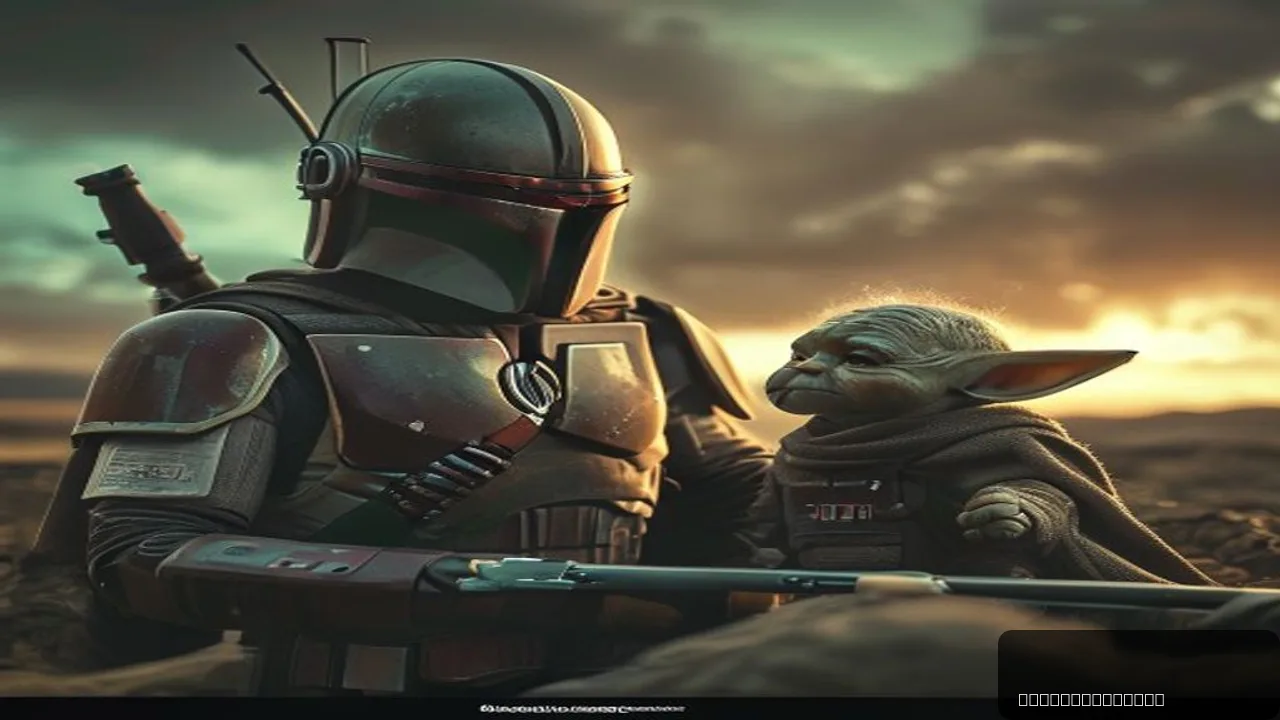
The Mandalorian and Grogu's Dejarik Gamble: How a 1977 Board Game Becomes Canon
TL;DR: "The Mandalorian and Grogu" hits theaters May 22, 2026. The film's standout moment reveals that the holographic chess game from the original 1977 Star Wars isn't just a game — it's based on real gladiatorial combat. What that means for the franchise, where to watch it, and whether the sequence actually lands.
Here's what nobody's talking about yet: Jon Favreau just weaponized nostalgia in a way that actually changes the Star Wars universe.
The holochess board from "A New Hope" — that throwaway scene where Chewbacca and R2-D2 play while Han Solo cracks a joke about letting the Wookiee win — gets recontextualized in "The Mandalorian and Grogu" as proof of something much darker. The eight creatures on that board aren't fictional game pieces. They're real fighters. Real death matches. The board game is based on an actual gladiatorial sport that exists in the galaxy. And the film doesn't just reference this. It shows it.
That's the Easter egg. That's the whole thing. And it works because Favreau treats it like worldbuilding, not fan service.
Before You Buy a Ticket: The Basics
Release date: May 22, 2026 (theaters only for now)
Stars: Pedro Pascal (Din Djarin), Sigourney Weaver (Colonel Ward), Jeremy Allen White (Rotta the Hutt), Jonny Coyne (Lord Janu)
Director/Writer: Jon Favreau
Runtime: North of two hours (exact runtime not yet confirmed)
Where it's heading: Disney+ eventually. For India, that means Disney+ Hotstar — likely 45 days after the theatrical window closes, putting a July 2026 arrival at the earliest.
This isn't a spinoff. It's the theatrical culmination of everything the Mando-verse has been building across three seasons of Disney+ television. If you've watched the show, you need to see this in a cinema. The arena sequence needs the screen size.
What Actually Happens: The Dejarik Reveal and Why It Matters
The film's central action set piece takes place inside a gladiatorial arena run by Lord Janu, a Hutt crime boss with ambitions beyond the typical spice-trafficking portfolio. Rotta — Jeremy Allen White's character, a Hutt warrior — is forced into a predetermined fight roster. One by one, he faces the eight creatures whose holographic representations appear on Dejarik boards across the galaxy.
The thing nobody mentions is how practical Favreau made it feel.
Compare this to the arena sequence in "Attack of the Clones." That was spectacle designed to show off what digital cinema could do. This is spectacle built on logic. You understand the stakes without exposition. You see the arena's economy — who profits, who loses, what the crowd wants. It's less "video game boss rush" and more "organized crime revenue stream" (which, frankly, is a weird thing to get right, but Favreau gets it right).
What the trade write-ups keep missing: this is Favreau's first Star Wars theatrical feature after directing three seasons of prestige television, and the shift from streaming to big-screen grammar isn't cosmetic. The arena sequence is blocked and shot like a '90s Ridley Scott picture, not like a Disney+ episode with a bigger budget. That's a quiet but significant evolution, and it tells you Favreau is thinking about legacy, not content volume.
The Dejarik reveal retroactively adds weight to every holochess scene in franchise history. That's not a small thing. That's the kind of worldbuilding that makes audiences care about what happens between releases.
The Original Scene That Started All This
May 25, 1977. The Millennium Falcon. Chewbacca and R2-D2 are playing holochess while traveling through hyperspace. C-3PO warns that Chewie will lose. Han Solo tells him to let the Wookiee win.
That's it. That's the entire scene. Forty seconds. No explanation of what Dejarik is, no lore dump, no sense that it's based on anything real. Just a game. Visual effects artists Phil Tippett and Jon Berg designed the board and the creatures as an early showcase of holographic technology — pure aesthetic worldbuilding.
But here's what's interesting: the eight creatures on that board have actual names in Star Wars canon. The Mantellian Savrip. The Kintan Strider. The K'lor'slug. The Houjix. The Ghhhk. The Molator. The Monnok. The Ng'ok. They were always just game pieces.
"The Mandalorian and Grogu" changes what they represent. Now they're real. Now that board game you see in the background of "The Force Awakens" or "Solo" has actual weight behind it.
Jon Favreau's Approach: Why the Physical Matters
Favreau has always pushed against the digital-first instinct in Star Wars filmmaking. During the original "Mandalorian" series, he insisted on building practical sets wherever possible — environments that actors could actually stand in and react to. That philosophy matters more than it sounds. It's the difference between a performance that feels grounded and one that feels like someone's reacting to a tennis ball on a stick.
The Dejarik arena sequence apparently follows the same principle. From what I gather, Favreau built out the arena as a physical set, then layered digital effects on top. You can feel the difference. The camera movement has weight. The actors have something solid to push against.
Jeremy Allen White, who plays Rotta, told Entertainment Weekly that the physical demands surprised him. "I didn't expect to be doing what I ended up doing," he said — which is film-speak for "I did way more stunt work than the contracts originally specified." For a character who's supposed to be an undefeated gladiatorial champion, that's credible casting. White's got the build for it. He's got the intensity. But he apparently also has the willingness to actually do the choreography instead of handing it off to a double.
How This Lands: The India Release and Timeline
Here's the honest part: India gets a theatrical window first. Disney's treating this as a proper blockbuster — not a streaming event. That means Hindi, Tamil, and Telugu dubs will be ready for release day, May 22, 2026, across major cinema chains in metro areas.
Then comes the wait. Streaming arrival on Disney+ Hotstar follows the theatrical window — typically 45 days for Disney releases, which would put it somewhere in early-to-mid July 2026. That's not confirmed yet. Disney hasn't officially announced the Hotstar window. But that's the standard pattern.
If you want to track when exactly it arrives on Hotstar without wading through studio press releases, Movie OTT's where-to-watch tracker updates regularly as streaming release dates get announced. Bookmark it now — saves time later.
The Mandalorian has a smaller but genuinely passionate fanbase in India. These are people who watched all three seasons on Hotstar and will absolutely show up for a film that rewards that loyalty with actual lore payoffs. The Dejarik reveal is exactly the kind of thing that plays well with that audience — it's not just fan service, it's franchise logic that retroactively enriches everything that came before.
The Franchise Ecosystem: What This Changes
Dejarik appeared in:
- "Star Wars: A New Hope" (1977) — the original scene
- "The Force Awakens" (2015) — Han and Rey in the Falcon
- "Solo: A Star Wars Story" (2018) — background detail
- "The Clone Wars" animated series — multiple episodes
In none of those appearances was it established that the board game was based on actual combat. The game was just a game. A piece of world-building flavor.
"The Mandalorian and Grogu" changes that calculus entirely. Every future appearance of Dejarik now carries subtext. When you see it in the background of a scene, you know it represents something real and brutal happening elsewhere in the galaxy. That's the kind of retroactive worldbuilding that keeps audiences engaged between releases — it makes them want to rewatch, to look for what they missed.
Box Office and What Happens Next
Early tracking from Deadline puts the opening weekend in the $80-120 million domestic range. That's solid for a Disney+ franchise extension, though well below mainline Star Wars trilogy numbers. The real test is international performance — where the Mando-verse has strong brand recognition but lower ceiling than the Skywalker saga. Worth noting: the film opens the same corridor as "Mission: Impossible – The Final Reckoning," which Paramount has dated for May 23, 2025, and the word on the lot is Disney deliberately chose to go a full year later rather than compete head-to-head with that franchise's final bow (though that part is still rumour — scheduling decisions at this level involve a dozen variables nobody outside the distribution teams sees).
The Dejarik sequence is generating the kind of fan-theory content online that becomes free marketing. People are already mapping out the gladiatorial rules, speculating about which creatures would win in a hypothetical matchup. The "let the Wookiee win" callback practically writes its own social media cycle.
If the film performs, a Rotta the Hutt standalone is the obvious next move. I hear Jeremy Allen White's deal already includes options for additional appearances, and the gladiatorial arena gives that spinoff a built-in setting and economy. White as a Hutt crime lord jockeying for power in the post-Jabba vacuum is a pitch that basically sells itself.
Should You Actually Watch This?
Here's the thing: most franchise films treat the original movies like sacred text you're not allowed to recontextualize. Favreau does the opposite. He takes a forty-second scene from 1977 and asks a simple question: What if this was real? What if that game has roots in actual sport? What if the galaxy's economy includes organized combat?
That's not derivative thinking. That's franchise logic done right.
The arena sequence works because it has internal coherence. You understand the stakes, the rules, the incentives. Favreau's background in ensemble action — "Iron Man," "The Jungle Book" — shows in the pacing. He knows how to stack multiple fight sequences without the audience losing track of what matters.
Watch it in theaters if you can. The sequence needs the screen size. The sound design needs the speaker system. And if you've spent the last six years watching Din Djarin and Grogu across the Hotstar seasons, you've earned the payoff.
What to Know Before May 22
If you haven't watched the "Mandalorian" series in a while, here's the watch order to refresh: Season 1, Season 2, Season 3. Then the film. Each one builds on the last — you're not missing anything critical if you jump straight to the movie, but the emotional weight lands harder if you've seen what came before.
The film is rated PG-13 (not confirmed officially yet, but given that the series was TV-14, expect that ballpark). That means it's family-friendly by action-film standards, though the gladiatorial violence is more implied than graphic.
Runtime sits somewhere north of two hours — probably 130-145 minutes based on typical Favreau pacing. Not a sprint, but not bloated either.
For the latest on confirmed streaming dates for Hotstar and other international platforms, check Movie OTT as release windows get officially announced over the next few months.
The Lore Payoff and What It Means
What strikes me most about the Dejarik reveal is that it's not necessary. The film would work fine without it. But Favreau included it anyway — because that's what separates franchise films that last from franchise films that merely exist.
The holochess board has been in the background of Star Wars for almost fifty years. Nobody was demanding an explanation for it. Nobody was asking "But where does Dejarik come from?" It was just flavor.
Favreau made it matter. And that's the kind of creative decision that makes audiences care what happens next in the universe.