How Meryl Streep's Cerulean Sweater Speech Rewrote Fashion Film History
The cerulean sweater monologue in The Devil Wears Prada wasn't scripted by the writers — it was Meryl Streep's own invention, and nearly two decades later, it's still the scene that defines the film. Here's why it matters, where to watch both films right now, and what The Devil Wears Prada 2 does with that legacy.
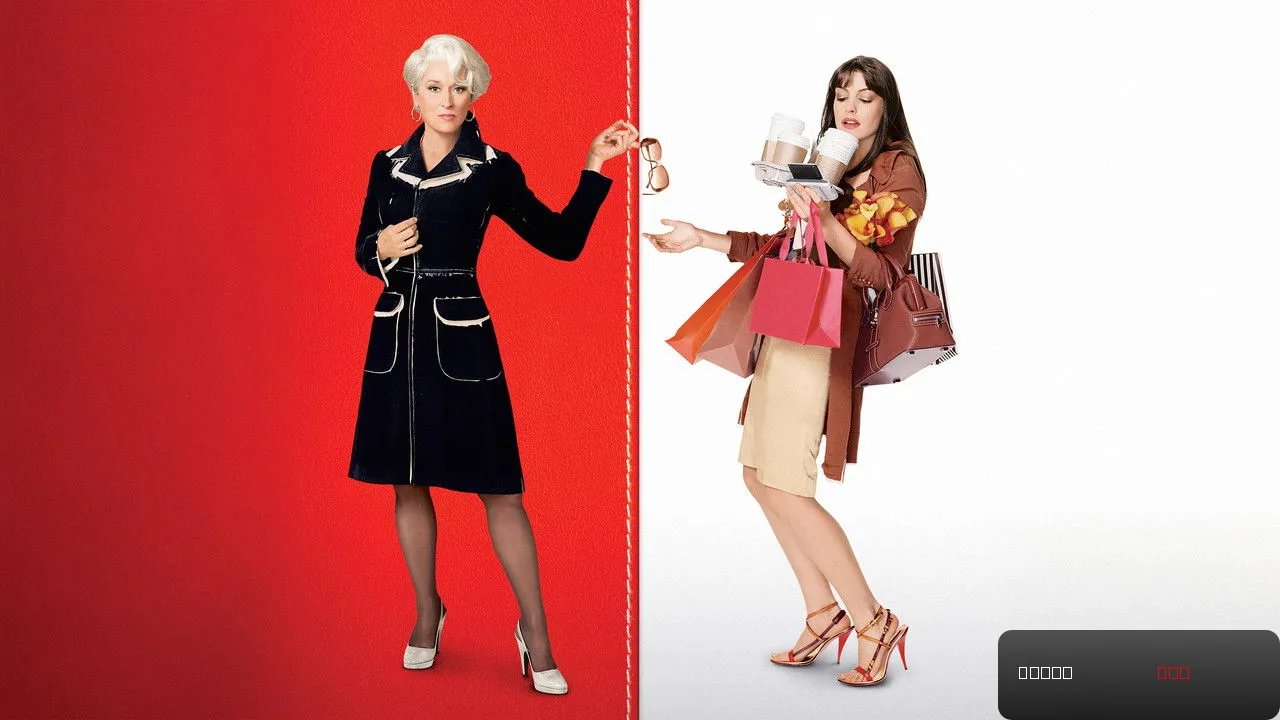
Just $100,000. That was the official fashion budget for The Devil Wears Prada when it hit cinemas on June 29, 2006 — and yet the film somehow showcased over $1 million worth of outfits on screen. Think about that gap for a second. A production that couldn't technically afford its own wardrobe ended up producing one of the most fashion-literate movies Hollywood has ever made. The numbers don't add up, and that's sort of the point. Because the most memorable piece of clothing in the entire film — a lumpy, unremarkable cerulean sweater worn by Anne Hathaway — cost practically nothing and came from no famous designer. It mattered because of what Meryl Streep did with it.
The Scene Nobody Knew Streep Had Written
The cerulean sweater monologue arrives roughly mid-film, after Andy Sachs (Hathaway) makes the mistake of smirking while Miranda Priestly (Streep) deliberates between two nearly identical belts. Andy mutters something about still learning "this stuff." Miranda doesn't raise her voice. She doesn't need to.
What follows is a 90-second takedown — calm, precise, devastating — in which Miranda traces the specific shade of blue in Andy's bargain-bin sweater all the way back to a collection by Yves Saint Laurent, then through the trickle-down mechanics of the fashion industry, arriving at the punchline: Andy didn't opt out of fashion. Fashion chose her anyway, and she didn't even notice.
Here's what makes the behind-the-scenes story so interesting: screenwriter Aline Brosh McKenna confirmed to IndieWire that Streep herself conceived the speech. It wasn't in the original script. Streep told IndieWire directly: "That scene wasn't about the fun of fashion, it was about marketing and business — the fun of it is what we always think of." That distinction matters. The scene works not because it's glamorous but because it's correct. Miranda isn't performing fashion; she's explaining an economic system.
Runtime: 109 minutes. Director: David Frankel. Lead cast: Meryl Streep, Anne Hathaway, Emily Blunt, Stanley Tucci.
The film earned Streep an Academy Award nomination for Best Actress. It's rated PG-13 and runs 109 minutes — lean, punchy, no wasted scenes.
Why a Single Monologue Has Outlasted an Entire Decade of Fashion Films
The cerulean sweater scene has been analyzed by fashion academics, quoted in marketing lectures, and referenced in design school curricula — and that's not an accident. As Art Departmental's breakdown of the cerulean monologue makes clear, the speech is structurally a masterclass in how taste and commerce operate together, not separately. Miranda isn't being cruel for cruelty's sake. She's demonstrating that ignorance of a system doesn't exempt you from it.
That's genuinely rare in fashion film. Most movies in this space — think Ugly Betty adaptations, or even Clueless — treat fashion as aspiration, as costume, as visual shorthand for character. The Devil Wears Prada does something more unsettling: it argues that fashion is infrastructure. It shapes what you wear even when you think you've rejected it.
What's striking is how few films have managed to replicate that argument since 2006. Prada's longevity owes a lot to the cerulean scene specifically, because it gives audiences who don't care about fashion a reason to care. The scene is about power and perception, not hemlines.
According to Her Campus's ranking of the film's best scenes, the cerulean monologue consistently tops reader lists — above "Gird your loins," above "That's all," above every other iconic Miranda Priestly line. That's a significant achievement for a scene that, technically, is just a woman describing a color.
The film also benefits from what you might call the Streep multiplier. Her Miranda Priestly draws heavily from the documented working style of Vogue editor-in-chief Anna Wintour — the whispered commands, the glacial delivery, the way silence functions as judgment. Streep has spoken about stripping away the obvious menace you'd expect from a villain and replacing it with something more chilling: competence.
What Meryl Streep Actually Said About the Scene
Screenwriter Aline Brosh McKenna was unequivocal in her IndieWire interview: Streep "came up with the speech about the blue sweater." This wasn't a collaborative workshop session or a table-read suggestion. Streep identified a gap in the script — a moment where Miranda needed to be seen working, not just commanding — and filled it herself.
Streep's own framing of the scene is worth sitting with: "That scene wasn't about the fun of fashion, it was about marketing and business." She wanted to show Miranda's intelligence as a business mind, not just her taste as an aesthete. That's a subtle but crucial distinction. A Miranda who's merely stylish is a caricature. A Miranda who can trace a supply chain from a Paris runway to a discount rack in Ohio is genuinely formidable.
(This is, incidentally, why the scene has aged so well — it's not dated by trend cycles because it's not really about trends at all.)
Movie OTT has tracked the film's streaming availability across regions since its initial digital release, and the cerulean scene remains one of the most-clipped moments in the film's entire streaming history.
The Devil Wears Prada 2 and the Callback That Fans Deserved
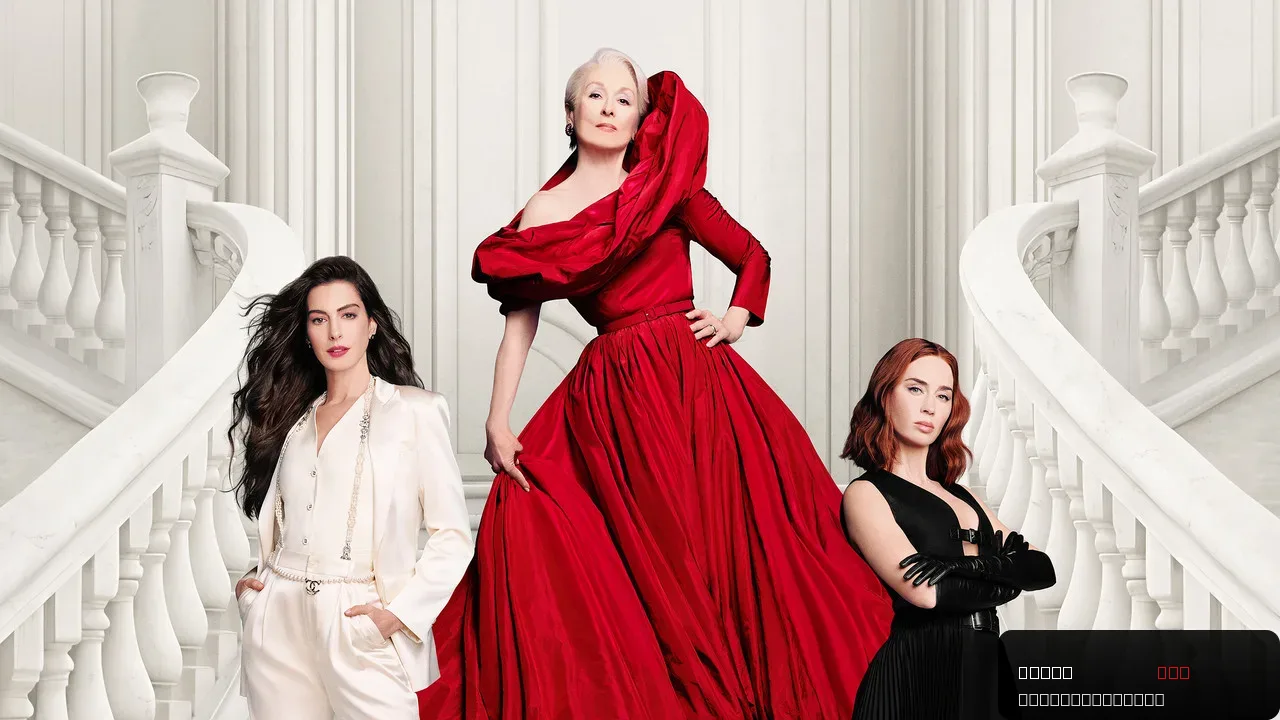
Twenty years is a long time. The Devil Wears Prada 2, arriving in 2026, earned a 78% critics' rating on Rotten Tomatoes against the original's 75% — and an audience score of 86%, notably higher than the first film's 76%. Director David Frankel returned, which matters.
The sequel makes smart choices about what to preserve and what to evolve. Miranda and Nigel have moved toward "quiet luxury" aesthetics — neutrals, understated tailoring, nothing that shouts. Emily's style has sharpened into something edgier. Andy, now an award-winning journalist, wears white suits, blazers, and carries a messenger bag. The stylists deliberately chose pieces that communicate "reporter," not "runway."
But the cerulean callback is what fans came for. Early in the film, in a Central Park opening sequence, Andy passes a vendor holding up two nearly identical belts. If you've seen the original, you know exactly what that image is referencing. Later, the sweater itself reappears — or rather, a 2026 version of it does. Frankel told Entertainment Weekly that Anne Hathaway wanted to cut the sleeves off the original garment for the closing scene, so the production found a duplicate and restyled it. Andy wears a sleeveless cerulean piece in the film's final moments. Full circle.
Where to Watch in India Right Now
For Indian audiences, both films are accessible across major platforms — though availability can shift, so checking Movie OTT's where-to-watch tracker before you sit down is the smartest move.
Current streaming availability for The Devil Wears Prada (2006) in India:
- Disney+ Hotstar — available with subscription (English with subtitles)
- Amazon Prime Video — available for rental or purchase
- Apple TV — available for digital rental/purchase
The Devil Wears Prada 2 (2026) is confirmed for Hulu in the US. Indian availability for the sequel is expected to follow through Disney+ Hotstar given the existing distribution relationship, though an official India launch date hasn't been confirmed at time of publication.
The original film has found a devoted Indian fanbase over the years — particularly among audiences in metro cities who work in media, fashion, and advertising. The corporate power dynamics Miranda embodies translate cleanly across industries. The cerulean sweater speech, in particular, gets shared in Indian professional communities as a piece of actual business commentary, not just movie dialogue. Hard to say if that's what Streep intended, but it's a real phenomenon.
No Hindi or regional language dub of the original film appears to be currently available on major Indian platforms; the film streams in English with subtitle support.
David Frankel, Meryl Streep, and the Film That Defined Both Their Careers
David Frankel directed The Devil Wears Prada in 2006 after establishing himself in television, most notably as a producer and director on Sex and the City. He brought a New York texture to the film that feels lived-in rather than postcard-pretty — the city as workplace, not fantasy.
Meryl Streep needs no extended biography. Three Academy Awards. More nominations than any other actor in Oscar history. But Miranda Priestly is widely cited as one of her most technically demanding performances — specifically because she chose to underplay rather than overplay. The whisper is harder than the shout.
Anne Hathaway was 23 during filming. The role launched her into a different tier of Hollywood leading woman, and she's spoken in interviews about how physically and emotionally demanding the transformation scenes were. Stanley Tucci as Nigel — the loyal, quietly heartbroken creative director — gives the film its emotional core in several scenes, including a monologue about what fashion meant to "a young boy pretending to go to soccer practice when he was really going to sewing class."
Emily Blunt, as first assistant Emily, delivers lines with a comic precision that still gets quoted. "I'm just one stomach flu away from my goal weight." Effortless. Devastating.
Movie OTT's full cast and crew page has the complete franchise details for both films.
What Comes Next for the Franchise
The Devil Wears Prada 2 officially set its Hulu release for the week of May 18, 2026, according to Screen Rant's reporting. Early reviews have been warmer than many expected for a sequel arriving two decades after the original — the Rotten Tomatoes audience score of 86% suggests genuine enthusiasm, not just nostalgia traffic.
Whether a third film follows depends on how the sequel performs over its first month on Hulu. Frankel has said the cerulean callback in the closing scene was designed as a "final" reference — though in Hollywood, "final" is a flexible concept. For now, both films are worth your time. The original is one of the sharpest workplace comedies of the 2000s. The sequel, by early accounts, honors it without simply repeating it.
For the latest streaming availability across regions as it updates, Movie OTT has the current picture.