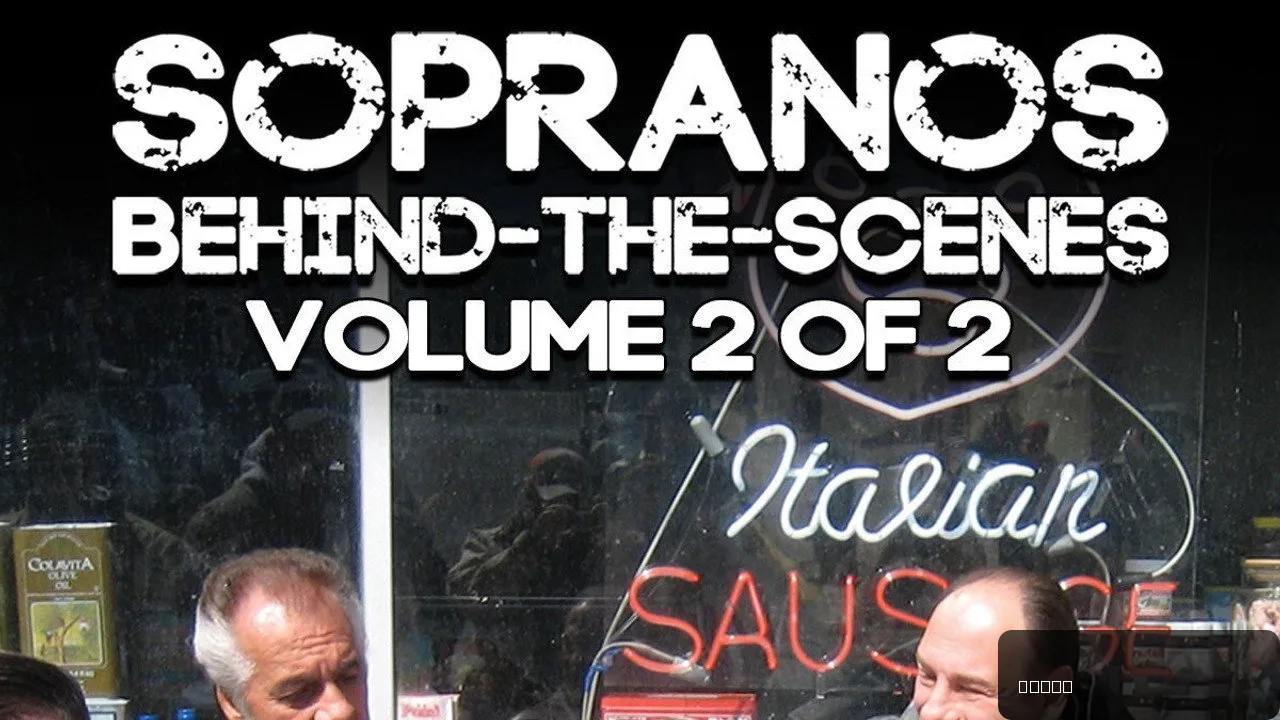
Tony Soprano's Gabagool Habit Was Always a Trauma Response
The Sopranos buried one of its most psychologically rich character details inside a deli order — and most viewers just laughed along for six seasons without catching it. Here's what the gabagool actually meant, and where to watch the series right now.
Three years after The Wire rewrote how critics talked about television's capacity for layered social storytelling, The Sopranos was doing something quieter and arguably stranger — encoding a character's deepest psychological wound inside his lunch order. The detail has resurfaced in a significant wave of online discussion in 2026, driven by a TikTok and Sora AI trend in January featuring an Italian-American caricature demanding gabagool, which sent a new generation of viewers back to the HBO original. What they found there is darker than the meme ever let on.
The Panic Attack Scene That Changes Everything About Tony's Appetite
The key scene is in Season 3, Episode 6 — "Fortunate Son" — and it's worth going back to with fresh eyes.
Dr. Jennifer Melfi, played by Lorraine Bracco, has been working with Tony (James Gandolfini) on his recurring panic attacks. She starts noticing a pattern: his first attack happened while he was grilling sausages. A subsequent one struck while he was making a sandwich. Then, mid-episode, Tony pulls a slice of gabagool — capicola, the cured pork shoulder beloved in Italian-American households — from the refrigerator, takes a bite, and collapses into another episode.
What follows is the flashback that reframes the entire series. An eleven-year-old Tony, played by Mark Damiano II, watches his father Johnny Boy Soprano (Joseph Siravo) and his Uncle Junior (Rocco Sisto) brutally beat the owner of Satriale's Pork Store, a man named Mr. Satriale (Lou Bonacki). This is the first panic attack Tony ever experienced. The trauma lodges itself not in his conscious memory, at least not immediately, but in his body — specifically in the act of eating cured meat.
James Gandolfini portrayed Tony across all six seasons from 1999 to 2007. The show ran on HBO and is widely regarded as one of the defining American television dramas of its era, winning 21 Emmy Awards across its run.
The gabagool detail is worth spelling out plainly:
- Tony's panic attacks are physiologically triggered by meat — sausages, sandwiches, capicola
- The trigger connects directly to the Satriale's beating he witnessed at age 11
- That beating is also the origin point of Tony's understanding of what his family does
- Satriale's Pork Store becomes, for the rest of the series, the Soprano crew's primary hangout — the violence absorbed into the everyday
That last point is what makes it so unsettling. Tony doesn't avoid Satriale's. He eats there constantly. The trauma doesn't keep him away; it keeps him there, in a loop he can't see clearly enough to break.
Why Writers Embedded This Detail So Quietly
The thing nobody mentions enough is how deliberately the show's writers withheld the explanation. Viewers had watched Tony order gabagool for two full seasons before "Fortunate Son" arrived with its context. That's not an accident.
According to Collider's analysis of the gabagool motif, the writers used Tony's food obsessions as a running psychological shorthand — a way of communicating his internal state to attentive viewers without the characters themselves ever naming it directly. Tony doesn't know why gabagool gives him panic attacks until Dr. Melfi helps him surface the memory. And even then, he doesn't stop eating it. He can't.
This is the cycle the show keeps returning to: Tony understands, on some level, that his childhood made him violent and anxious and broken in specific ways. He goes to therapy. He talks about his mother. He cries about the ducks in his swimming pool. And then he goes back to Satriale's and orders the same thing he always orders.
What's striking is how this maps onto the show's larger argument — that insight without structural change is just suffering with better vocabulary.
Gabagool as American Slang: A Quick Linguistic Detour
Esquire's breakdown of the gabagool phenomenon traces the word's origins through Southern Italian dialect — specifically the Neapolitan pronunciation of capicola or capicollo, filtered through generations of New Jersey Italian-American speech patterns. Vowels drop, consonants shift, and you get gabagool. Same process gives you "muzzadell" for mozzarella, "rigot" for ricotta, "proshut" for prosciutto.
The term exploded into broader pop culture through The Sopranos and never really left. VideoGameDunkey's 2020 parody song gave it a second life online. Then the January 2026 TikTok/Sora AI trend pushed it into a genuinely new audience demographic — people who'd never watched the show, laughing at a meme, then curious enough to actually go find it.
Hard to say if that's the ideal entry point for a show this dense. But it's an entry point.
A Writer Who Grew Up Inside This World
Jen Vestuto, who wrote about this subject for Collider on May 11, 2026, brings a specific lens to the material — she grew up on Long Island in what she describes as "a loud Italian family" and worked in television writers' rooms for shows including The Vampire Diaries and Nancy Drew. Her perspective on the gabagool scene is grounded in familiarity with the cultural texture the show is working with.
"If you are an Italian-American, especially in the Tri-State area," Vestuto wrote, "you're familiar with the slang terms we sometimes use to describe our favorite foods." That cultural intimacy is part of why The Sopranos lands differently for viewers who grew up in that world versus those encountering it from the outside — the food isn't just flavor detail, it's the texture of a whole way of life.
Movie OTT reached out to HBO for comment on the renewed audience interest in The Sopranos driven by the 2026 TikTok trend but had not received a response at time of publication.
Where Indian Audiences Can Watch The Sopranos Right Now
The Sopranos has a substantial and growing Indian viewership, particularly among audiences aged 25–40 who came up watching prestige American drama during the streaming boom of the early 2020s. The show's themes — family loyalty, the weight of tradition, violence as inheritance — travel across cultures with less friction than you might expect.
Here's the current streaming picture for Indian viewers:
- JioCinema: The Sopranos all six seasons are available on JioCinema Premium, which carries a significant portion of the HBO Max library in India
- Apple TV+ (via HBO add-on): Available in some configurations depending on your subscription tier
- Physical/digital rental: Available on Google Play Movies and Apple TV for per-episode rental if you don't want a full subscription
Movie OTT's where-to-watch tracker has the most current availability information across Indian platforms, since streaming rights shift regularly.
The show is not dubbed in Hindi or any regional Indian language — all streaming versions in India are in English with English subtitles available. The six seasons run to 86 episodes, each averaging approximately 50–55 minutes. The full series premiered between January 10, 1999 and June 10, 2007. For new Indian viewers, the general recommendation is to commit to at least the first four episodes before making a judgment — the pilot is strong, but the show's rhythm takes a few hours to settle into.
The Show Behind the Meme: Cast, Creators, and Legacy
The Sopranos was created by David Chase, who developed the concept from a film idea he'd been working on for years. Chase served as showrunner across all six seasons and wrote or co-wrote several of the series' most significant episodes, including the polarizing series finale.
James Gandolfini as Tony Soprano remains one of the most celebrated performances in American television history. Gandolfini won three Emmy Awards for the role. He died in June 2013. The prequel film The Many Saints of Newark (2021), directed by Alan Taylor, cast Michael Gandolfini — James's son — as a young Tony.
Key cast members across the series:
- Edie Falco as Carmela Soprano — Tony's wife, a character whose moral compromises are as complex as Tony's own
- Lorraine Bracco as Dr. Jennifer Melfi — Tony's therapist, the structural device through which much of the show's psychological excavation happens
- James Gandolfini as Tony Soprano — the lead, across all 86 episodes
- Joseph Siravo as Johnny Boy Soprano — Tony's father, seen primarily in flashbacks
- Rocco Sisto as a young Junior Soprano in the flashback sequences
Movie OTT's franchise pages carry the full episode and season breakdown for viewers who want to track specific episodes like "Fortunate Son" without committing to a full rewatch.
What the 2026 Revival Means for Where This Show Goes Next
The January 2026 TikTok trend and the resulting wave of think-pieces — this one included — suggest The Sopranos is in the middle of a genuine cultural reappraisal cycle, the kind that tends to happen every seven to ten years with landmark television. New viewers are arriving without the baggage of the original discourse. They're not arguing about the finale the way 2007 viewers did. They're noticing things earlier generations glossed over. Like the gabagool.
HBO has not announced any new Sopranos-adjacent projects beyond The Many Saints of Newark, though David Chase has spoken in various interviews about the possibility of additional prequel material. Nothing confirmed as of this writing.
For the latest streaming availability and any new announcements around the franchise across India, the US, the UK, and Spain, Movie OTT is tracking developments in real time. The gabagool detail has been hiding in plain sight for twenty-five years. It'll still be there when you're ready to look.