Arthur Harari's Cannes Controversy: The Unknown Director Takes a Stand Against Bollore's Media Empire
TL;DR: At Cannes 2026, French director Arthur Harari defended signing the "Time to Switch-Off Bollore" open letter while premiering his Competition film The Unknown — a body-swap drama starring Léa Seydoux and Mathieu Schneider. Canal Plus CEO Maxime Saada responded by blacklisting the letter's 600-plus signatories, triggering the festival's most explosive off-screen drama in years.
On a Tuesday morning in Cannes, with the Palme d'Or race still wide open and the Croisette buzzing from the previous night's premiere, Arthur Harari sat down at the press conference for his Competition entry The Unknown and did something that very few filmmakers at very high-stakes festivals are willing to do: he doubled down. The French director, whose film had already earned a nine-minute standing ovation at its premiere, refused to walk back his signing of an open letter targeting media mogul Vincent Bolloré — even as Canal Plus CEO Maxime Saada had announced, just two days prior, that his company would cease all collaboration with the letter's 600-plus signatories. For streaming audiences and cinephiles tracking The Unknown's awards trajectory, this controversy isn't just political noise. It cuts directly to questions about who finances European cinema, who controls what gets made, and whether a film this bold can find the distribution muscle it deserves.
What Harari Actually Said at the Press Conference
The director's position, stated calmly but with unmistakable conviction, drew a careful distinction that the headlines have largely flattened. Harari wasn't attacking the Canal Plus editorial teams or their programming decisions — he was pointing at the structural reality of who owns the company that owns those teams.
"The fact Canal Plus, which is the guarantor and has contractual commitments to the diversity of cinema, is part of a larger conglomerate owned by Vincent Bolloré, which is increasingly concentrating a rather staggering number of media outlets, newspapers, and television channels, and whose orientation is very clearly far-right — that had to be named," Harari said at the press conference, as reported by Deadline. "When something isn't spoken, it festers."
He was equally direct about his motivation for signing the letter, titled Time to Switch-Off Bolloré, even while acknowledging he didn't agree with every word: "There are elections in a year. There has never been such a strong possibility that the far-right party will govern France... something had to be said about the situation of this group, which is fundamental to the financing of French cinema — not just French cinema; it's one of the life bloods of European cinema."
That's not a filmmaker venting. That's a filmmaker doing the math on what happens to independent film funding if political winds shift.
The Ownership Stakes That Make This More Than a Spat
Here's the structural picture, because the numbers matter enormously. The Bolloré Group holds a 30% stake in Canal Plus, making it the broadcaster's dominant shareholder. Canal Plus, in turn, recently acquired a 34% stake in French mini-major UGC, with a contractual option to purchase the company outright in 2028, according to Deadline's reporting.
Canal Plus isn't just a broadcaster. It's a financing engine wired into the contractual obligations of French cinema law — a system that mandates broadcasters invest in domestic film production as a condition of their operating licenses. If the editorial direction of that engine shifts, the downstream effects on which films get greenlit, which directors get funded, and which voices get amplified are not hypothetical. They're structural.
Saada's response — cutting off 600 film professionals from Canal Plus collaboration — was itself a significant escalation. His specific objection was to Harari's characterization of Bolloré as "a crypto-fascist" in an interview with French newspaper Libération. "If some go so far as to call Canal+ 'crypto-fascist', then I cannot agree to collaborate with them," Saada said, as quoted by Deadline. "That's the line."
Most coverage has framed this as a free-speech standoff between an outspoken director and a thin-skinned CEO, but the real story is quieter and more structural: Saada's blacklist effectively weaponized Canal Plus's legally mandated financing role, turning a public-interest obligation into a loyalty test. That's not a spat. That's a precedent.
The Unknown Itself: What the Film Is Actually About
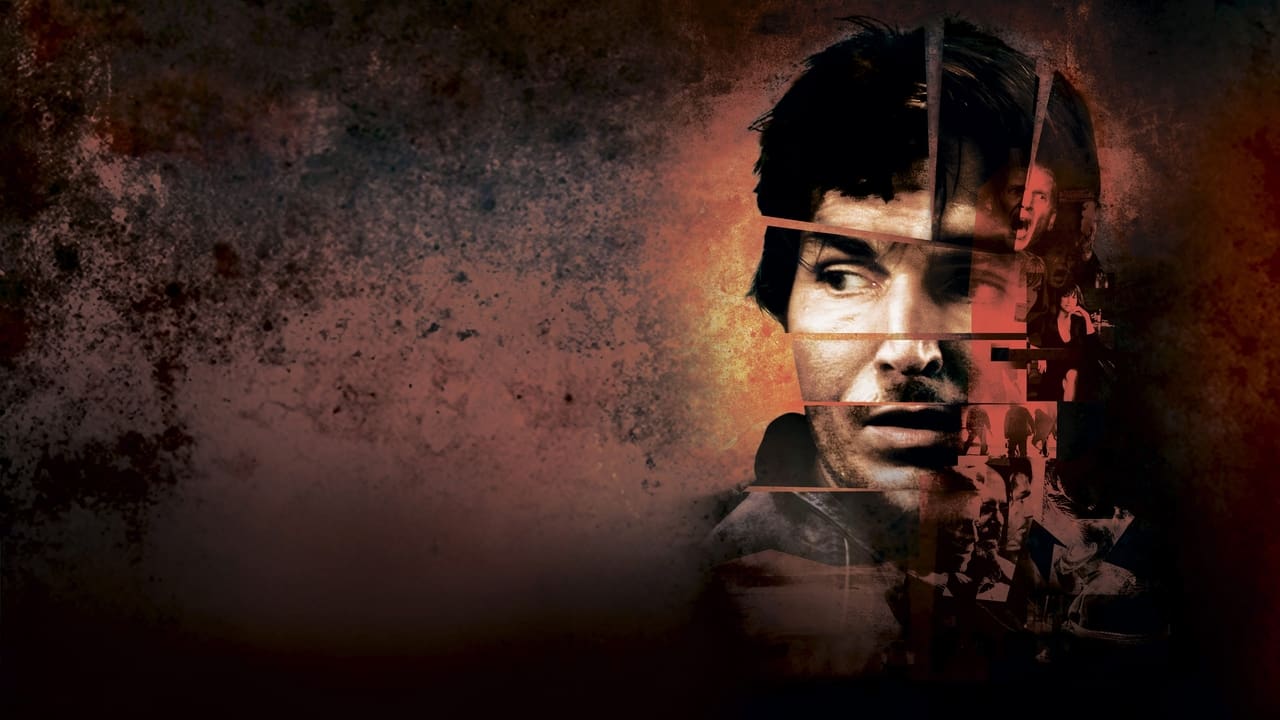
Set aside the politics for a moment, because the film at the center of all this deserves its own serious attention. The Unknown (French title: L'Inconnue) is Arthur Harari's adaptation of The Case of David Zimmerman, a graphic novel he co-wrote with his brother Lucas Harari. The premise is bracingly strange: a reclusive photographer named David wakes up on New Year's Day to find himself inhabiting the body of a woman — played by Léa Seydoux — with whom he had an uncanny encounter at a party the night before. The man David used to be is now played by Mathieu Schneider, similarly displaced into an unfamiliar body, trying to piece together a life whose history is a complete mystery.
Comparisons to Being John Malkovich and Michel Gondry's more surrealist work will be inevitable, and not entirely unfair. But the body-swap genre here feels less like a high-concept comedy and more like a philosophical inquiry into identity, selfhood, and the gap between who we think we are and who others see. The part I'm most curious about is how Harari handles the physical performances — because asking Seydoux and Schneider to essentially play each other, inhabiting the same continuous spirit in radically different bodies, is an acting challenge that could go very wrong very fast, or produce something genuinely extraordinary.
The film received a nine-minute standing ovation at its Cannes premiere, which by festival standards signals serious Palme d'Or contention.
Harari's Place in French Cinema — and Why His Voice Carries Weight
Arthur Harari isn't a provocateur for the sake of it. His debut feature Onoda: 10,000 Nights in the Jungle (2021) was a patient, meticulous wartime epic that ran a demanding 166 minutes and earned serious critical attention across Europe. He's also the partner of director Justine Triet, whose Anatomy of a Fall won the Palme d'Or at Cannes 2023 — a film that Canal Plus co-financed, which makes the current standoff even more layered than it might initially appear. That detail alone. Think about it: the broadcaster now threatening to blacklist Harari helped fund the Palme d'Or winner from his own household two years ago.
For readers tracking this on Movie OTT, Harari represents a strand of French auteur cinema that sits somewhere between mainstream arthouse and genuinely difficult festival fare: films with real star power (Seydoux is one of the most bankable European actors working today), high-concept premises, and a refusal to sand down the edges.
Why This Controversy Matters to Anyone Who Watches European Film on Streaming
The Bolloré situation isn't a niche French media story. For global streaming audiences, the implications run deeper than they look on the surface.
Canal Plus is a co-financier on a significant slice of the French films that eventually land on Netflix, MUBI, and Prime Video internationally. If the broadcaster's editorial independence erodes — or if 600 of France's most active film professionals are genuinely locked out of Canal Plus funding — the pipeline of adventurous European cinema that feeds international streaming platforms gets narrower. Think about the films you've discovered on MUBI or Netflix's international section: many of them have Canal Plus somewhere in the credits. That's the system at risk here.
Hard to say if Saada's blacklist announcement was a genuine policy shift or a pressure tactic designed to draw a line in the sand. But either way, the French film industry's reaction (outrage, immediate public statements, festival-floor debate that reportedly spilled into the Majestic Hotel bar well past midnight) suggests that filmmakers there believe it's real.
Movie OTT tracks streaming availability across regions, and the pattern we've seen with politically contentious European films is that controversy at the festival level rarely hurts international streaming deals. If anything, the noise around The Unknown has probably made it more visible to acquisition teams at MUBI and Netflix's arthouse arm.
Where Indian Audiences Can Watch The Unknown — and What to Expect
The Unknown is a Cannes 2026 Competition film, which means its theatrical and streaming release timeline is still being established. Here's what we know and what to reasonably expect for Indian viewers:
- MUBI India is the most likely home for this film, given the platform's track record with Cannes Competition titles and French-language cinema. MUBI has established itself as the go-to platform in India for exactly this category of film.
- Netflix India has acquired Cannes Competition titles before (including films from Harari's orbit), though typically with a longer delay after theatrical release.
- Prime Video India is a lower-probability landing spot for a film of this type, though not impossible.
- A theatrical release in India through PVR Inox's English/foreign-language screens in Mumbai, Delhi, and Bengaluru is plausible, particularly if the film performs strongly in awards season.
- No Indian release date has been confirmed as of the time of writing. Cannes Competition films typically see Indian streaming availability within 6-18 months of their festival premiere.
For the most current streaming availability updates across these platforms, Movie OTT's where-to-watch tracker is worth bookmarking — particularly for European arthouse releases where the acquisition landscape shifts quickly.
Indian audiences who connected with Anatomy of a Fall (Harari's partner Justine Triet's Palme d'Or winner, which MUBI India picked up and which ranked among the platform's top-ten most-watched titles in India for Q1 2024) will find The Unknown a natural next watch. The sensibility is adjacent: European, intellectually rigorous, anchored by a high-concept premise that rewards patience.
What Happens Next — for the Film and for French Cinema
The Cannes jury hasn't spoken yet, and The Unknown remains a serious Palme d'Or contender. A win — or even a major jury prize — would significantly complicate any broadcaster's attempt to quietly sideline the film or its director. Awards change the distribution calculus entirely.
The broader Bolloré-Canal Plus situation will play out over months, possibly years, tied to French electoral politics and the regulatory framework governing broadcast obligations. The CNC (France's National Center for Cinema), which Harari specifically named as under threat from National Rally politicians, is the institutional backstop for the entire French film financing system. If that changes, the ripple effects will eventually reach streaming queues in Mumbai, London, and Los Angeles.
Watch for: the Palme d'Or announcement at the Cannes closing ceremony; Canal Plus's response to industry pressure on the blacklist; and the first international distribution announcements for The Unknown, which will signal how widely the film travels beyond the festival circuit. Movie OTT will update streaming availability as deals are confirmed across regions.
Should you watch The Unknown? Yes. Unambiguously. A Léa Seydoux body-swap drama from a director with a Palme d'Or-winning household and a nine-minute standing ovation at Cannes — that's not a hard call. The controversy around it is real and worth understanding, but don't let it overshadow the film itself.