Sophie's Choice: Is the Classic Holocaust Drama Worth Streaming in 2026?
TL;DR: Sophie's Choice (1982) remains one of cinema's most emotionally devastating works, anchored by Meryl Streep's Oscar-winning performance. It's available on select streaming platforms depending on your region. Whether it holds up as essential viewing — or whether the industry's current nostalgia cycle is overselling it — is worth a harder look than most retrospectives give it.
A 44-year-old film is suddenly back in the conversation. Not because of a remake announcement, not because of a sequel greenlight, but because streaming algorithms keep surfacing it and audiences keep asking: is Sophie's Choice actually as good as everyone says, or is it one of those films that gets called a masterpiece because nobody wants to be the person who disagrees?
Fair question. The honest answer is more complicated than the consensus allows.
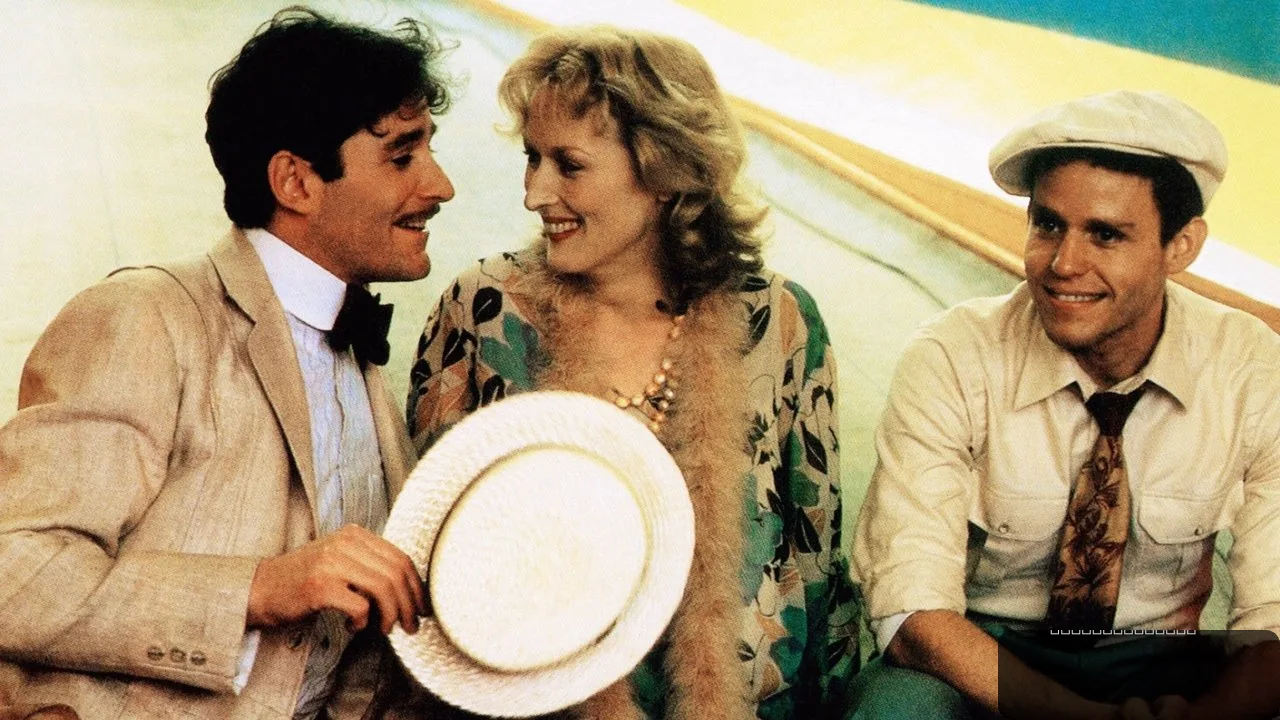
Sophie's Choice (1982) is the kind of film that comes pre-loaded with cultural weight so heavy that actually watching it becomes almost secondary to the act of having watched it. Directed by Alan J. Pakula and starring Meryl Streep in what many consider her finest screen performance, the film adapts William Styron's 1979 novel into a two-and-a-half-hour drama that moves between postwar Brooklyn and the horrors of Auschwitz with a deliberateness that modern audiences may find either profound or exhausting, depending on their patience threshold. Streep won the Academy Award for Best Actress for the role. Kevin Kline and Peter MacNicol round out the central trio. The film was a significant awards-season story and a box-office performer for its era. But does it deserve the near-untouchable status it's been assigned?
What the film actually is, and what it isn't
The plot follows Stingo (MacNicol), a young aspiring writer who relocates to Brooklyn in 1947 with dreams of finishing his first novel. He falls into the orbit of Sophie (Streep) and her volatile lover Nathan (Kline), and what begins as a portrait of bohemian camaraderie slowly reveals itself as something far darker. Sophie is a Holocaust survivor. Her past, delivered through a series of flashbacks, traces her journey from prewar prosperity to Auschwitz. Nathan, charismatic and brilliant, is also deeply unstable. The film builds toward a revelation — the "choice" of the title — that has become one of cinema's most referenced dramatic moments.
Runtime: 150 minutes. That's not a warning, exactly, but it's something to plan around. This is not a film that moves quickly. Pakula takes his time establishing the Brooklyn summer, the heat, the intimacy of the boarding house, the particular quality of light before something terrible is understood. Whether that pacing feels earned or indulgent is genuinely a matter of taste, and I keep coming back to the fact that most modern streaming viewers encounter this film in an environment built for skipping ahead.
The numbers behind a 1982 prestige release
Here's where context matters. Sophie's Choice was produced on a budget of approximately $14 million, per production records cited by IMDB's historical data, and grossed around $30 million domestically during its theatrical run, per Box Office Mojo — a solid return for a serious literary adaptation in the early Reagan era, not a blockbuster, but a clear commercial and critical success.
Meryl Streep's Oscar win was her second (she had previously won Best Supporting Actress for Kramer vs. Kramer in 1980), a fact that sometimes gets compressed into the shorthand of "Streep is always nominated." The film holds an 86 on Metacritic based on critical aggregation, which places it in the "universal acclaim" tier. Kevin Kline received a BAFTA nomination for his performance as Nathan. The film was distributed by Universal Pictures, with Pakula producing alongside Keith Barish.
These numbers tell a story of a film that punched above its weight commercially while landing exactly where critics expected it to land. Nothing surprising there. What's more interesting is how streaming has extended its shelf life in ways that a 1982 theatrical release couldn't have anticipated.
Films that share its DNA — and what happened to them
| Film | Year | Outcome | |---|---|---| | Schindler's List | 1993 | Directed by Spielberg, won 7 Oscars, still considered the benchmark | | The Reader | 2008 | Kate Winslet won the Oscar; the film divided critics on its moral framing | | The Pianist | 2002 | Roman Polanski, Adrien Brody won Best Actor; endures as a genuine masterpiece |
Sophie's Choice sits in this company — or is placed there by default. The comparison to The Reader is worth dwelling on. Both films use a non-linear structure to reveal wartime trauma, both center on a complex female survivor, and both won their lead actress the Academy Award. The Reader has since attracted substantial critical pushback for how it frames its subject — Ron Rosenbaum's widely circulated Slate essay called it "Oscar-bait Holocaust kitsch" within weeks of its release, and that charge stuck. Sophie's Choice has largely escaped that reassessment. Hard to say if that's entirely fair. Most retrospectives treat Sophie's Choice as the prestige template and The Reader as the cautionary tale, but strip away the Streep mystique and the structural similarities are uncomfortable: both films ask you to empathize with a European woman whose wartime complicity is revealed gradually, and both use a younger male narrator as the audience's emotional proxy. The difference may be less about artistic quality than about which decade's critics were willing to ask the harder questions.
What Meryl Streep said about playing Sophie
The performance is, genuinely, extraordinary. Streep learned Polish and a Southern American accent simultaneously for the role, a technical feat that has been documented extensively. As Variety noted in a retrospective profile, Streep described the preparation as among the most demanding of her career, saying: "I had to find a way to carry all of that loss without letting it crush every scene. Sophie had to seem alive, not just tragic."
That balance is what makes the film work when it works. Streep's Sophie isn't a symbol or a monument. She's a person who laughs and flirts and makes bad decisions and loves someone who is destroying her. The flashback structure, which might have felt like emotional manipulation in less careful hands, becomes something more like archaeology — you're watching Stingo, and by extension the audience, slowly uncover what Sophie has survived.
What's striking is that the film trusts its audience not to need every revelation underlined. That kind of restraint is rarer than it should be.
Where to watch Sophie's Choice right now
Streaming availability shifts by region, so Movie OTT's where-to-watch tracker is the most reliable place to confirm current availability before you go hunting. As of this writing, here's the general picture:
- United States: Available on Peacock (NBC Universal's streaming service, which holds Universal library titles)
- United Kingdom: Check BFI Player and MUBI, both of which rotate classic titles; availability varies by month
- India: Currently accessible via select titles on MUBI India; not confirmed on Netflix India, Prime Video India, or Hotstar as a permanent addition
- Spain: MUBI Spain has carried it periodically; check Movie OTT for current status
Released theatrically: December 8, 1982. For physical media collectors, the Criterion Collection released a Blu-ray edition with supplementary materials including interviews with Pakula (before his death in 1998) and academic commentary on Styron's novel.
The India angle: how this film lands for a different audience
Indian streaming audiences have developed a genuine appetite for prestige Western cinema, and Movie OTT tracks this demand closely across platforms including Netflix India, Prime Video, Hotstar, SonyLIV, and Zee5. Sophie's Choice isn't a mainstream discovery title in India — it doesn't have the franchise recognition of, say, a Marvel release or the algorithmic push of a new Netflix original. But it surfaces regularly in curated lists for cinephiles.
MUBI India has become the most natural home for this kind of film in the Indian market. The platform's subscriber base in India crossed 1 million in 2023 (per MUBI's own investor communications), and its curation model specifically rewards canonical titles with high critical scores — a Meryl Streep vehicle with an 86 Metacritic fits that pipeline almost by design. There are no Hindi, Tamil, or Telugu dubbed tracks available, which limits its reach to English-language or subtitle-comfortable viewers. A real ceiling.
The Holocaust as a subject has a specific reception context in India, where the history doesn't carry the same immediate cultural memory it does in Europe or the United States. That distance can actually be useful for a film like this — Indian viewers may engage with the drama more as universal human tragedy than as a specifically European moral reckoning. Whether that's a feature or a limitation of the film's design is an interesting question that most Western criticism doesn't bother asking.
Director Alan J. Pakula's place in American cinema
Pakula's career is one of the more underappreciated bodies of work in American film. He directed Klute (1971), which won Jane Fonda the Oscar for Best Actress. All the President's Men (1976) is arguably the definitive American political thriller. Sophie's Choice completed what some critics call his "paranoia trilogy" — though that label fits the first two films better than the third, which is less about institutional conspiracy than personal devastation.
Pakula died in 1998 in a car accident. He was 70. His later work, including The Pelican Brief (1993) and The Devil's Own (1997), didn't reach the heights of his 1970s output, but the three films from that decade alone would constitute a significant legacy for any director.
Kevin Kline, in his film debut here, brings a quality to Nathan that could easily have tipped into melodrama but instead reads as genuinely frightening. The instability feels real, not theatrical. MacNicol as Stingo is the audience surrogate — young, naive, in over his head — and it's a thankless role that he handles with more grace than the part probably deserves on the page.
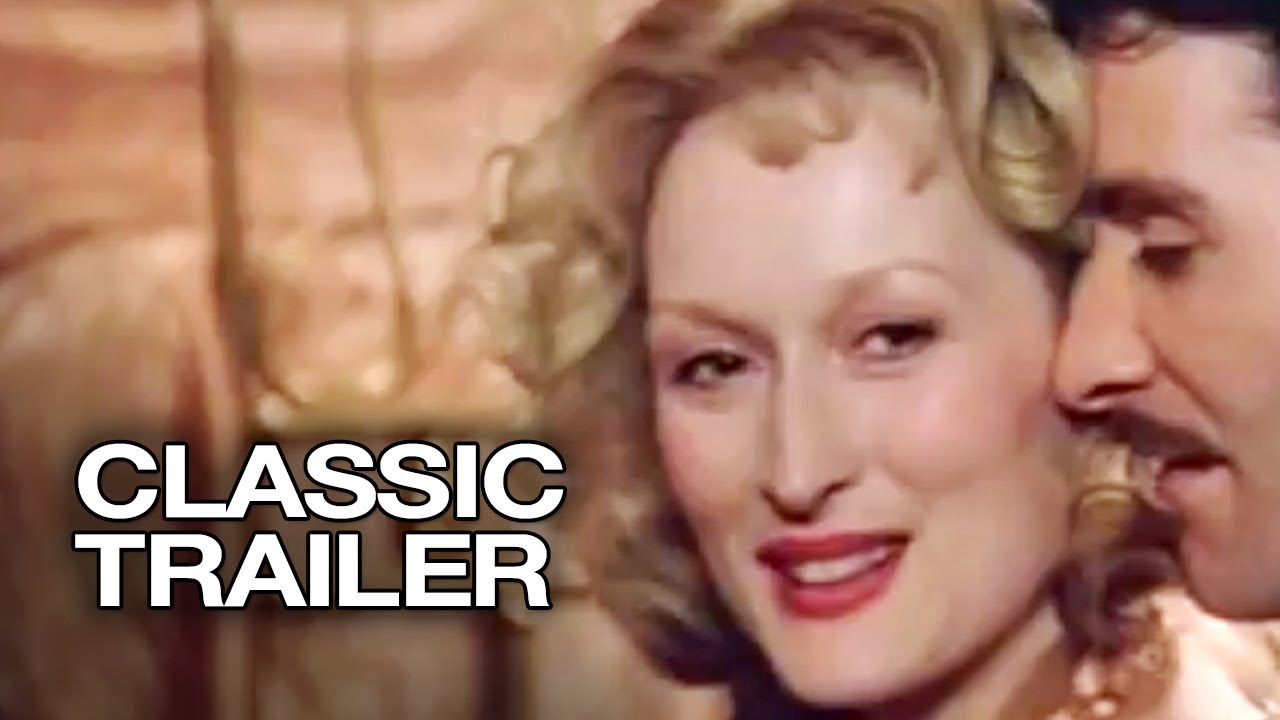
Watch the official trailer:
What's ahead: streaming rights, reissues, and the retrospective moment
The editorial take here — and I'll be direct about it — is that Sophie's Choice is being rediscovered not because audiences have suddenly become more interested in 1982 prestige drama, but because streaming platforms need library depth and algorithmic recommendation surfaces anything with a high critical score and a famous name attached. That's not cynicism, it's just how the current ecosystem works.
What to watch for: Criterion's licensing agreements for their Blu-ray catalog occasionally translate to streaming deals, and a MUBI exclusive window for the Criterion cut would be the most natural next step for this title. Universal's relationship with Peacock keeps it accessible in the US for now. The 45th anniversary falls in 2027, which is the kind of milestone that prompts theatrical re-releases in major markets.
Whether this film gets the full restoration-and-reappraisal treatment that Klute received — including new 4K transfers and critical reassessment pieces in major outlets — depends on whether a studio or distributor decides the commercial case is there. Given Streep's continued cultural prominence, the bet isn't a bad one. But we'll see.
Should you watch it?
Yes, with caveats. Sophie's Choice is a genuinely great film that has been slightly damaged by its own reputation. Go in expecting something demanding and human, not a tidy tearjerker. The performance is real. The ending hits. It earns its 150 minutes — mostly.
For the latest streaming availability across regions, Movie OTT has the current picture as platforms update their libraries.