Stan Lee's Philosophy Decoded: The Ideas That Built Marvel
TL;DR: Stan Lee's quotes from interviews spanning 1968 to the 1990s reveal a creative philosophy built on boredom, moral conviction, and a refusal to accept the formulaic. Understanding his thinking helps explain why Marvel dominates global pop culture today — and why the MCU still carries his fingerprints six decades on.
What actually made Marvel Comics different from everything that came before it? Not the costumes. Not the superpowers. The answer is a philosophy — one man's stubborn belief that comics could be art, that superheroes could be flawed, and that readers deserved better than what they were getting.
That man was Stan Lee. Born Stanley Martin Lieber in 1922, Lee spent decades at Marvel (then Timely Comics, then Atlas) before the creative explosion of the early 1960s turned him into a legend. His collaborations with Jack Kirby and Steve Ditko produced Spider-Man, the X-Men, the Hulk, Thor, Daredevil, the Avengers — essentially the entire architecture of the Marvel universe. But the characters themselves were almost secondary to the ideas behind them. Lee was, at his core, a thinker who happened to write comics. And he talked about those ideas constantly, across decades of interviews.
Studying those interviews now — and Goodreads has assembled a strong cross-section of his quotes — you start to see a coherent worldview. One that explains Marvel's rise, its cultural staying power, and yes, even some of its current creative struggles.
The Boredom That Changed Everything
Here's the thing nobody really talks about when they celebrate Stan Lee's legacy: he nearly quit.
By the late 1950s, Lee was grinding out comics he found genuinely, soul-crushingly dull. The industry had calcified. Stories were repetitive. Heroes were invincible and one-dimensional. The Comics Code Authority — a censorship body established in 1954 — had squeezed out anything edgy or morally ambiguous. Lee later told OUI Magazine in 1977 that the entire Marvel revolution "started out of sheer boredom," and that he told his wife Joan every day that he wanted to leave the industry.
Joan Lee's response, as he recounted it: stop writing "the same old slop" and write something better instead.
That's it. That's the origin story. Not a radioactive spider or a gamma bomb — a wife telling her husband to stop complaining and actually fix the problem. Lee credited Joan frequently in interviews, and rightly so. She pushed him to actualize what he already knew he could do. The result, starting around 1961 with the Fantastic Four, was a creative renaissance that reshaped American pop culture permanently.
What's striking is how applicable that lesson remains. Boredom isn't failure — it's diagnostic. It tells you something needs to change. Lee recognized that both he and his readers were bored, and rather than push through it, he treated it as a signal.
Why Marvel's Heroes Were Deliberately Imperfect
Lee's most revolutionary creative decision wasn't inventing new characters. It was making them human.
Before Marvel's 1960s output, superheroes were essentially power fantasies with thin moral veneers. DC's Superman was godlike and emotionally distant. Batman was wealthy, brilliant, untouchable. Lee found this boring — and, more importantly, he found it dishonest. Real people had money problems, family drama, self-doubt, and contradictory impulses. Why shouldn't their heroes?
Peter Parker was a broke, awkward teenager who couldn't talk to girls. Tony Stark was a weapons manufacturer with a drinking problem. The X-Men were feared and hated by the very public they protected. The Hulk was a man who couldn't control his own rage. These weren't incidental character details — they were the point. According to Quality Comix's exhaustive archive of Lee's statements, Lee consistently emphasized that readers needed to relate to characters on a personal level, not just admire them from a distance.
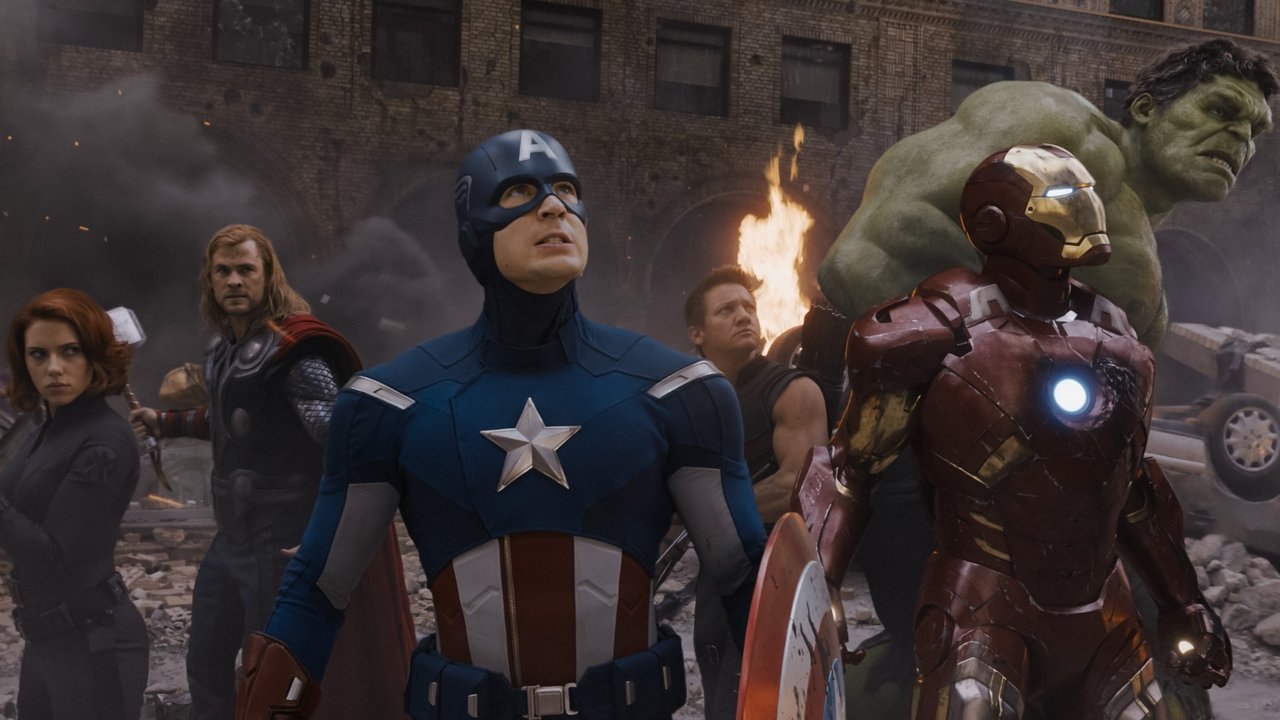
This was the philosophical engine behind Marvel's dominance. And it's why the MCU films, at their best, still work — when Tony Stark says "I am Iron Man" at the end of Endgame, the line lands because we've watched him wrestle with ego and responsibility for eleven years. That arc was baked in by Lee in 1963.
Movie OTT covers the full Marvel Cinematic Universe streaming availability across regions — useful if you're trying to trace that character evolution from Iron Man (2008) all the way through Endgame (2019).
Comics as Art: The Michelangelo Argument
Lee spent years fighting the perception that comics were low culture. Disposable. Kids' stuff.
His counter-argument was elegant. Speaking to OUI Magazine in 1977, he posed a hypothetical: what if Michelangelo and Shakespeare were alive today, and Shakespeare said, "Let's team up — you draw, I'll write"? Nobody, Lee argued, would then claim comics weren't a legitimate art form.
The point isn't grandiose. It's actually grounded in history — both Michelangelo and Shakespeare were commercial artists working within popular forms for mass audiences. The Sistine Chapel was a commission. Shakespeare wrote for crowds who threw vegetables at bad performances. Neither man was operating in some rarefied artistic bubble. Lee was saying: the medium doesn't determine the worth. The execution does.
This argument matters now more than ever, given how seriously film criticism has come to treat superhero cinema. When Black Panther earned a Best Picture nomination at the 2019 Academy Awards — becoming the first superhero film to do so — it validated an argument Lee had been making for fifty years.
"The Human Race Needs Superheroes": Lee's Philosophical Bet
In a 1970 interview with IT Magazine, Lee made a claim that sounds almost Voltairean in retrospect.
"I think the human race needs superheroes," he said, "and if we don't have real ones, we're almost forced to create them. Because I think we're all aware, consciously or unconsciously, that the problems that face us are just too big and too grave for us to solve ourselves."
Real heroism, Lee understood, is fragile and inconsistent. Real heroes disappoint. Institutions fail. The fantasy of a figure who is both powerful and morally reliable fills a genuine psychological need — and that need intensifies as the world gets more complicated.
This is why Marvel's output in the 1960s and 1970s hit so hard for its generation, and why the MCU hit hard for ours. The world felt chaotic. Superheroes offered a version of justice that felt achievable, even if fictional.
Movie OTT's streaming tracker can help you find where classic Marvel animated series and films are available in your region — a worthwhile companion if you want to trace how this philosophy evolved across decades of storytelling.
Stan Lee as Reluctant Preacher
One element of Lee's work that doesn't always get acknowledged: he was openly moralistic. And he didn't apologize for it.
"I try to moralize as much as possible," he told IT Magazine in 1970. "I'm naturally half a preacher at heart. I find I enjoy it."
The X-Men were always a civil rights allegory — mutants as stand-ins for any persecuted minority group. Captain America punched Hitler in a 1941 cover published a full year before the United States entered World War II. These weren't accidents. Lee believed stories with millions of readers carried real social weight, and that he had a responsibility to use that weight thoughtfully.
Hard to say if modern Marvel always honors that instinct. The current MCU can sometimes feel more concerned with franchise architecture than with what the stories are actually saying. Lee's era had a clarity of moral purpose that, frankly, the current output occasionally lacks.
Where to Watch Marvel and Why Lee's Legacy Matters Right Now
For audiences in India, the US, the UK, and Spain, the full MCU is available across multiple platforms:
- Disney+ / Disney+ Hotstar (India): The complete MCU library, including Phase 1 through Phase 5 films and all Marvel Disney+ series
- Amazon Prime Video (select regions): Some older Marvel titles rotate in and out of availability
- Netflix (Spain and UK): Carries select Marvel titles depending on licensing windows
- JioCinema (India): Periodically streams Marvel content through partnership deals
In India specifically, Disney+ Hotstar remains the primary home for Marvel content, with Hindi, Tamil, and Telugu dubs available for most MCU films. Movie OTT tracks current streaming availability across all these platforms in real time — worth bookmarking if you're planning a Marvel rewatch.
The Man Behind the Myth
Stan Lee — born December 28, 1922, died November 12, 2018 — spent over seventy years in the comics industry. He became Editor-in-Chief of Marvel Comics in 1941, at the age of eighteen. His co-creations with Jack Kirby include the Fantastic Four (1961), the X-Men (1963), Thor (1962), and the Hulk (1962). With Steve Ditko, he created Spider-Man (1962) and Doctor Strange (1963).
Key collaborators:
- Jack Kirby — The visual architect of Marvel's Silver Age; his dynamic panel compositions defined the look of superhero action
- Steve Ditko — Co-creator of Spider-Man and Doctor Strange; his psychological complexity shaped those characters' inner lives
- Joan Lee — Stan's wife of 69 years, and by his own account, the person who pushed him to write better work when he was ready to quit
Lee's cameo appearances in Marvel films became a beloved tradition, running from X-Men (2000) through Avengers: Endgame (2019). His final cameo, in Captain Marvel (2019), was dedicated to his memory.
What Comes Next for Marvel's Creative Identity
The MCU is currently in Phase 5, with Avengers: Doomsday scheduled for release on May 1, 2026, featuring Robert Downey Jr. returning as Doctor Doom. The film is directed by the Russo Brothers, who also helmed Infinity War and Endgame.
Whether the current Marvel machine can recapture the creative restlessness Lee described — that hunger to escape the formulaic, to write something that actually means something — remains an open question. Lee's prescription was simple: recognize when you're in a rut, get genuinely bored by your own output, and then fix it.
According to Addicted 2 Success's profile of Lee's philosophy, he believed creative ambition and commercial success weren't in opposition. Marvel proved it once. For the latest on where Stan Lee's Stan Lee's Marvel legacy is streaming across all regions, Movie OTT has the current picture.