Andrey Zvyagintsev's Minotaur: A Resurrection Nine Years in the Making
TL;DR: Two-time Oscar nominee Andrey Zvyagintsev returns to Cannes in 2026 with Minotaur, his first feature since 2017, after spending 40 days in a medically induced coma during COVID. The film—set during Russia's 2022 military mobilization and shot in Latvia—is already being eyed by Netflix and MUBI for streaming acquisition. Expect platform availability by early 2027; track it on Movie OTT's distribution tracker.
How a near-fatal illness changed what Zvyagintsev decided to make
Andrey Zvyagintsev almost died. Not metaphorically. In 2020, he contracted COVID-19 severe enough to require 40 days in a medically induced coma, followed by nearly a year of rehabilitation at a German clinic. When he woke, he couldn't stand. When he recovered, he moved to Paris.
That biographical fact is not incidental detail. It's the entire context for understanding Minotaur.
"The light can go out at any second," Zvyagintsev told Variety's Christopher Vourlias at Cannes 2026. "After this experience, I became even more daring. I became even hungrier."
What's striking is how he means that literally—not as metaphor. Directors who return after nine-year gaps tend to fall into two camps: cautious or swinging. Zvyagintsev came back swinging. For distributors bidding at Cannes, that's the pitch they want to hear from someone whose prior work already had a measurable theatrical ceiling and a documented arthouse audience.
The nine-year silence wasn't creative choice. It was survival.
The film itself: a Russian story that can't be filmed in Russia
Title: Minotaur
Director: Andrey Zvyagintsev
Setting: September 2022 (Russia's military mobilization)
Filmed in: Latvia (standing in for Russia)
Festival status: Cannes 2026 Main Competition (Palme d'Or contender)
Where to watch: Pending distribution deals (MUBI and Netflix expected contenders)
Here's what happens: A Russian businessman—successful, compartmentalized, running on parallel lies—watches his marriage implode and his country draft men into a war. The personal and political collapse simultaneously. He can't fix either one, so he does what Zvyagintsev's men always do. He runs.
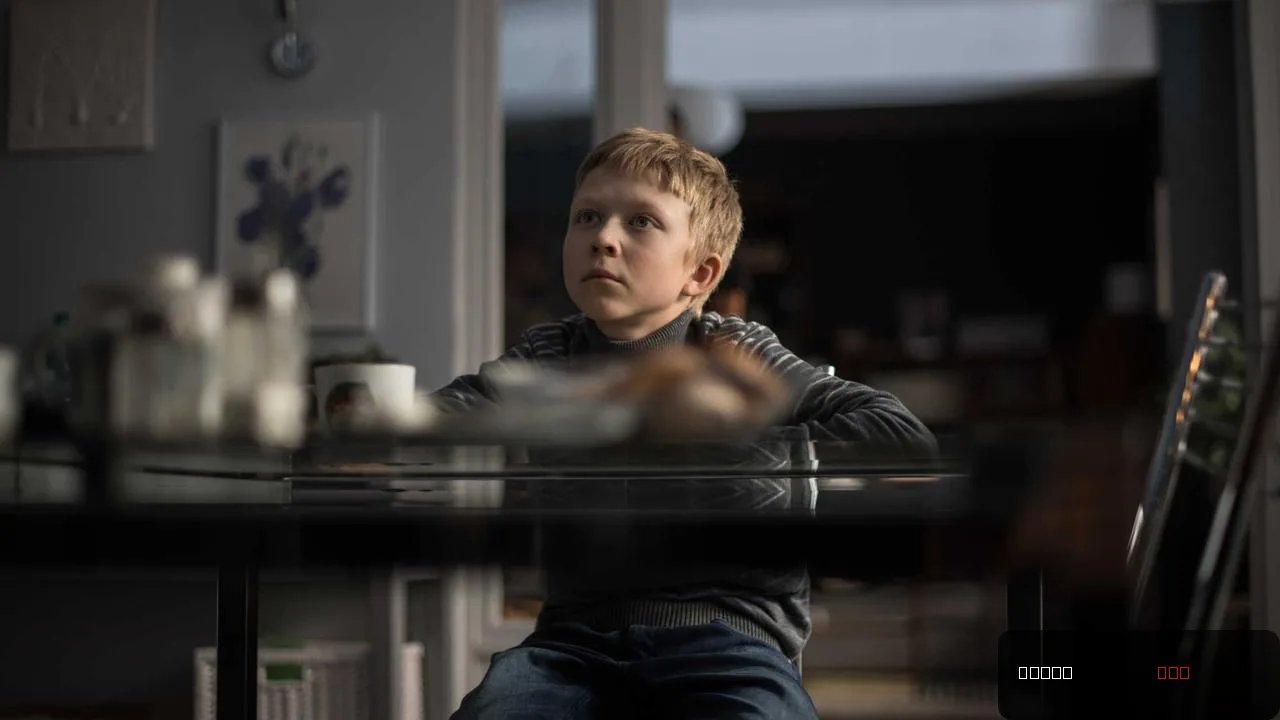
That last part matters. Look at the filmography. Kolya in Leviathan (2014)—crushed by corruption he can't fight. Boris and Zhenya in Loveless (2017)—so desperate to abandon their old lives they abandon their 12-year-old son. Every protagonist flees. The historical context changes. The moral cowardice stays constant.
Loveless earned Zvyagintsev an Oscar nomination and the Cannes Jury Prize. It also established a template: domestic wreckage as mirror for state wreckage. Minotaur scales that architecture outward. Same psychology. Different stakes—now the country itself is fracturing alongside the protagonist.
Most coverage frames Minotaur as a comeback story, and the near-death biography makes that framing irresistible. But the more interesting question is whether this is actually a market test for exile-Russian cinema as a viable streaming category. Zvyagintsev isn't the only Russian auteur now working from Western Europe; Kirill Serebrennikov's Limonov premiered at Cannes 2024, and Kantemir Balagov signed a deal with Universal before the invasion. If Minotaur lands a seven-figure acquisition, it validates an entire pipeline of displaced Russian filmmakers whose work Western platforms can fund and distribute without touching Moscow's regulatory apparatus. That's a structural shift, not just one director's return.
Zvyagintsev couldn't film in Russia. So Latvia became the production base (the country's Soviet-era architecture doubles convincingly for Russian locations). It's a practical constraint that carries symbolic weight. A Russian director, exiled by circumstance and by choice, making a film about Russians fleeing. The irony isn't subtle, but it's effective.
Why this matters for awards and for streaming dollars
Two Oscar nominations in two consecutive years. Leviathan won the Golden Globe for Best Foreign Language Film in 2015 and earned an Academy Award nomination. Loveless repeated the Oscar nomination in 2018 and took the Cannes Jury Prize. That's a sustained track record—the kind that attracts serious funding and serious distributor attention.
MUBI acquired Loveless and has built a 14+ million subscriber base globally around exactly this kind of filmmaker. Netflix paid $30 million for Roma's worldwide rights in 2018, according to The Hollywood Reporter. They're hungry for prestige international cinema that plays well in awards season and builds their film-slate credibility.
Here's the commercial math nobody discusses openly: a Zvyagintsev film makes almost no money in theatrical. Leviathan grossed approximately $3.5 million in North American art-house release—excellent for a Russian-language film with zero studio backing. But a streaming acquisition deal would generate multiples of that in guaranteed upfront revenue. The real money comes from the platform, not from multiplexes.
The geopolitical context also works as a marketing asset. Russia's September 2022 mobilization triggered an estimated 500,000–700,000 departures in the weeks following Putin's decree, according to multiple analyses cited by Reuters and the BBC. That's not background texture. That's the dramatic engine. Western audiences who followed that news cycle already have an emotional entry point—they understand what the film is asking before they press play. And for platforms weighing acquisition costs, a built-in news-literate audience lowers the customer-acquisition spend considerably.
Where it streams (and when) depends on who wins Cannes
Distribution deals for Cannes competition titles close within days of the festival ending—sometimes on the market floor itself. Expect announcements in May 2026.
Here's the likely geography:
United States & Europe: Sony Pictures Classics, Neon, or A24 will grab theatrical rights. Expect a 90-day exclusivity window before streaming premiere.
Streaming platforms: MUBI is the most likely primary platform based on their prior acquisition of Loveless. Netflix remains a possibility if they win global rights. Movie OTT tracks these deals in real time—their where-to-watch database updates within hours of announcement.
India release: This is where the timing gets fuzzy. Zvyagintsev's prior films arrived on MUBI India several months after the European premiere. Realistically, expect Indian platform availability in Q1 or Q2 2027—possibly later if theatrical release takes priority. (Subtitle quality matters enormously for arthouse cinema, and Indian distributors tend to wait for professional Hindi/Tamil subtitles rather than rushing with auto-generated tracks.)
The India market doesn't get enough attention in international film coverage. There's a measurable, growing audience for prestige arthouse on MUBI India and on Amazon Prime Video's international indie section. Leviathan and Loveless both found their way there. Minotaur will too.
The through-line that connects Zvyagintsev's entire career
I keep coming back to one detail: Zvyagintsev's protagonists don't fight. They escape.
Kolya in Leviathan stands before a corrupt system and simply accepts it. Boris and Zhenya in Loveless are so eager to shed their old identities—old partners, old obligations—that they're willing to lose everything, including their son. They're not villains exactly. They're cowards who've rationalized their cowardice as self-actualization.
The businessman in Minotaur follows the same arc. A mobilization happens. A war happens. He chooses an affair. He chooses professional maneuvers. He chooses anything but the one thing that would require actual courage—confronting either his personal or political complicity.
That consistency is what makes Zvyagintsev durable across audiences who have zero connection to Russian geography. The film isn't really about September 2022's draft. It's about the specific moral architecture of men who choose private escape over collective responsibility. That plays in Mumbai as readily as it plays in Milan.
Honestly, that's why the film will likely find a larger streaming audience than his theatrical performance might suggest. On a screen in someone's apartment, with time to sit with the discomfort—that's where Minotaur's psychology lands hardest.
Watch the official trailer:

What comes next: Zvyagintsev is already thinking in centuries
Here's the weird part. Zvyagintsev told Variety he's already planning his next project. Not set in 2022 Russia. Not set in contemporary Europe. Set in ancient Greece, approximately 2,500 years ago, drawing on Plato's accounts of Socrates.
That's a significant pivot. A classical-world film from a two-time Oscar nominee would attract entirely different funding structures than his Russia-focused work. It suggests he's not interested in being typecast as the "dissident Russian filmmaker." He's thinking bigger—or maybe just differently.
But that's next. Right now, Minotaur is competing at Cannes. Watch for:
- Palme d'Or jury decisions — Zvyagintsev's biographical narrative (the near-death, the exile, the return) gives the film awards-festival momentum
- Distribution announcements — likely within days of Cannes closing
- Theatrical release window — probable in Europe by fall 2026, US follows in early 2027
- Streaming premiere — expect platform unveiling 90 days post-theatrical, so late 2026/early 2027 for North America; later for India
The thing nobody mentions about long director gaps is that they work as a reset button. When you come back after nine years, especially after nearly dying, your perspective shifts. Audiences sense that. Critics sense that. Festival juries sense that. Minotaur doesn't just come back to Cannes—it comes back as a film made by someone who understands time as finite.
That's the real story here. Not the geopolitics. Not the awards pedigree. Just a man who was gone, who shouldn't have come back, who did anyway, and who made something urgent because he knows the light can go out at any second.