The Dreamed Adventure Is the Cannes Palme d'Or Contender That Refuses to Play It Safe
TL;DR: Valeska Grisebach's debut Palme d'Or competition entry premiered May 23, 2026, in Cannes. It's a Bulgarian-set Western that isn't quite a Western. Streaming's still months away — but this is the film to track. MUBI is the likely eventual home in India; no confirmed dates yet.
Valeska Grisebach doesn't make films often. The Dreamed Adventure is only her third feature in roughly 20 years, and it just landed in the Cannes competition section — which means it's one of 22 films competing for the Palme d'Or against some of the year's heaviest hitters. If you've never heard of her, that's fine. But if you watched Western in 2017 (her last film, also set in Bulgaria), you already know she's capable of something most contemporary European directors won't attempt: making a genre film that's actually about something.
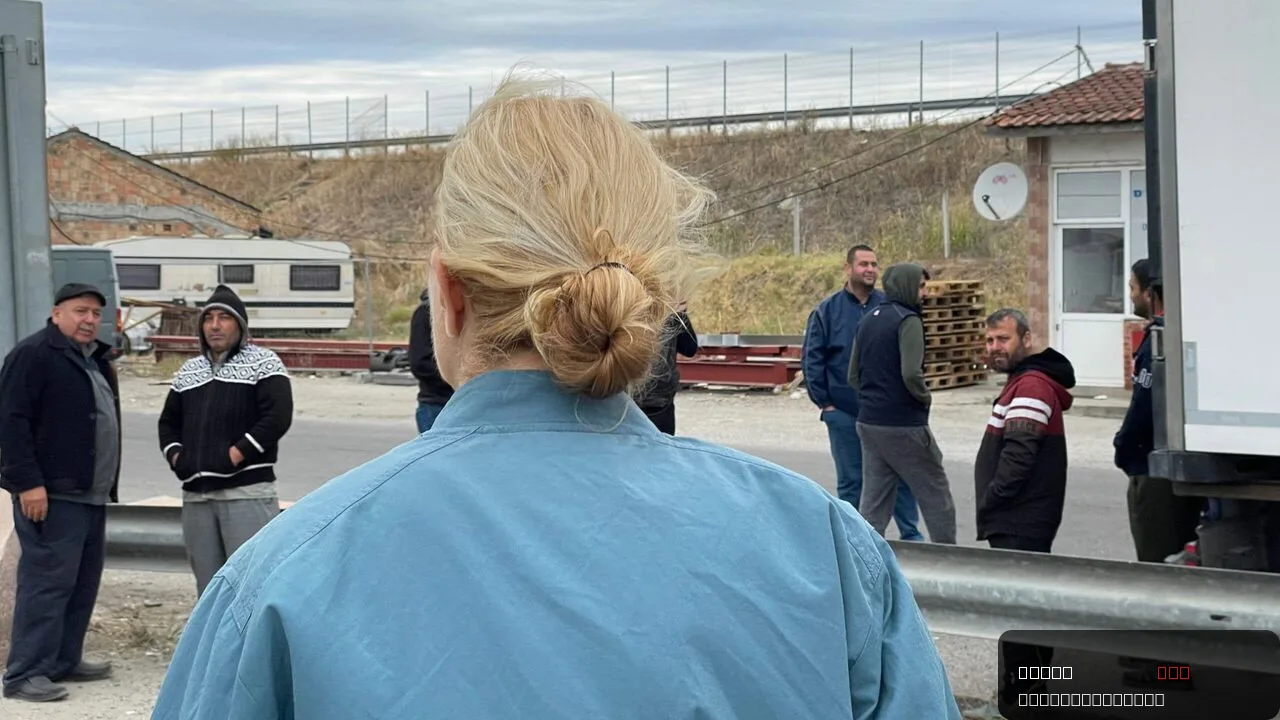
Here's what matters right now: if you live in India, the US, or the UK and want to watch The Dreamed Adventure immediately, you're out of luck. The festival-to-streaming pipeline for prestige arthouse films typically runs six to nine months minimum. But the wait is worth noting — because Grisebach has made something genuinely strange. It's a Western where the ammunition is conversation, the conflicts are about power and sex and who gets to tell the story, and the setting is the Bulgaria-Turkey border in a town the new highway left behind.
What Grisebach Actually Said About Power and Genre
The quote I keep returning to appeared in Variety before the premiere. Speaking about what the Western genre demands versus what she wanted to explore, Grisebach said: "The genre is asking for conflict, but for me it was more interesting to address ideas about who is strong and who's weak. Who is on top and who is on the bottom? Who is, to speak frankly, fucking, and who is being fucked?"
That's not hedged. That's not softened for critical approval. It's direct language about dominance — which tells you everything about how this film approaches the Western as a form. Grisebach isn't interested in shootouts or cattle or property disputes. She's interested in the same thing great Westerns have always been secretly about: who survives, who gets erased, and who gets to write what happened next. The ammunition changes. The stakes don't.
The Cast and Crew: Non-Stars, Serious Production
Here's the practical breakdown:
Director: Valeska Grisebach
World Premiere: May 23, 2026, Cannes Film Festival (Competition)
Lead cast: Yana Radeva as Veska, Syuleyman Letifov as Said, Denislava Yordanova as Maria
Production: Komplizen Film (Germany), with co-production support from Kazak Productions (France), Miramar Film (Bulgaria), Panama Film (Austria), and New Matter Films (Germany)
World Sales: The Match Factory
Producers: Jonas Dornbach, Janine Jackowski, and Maren Ade (Komplizen Film)
Yana Radeva isn't a household name — and that's intentional. Grisebach casts regional actors who've lived in the places her stories inhabit. The production is European but genuinely multinational; you're looking at German, French, Bulgarian, and Austrian money all backing this. That's the signal of serious artistic commitment, not commercial calculation.
Why Komplizen Film's Track Record Matters Here
If you've heard of Komplizen Film, it's probably because of Toni Erdmann — Maren Ade's 2016 film about a father-daughter relationship that somehow landed a Best Foreign Language Film Oscar nomination and grossed over $12 million worldwide on a budget that was a fraction of that. Komplizen doesn't make many films, but the ones it makes tend to stick around. Toni Erdmann is still being discussed as one of the decade's best European works, and that was a comedy — a word nobody applies to Grisebach's films.
Western (2017), her previous film and also a Komplizen production, is the essential prep work here. It's set in Bulgaria. It takes the Western as its genre skeleton. It features construction workers from Germany building a power plant in rural Eastern Europe, and it uses that setup to examine something most political films don't bother with: the quiet, ongoing violence of post-communist economic integration. The film isn't angry. It's patient. It watches.
Most coverage of The Dreamed Adventure frames Grisebach's return as a simple "long-awaited comeback." The more interesting story is that nine years between features, for a director working at this level of ethnographic patience, isn't a gap — it's the method. She spent years embedded in the Bulgaria-Turkey border region conducting research, talking to locals, absorbing rhythms. Compare that to directors who announce projects annually and shoot on four-week schedules. The timeline is the artistic statement.
You need to see Western first. Not because it's a prequel — it's not — but because it shows you exactly how Grisebach works: long takes, minimal dialogue, actors who look like they actually live in the places you're watching, and a refusal to judge anyone in the frame. If you're planning to watch The Dreamed Adventure when it arrives on streaming, start with Western. MUBI carries it in most regions; Movie OTT's tracking service can tell you where it's currently available in your country.
The Plot: A Woman, a Deal, and the Border
Here's what we know from the verified synopsis: The story follows a woman living in the border region between Bulgaria, Greece, and Turkey. She agrees to participate in some kind of special arrangement to help a friend. This agreement puts her in a dangerous position. She's forced to confront desires she'd rather not examine.
That's lean information, and it's deliberately so — festival coverage tends to avoid plot specifics for competition films. But the outline tells you something: this isn't a story about a woman fighting back against a system. It's about a woman choosing something that compromises her. The moral texture is muddier. More human.
Why the Border Location Isn't Just Geography
I keep thinking about something Grisebach mentioned in her research: the men she spoke to in the region nostalgic for the 1990s. Not fondly nostalgic — she told Variety the nostalgia was complicated, almost intoxicated. "These moments of remembering [the 90s] were like getting drunk," she said. That's the social reality the film's set in. A place where the supposed "golden age" was brutal and chaotic and weirdly alive with possibility. A place where the highway that was supposed to connect everyone left this region disconnected instead.
The film's titled The Dreamed Adventure, and I think that title isn't romantic. It's suspicious. It's asking: what adventure? Whose dream? In a border town where the infrastructure passed you by, what kind of "deal" even exists? The part I am most curious about is whether Grisebach lets that suspicion bleed into the film's form itself (the way she fractured chronology in parts of Western) or plays it straighter this time. Those are the questions her camera watches, without necessarily answering.
When Streaming Actually Arrives: The Timeline
Here's the honest timeline:
- Theatrical rollout: Expect European markets to begin in late 2026 (starting with Germany, Austria, France)
- US/UK streaming: No deal confirmed yet. MUBI is the natural fit — it acquired Western and has been aggressively bidding on Cannes competition films. Janus Films and Criterion are outside possibilities, though less likely given the film's profile
- India: MUBI India is almost certainly the eventual home. The platform has been steadily expanding its Cannes-adjacent acquisitions. Netflix India and Prime Video India are unlikely fits — no recognizable stars, primarily Bulgarian dialogue, no algorithm-friendly genre hooks
- Actual release date for India: Hard to say exactly. Western took roughly 18 months from Cannes premiere to MUBI India availability. The Dreamed Adventure could follow a similar arc, suggesting late 2027 at the earliest
What accelerates that timeline? A Palme d'Or win or major prize at Cannes. If the jury recognizes the film, acquisition interest spikes immediately. Without a major award, the wait stretches longer.
Movie OTT is tracking all confirmed streaming deals as they're announced across regions — it's worth bookmarking if you don't want to hunt five streaming apps when this finally arrives.
The Watch Order: What to See Before This Arrives
If The Dreamed Adventure sounds like something you'd want to follow, don't wait until it hits streaming. Watch these now:
-
Valeska Grisebach — Western (2017). Absolutely essential. Same director. Same region. Same methodological approach to how power operates in spaces the world's supposedly "moved past." Available on MUBI in most regions.
-
Cristian Mungiu — 4 Months, 3 Weeks and 2 Days (2007). If you want to understand the DNA of contemporary Eastern European cinema that Grisebach's working in — patient, observational, refusing to sentimentalize — this is the foundational text. Also Romanian-set. Also about power and choice and what happens when you agree to something that compromises you.
-
Andrei Zvyagintsev — Leviathan (2014). Another Eastern European film about post-communist decay and the way official power coexists with unofficial power. Slower than Western, more explicitly political, but the same sensibility.
If you've seen Toni Erdmann and want more from that universe, The Dreamed Adventure is the logical next step — same production company, same European aesthetic sensibility, but Grisebach's vision is darker and less interested in reconciliation.
The Cannes Position: Why This Matters Right Now
The Dreamed Adventure is one of 22 films competing for the Palme d'Or. That's a crowded field. But competition status at Cannes — as opposed to Un Certain Regard or Out of Competition — means the festival's programmers believe this work is at the highest level. Not every strong film gets that slot. Grisebach had to earn it.
What's also worth noting: her previous film, Western, premiered in Un Certain Regard (a less prestigious but often more innovative section). This is a step up. It suggests the festival, and possibly the industry, sees her as a filmmaker working at a bigger scale now — not in budget, necessarily, but in ambition. The film's being handled in world sales by The Match Factory, one of the most respected arthouse sales agencies in Europe, which speaks to how serious the backing is.
If you follow Cannes coverage over the next few weeks, The Dreamed Adventure will likely be one of the most talked-about entries. Not because it's flashy. Because it refuses to be simple.
The India Angle: What You Should Know
No dub is expected. This is a Bulgarian-German co-production. Dialogue is primarily in Bulgarian. You'll be watching subtitled.
MUBI India is the most likely platform. It's the only major streaming service in India with a consistent acquisition strategy for Cannes competition films. Netflix India and Prime Video India have shown little interest in this category of work.
Pricing: MUBI India runs ₹399/month, though promotional rates appear seasonally.
Theatrical possibility: Unlikely unless PVR Cinemas' arthouse division picks it up for a limited Mumbai-Delhi-Bangalore run. Worth checking Movie OTT's India listings closer to release.
The Bottom Line: Should You Actually Care?
Yes. Unambiguously yes — with one caveat: this is not a film you half-watch while scrolling. It's slow. It's patient. It trusts you to notice things. If you found Toni Erdmann too long or Western too quiet, this probably isn't your film. But if you discovered European cinema through Portrait of a Lady on Fire or Memoria or Drive My Car, and you want something that operates at that level of serious formal control, mark this one down.
The fact that it's a Western at all — that Grisebach chose a genre associated with American mythology and Hollywood spectacle — and then used it to examine post-communist Eastern Europe, gender, and power dynamics in a border town is exactly the kind of move that matters. It's a genre film that knows what genres do, and it's subverting that knowledge deliberately.
When The Dreamed Adventure lands on MUBI or wherever it eventually streams in your region, that's the moment to commit two hours and give it your full attention. Not before. The wait's part of the point — it's a film that'll still be worth watching in six months, and probably even more interesting by then.