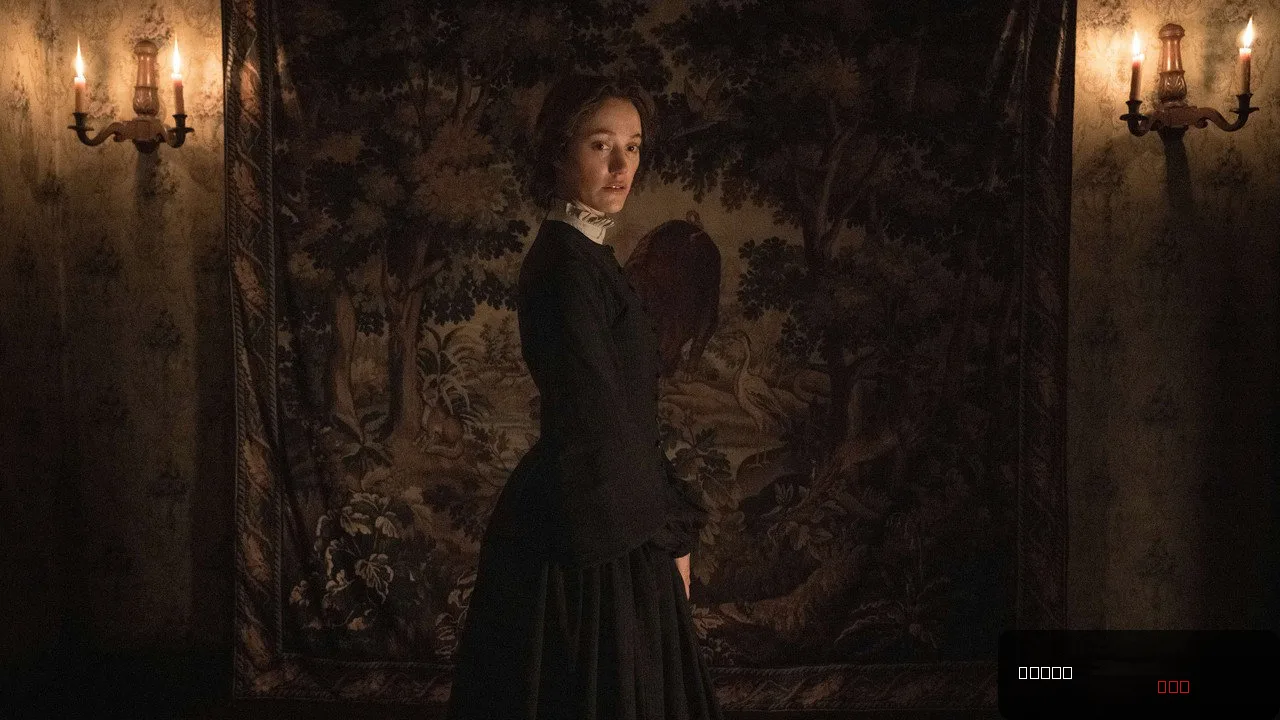
Victorian Psycho Review: Maika Monroe Becomes Horror's Most Terrifying Villain
TL;DR: A 90-minute Gothic horror-comedy premiering September 25, 2026, in US theaters. Maika Monroe plays a murderous Victorian governess who kills her way through a Yorkshire estate with cheerful indifference. Bleecker Street is releasing it theatrically; streaming availability for India and other regions hasn't been announced yet. Grade: B — sharp and darkly funny for 75 minutes, then flinches at the finish.
Three years after Saltburn weaponized the country-house setting, another filmmaker has walked into a Gothic manor with a knife in hand. Zachary Wigon's Victorian Psycho, which premiered at Cannes 2026 to real buzz, pulls a similar trick—using period drama as a Trojan horse for something far uglier—but goes further. Where Saltburn kept its anti-hero morally complicated, Wigon and screenwriter Virginia Feito (adapting her own novel) don't blink. Their protagonist doesn't want what the wealthy have. She wants to end them. Methodically. Without remorse.
The film hits theaters September 25, 2026, via Bleecker Street.
Why This Matters: A Final Girl Who Becomes the Killer
Here's the reversal at the heart of this thing: Maika Monroe has spent her career running from monsters. It Follows. The Guest. Longlegs. Horror's scream queen. Here, she is the monster, and what's unsettling is how normal she makes it look.
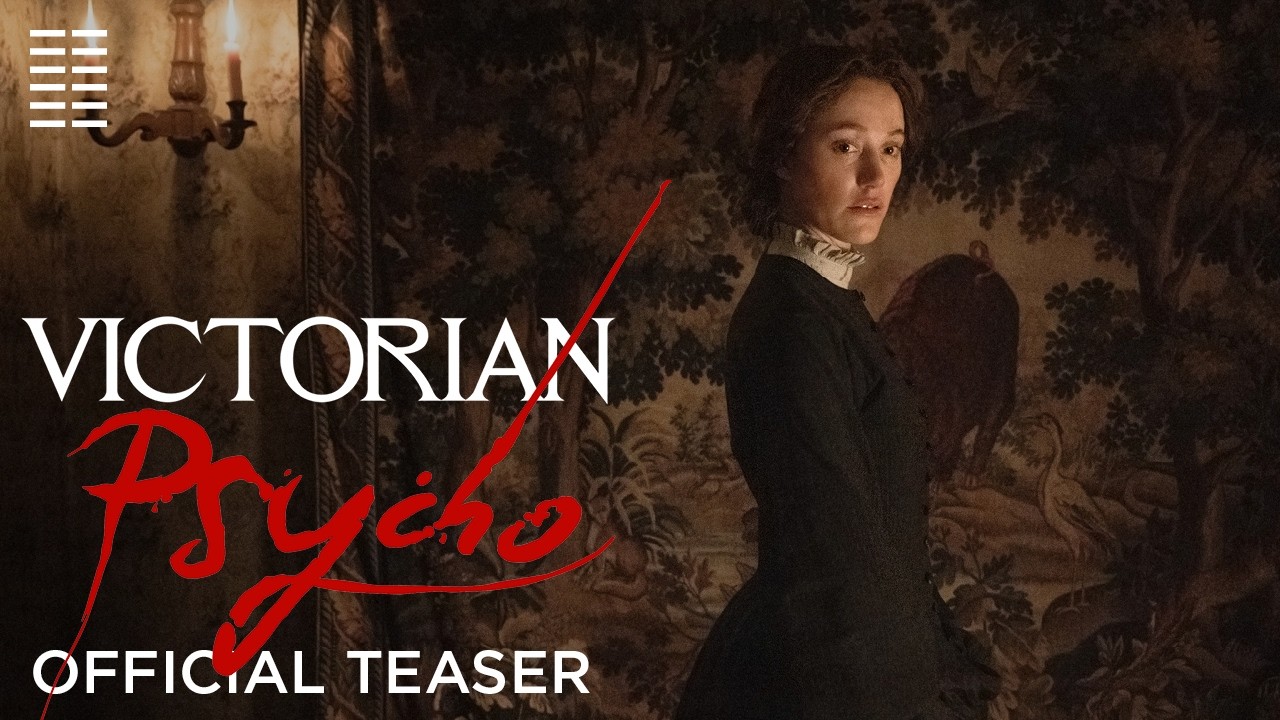
Winifred Notty arrives at Ensor House in 1858 as a governess of uncertain past and very certain homicidal intent. She tells herself this posting will be different. It won't be. Staff members disappear. The owners—Jason Isaacs and Ruth Wilson, both excellent—begin to suspect something's wrong. Winifred keeps moving through the house with the kind of calm that suggests she's already made peace with what she does.
Monroe spoke to press at Cannes about the inversion: "Winifred doesn't see herself as the villain. She genuinely believes she's the sanest person in every room." That self-delusion is the engine. Her internal voiceover, delivered with perfect deadpan, exists partly for us, mostly for her own reassurance. She's not performing sanity for the audience. She's performing it for herself, which is far more disturbing.
Wigon described the adaptation as "finding the comedy inside the horror rather than alongside it." That distinction matters. The violence isn't punctuated with jokes. The violence is the joke, staged and edited with what can only be called gleeful precision.
The Cast and Crew: Who's Making This and Why It Matters
Director: Zachary Wigon (2022's Sanctuary, a two-hander psychological thriller that showed real interest in power dynamics).
Lead: Maika Monroe. Her dead-eyed, rictus-grinned Winifred is a character creation, not just a genre inversion.
Supporting cast:
- Jason Isaacs (Harry Potter, The OA) as Mr. Pounds — the kind of aristocrat who can be monstrous beneath respectability in his sleep.
- Ruth Wilson (Luther, His Dark Materials) as Mrs. Pounds. According to IndieWire critic Kate Erbland, Wilson delivers a "sneaky-great" performance, doing more with less screen time than the role seems to require.
- Thomasin McKenzie (Jojo Rabbit, Last Night in Soho) in a supporting role as a nurse whose exact function in the plot is best left undiscovered.
Cinematographer Nico Aguilar shoots through keyholes, swings his camera like a pendulum, and at one point adopts the POV of something being swallowed. Playful. Gross. Exactly right for the material.
The screenplay comes from Virginia Feito adapting her own 2022 novel, and that's worth noting because Feito also wrote Mrs. March, another book obsessed with domestic spaces as sites of psychological collapse. What most coverage misses is that Victorian Psycho is the second Feito adaptation to reach production within eighteen months (a Mrs. March film, with Elisabeth Moss attached, was shooting in early 2025), making her arguably the most in-demand literary voice in psychological horror right now, a status no novelist working in the genre has held since Gillian Flynn's triple-adaptation run from 2012 to 2018. Both novels are worth reading if this film lands for you.
Where to Watch: US Release First, International Still Pending
Victorian Psycho hits US theaters September 25, 2026, through Bleecker Street. That puts it squarely in the early awards-season window, late enough to register with voters, early enough to build word-of-mouth before November prestige fatigue sets in.
International streaming? Not yet confirmed. Bleecker Street typically partners with Netflix for overseas releases, but no deal for India, the UK, or Spain has been announced as of writing. Check Movie OTT closer to the theatrical date — they track streaming availability in real time as deals close, and India listings will appear there first.
A theatrical run in India is possible but unlikely. Bleecker Street titles don't always get wide multiplex distribution outside North America. Most Indian audiences will probably access this through streaming when a deal lands.
For what it's worth, the film's sensibility — a woman who refuses to be victimized, taken to its most extreme conclusion — tends to travel across cultures. Knives Out did well on streaming in India. Victorian Psycho occupies a narrower, darker lane, but the core hook is similar.
The One Serious Problem: The Ending Doesn't Stick the Landing
Most reviews bury the caveat in a closing paragraph. Here it is up front: the finale is softer than it should be.
The novel builds to a Christmas massacre. A countdown. Something genuinely unrepentant. The film replaces this with a different climactic event, and in doing so, it implies that Winifred has some buried conflict about her own violence. That she's not entirely at peace with what she does.
I keep coming back to this choice, because it's the one place where the film flinches. The preceding 75 minutes are so committed to Winifred's absolute self-certainty, to her utter lack of doubt, that the sudden ambiguity feels imported from a different, safer film. It's not that moral complexity is wrong. It's that this particular story earned the right to be unrepentant, and the finale doesn't collect on that debt. The comparison that keeps nagging at me: Mary Harron's American Psycho (2000) had the nerve to leave Patrick Bateman entirely unrepentant in its final frames, and that refusal to moralize is exactly what turned a good film into a lasting one. Wigon's film needed that same conviction and didn't find it.
What's strange is that Feito wrote the screenplay herself. It's her own novel. The softening wasn't imposed by a studio executive uncomfortable with a female killer who feels no remorse. Feito chose it. Hard to say if that reflects a genuine artistic evolution in how she sees the character, or a miscalculation about what audiences need from a story called Victorian Psycho.
Either way, it costs the film about half a grade.
The Runtime That Actually Works
Ninety minutes. Not a weakness. A discipline.
Wigon doesn't linger where he doesn't need to, and the tight pacing is one of the film's most confident qualities, the kind of brisk momentum that made American Psycho (the obvious tonal ancestor here) feel like a black comedy rather than a slog. You're not sitting through slow burns or atmospheric dread. You're watching someone move methodically through a house, and it's funny until it's horrifying, often at the same moment.
Will This Get Awards Attention?
Honestly? Unclear.
Monroe's performance has the eccentricity that sometimes catches awards bodies off guard (think Toni Collette in Hereditary, another horror performance that got overlooked then reconsidered). Ruth Wilson's work could be a dark-horse supporting nomination. But the film itself, as a horror-comedy hybrid, tends to get shut out of major categories no matter how good it is.
Watch for the first wide trailer, any Bleecker Street international distribution announcements, and streaming confirmations across regions. Movie OTT will have the live data as deals land — that's the practical place to check rather than waiting for scattered Variety announcements.
The Bottom Line
Victorian Psycho is a B. Sharp for most of its runtime, diminished at the finish. Maika Monroe is genuinely great as someone who's made peace with being a killer in a way that most films don't let their female characters be, and that alone makes it worth seeing. The 90 minutes move fast. The dark comedy lands. The Gothic atmosphere works.
Just know going in that the ending pulls back from the edge, and if you're watching specifically for an uncompromising portrait of a woman who feels no remorse, you might feel slightly shortchanged at the fade.
Watch the official trailer: