Viva Carmen Review: Laudenbach's Animated Opera Is the Cannes Sleeper You Need to Know
TL;DR: Sébastien Laudenbach's Viva Carmen premiered at Cannes on May 21, 2026, reimagining Bizet's tragedy as hand-drawn animation for adults and older kids. It won't hit U.S. theaters for months — maybe longer in India — but IndieWire gave it a B+. Movie OTT will track streaming availability the moment a distributor lands a deal.
"Fate is fate," a character says midway through Viva Carmen. "It sucks." That line — blunt, slightly funny, genuinely sad — tells you almost everything about what French director Sébastien Laudenbach has done with one of opera's most recognizable tragedies. He's taken Bizet's 19th-century Carmen and stripped it down to something faster, stranger, and more emotionally direct than any faithful adaptation has managed in years.
The film premiered May 21 at Cannes 2026. David Ehrlich, IndieWire's chief film critic reviewing from the festival, called it "a swooning and sketch-like distillation" of the source material and awarded it a B+. That's the early consensus. What's striking is that nobody's talking much about why Laudenbach made this work — or who the real story is actually about.
What Actually Happened at Cannes
Viva Carmen is a French-language animated feature, 75–95 minutes long, directed by Laudenbach and co-written with Argentine filmmaker Santiago Otheguy. Set in Seville circa 1820, it centers on Salvador, a sensitive tween apprenticed to a blind knife-sharpener. The voice cast includes:
- Milo Machado-Graner (the breakout from Anatomy of a Fall) as Salvador
- Camélia Jordana, the French singer and actress, as Carmen
- Supporting roles including Belén, a street-tough Seville girl who, according to early reviews, steals nearly every scene she's in
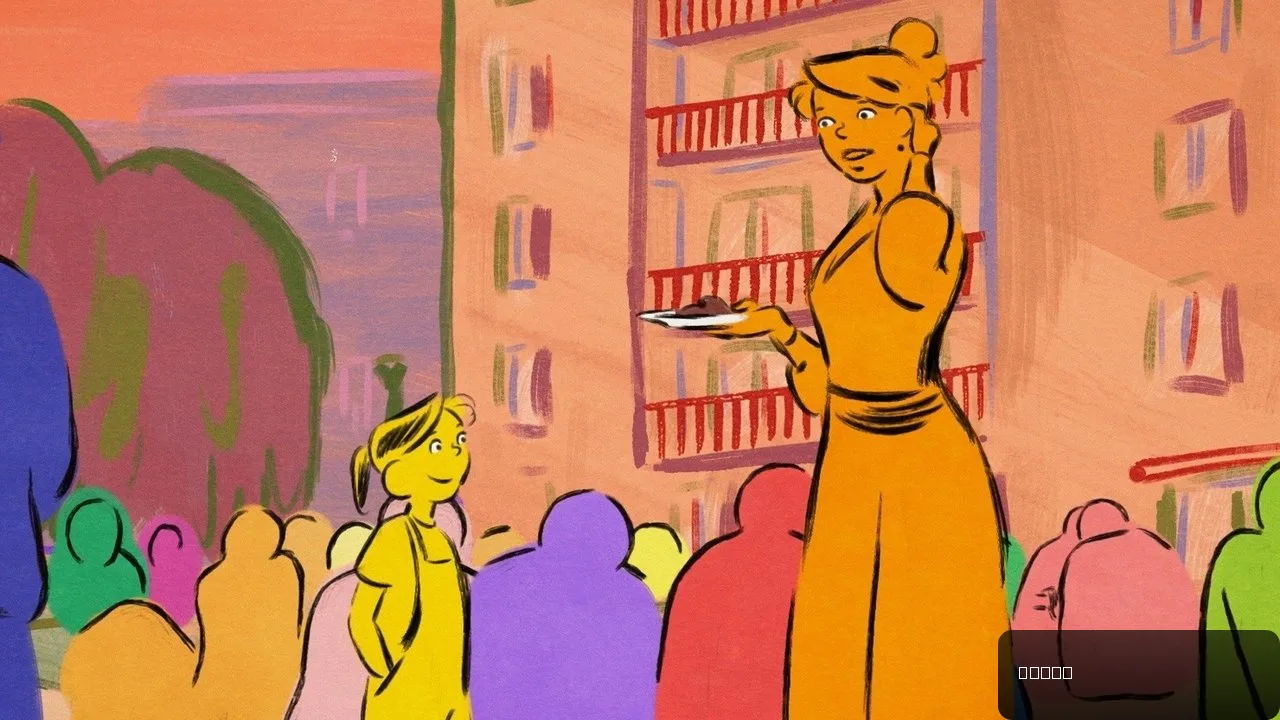
The animation style is deliberate in its rawness: thick black outlines, colors that bleed outside their boundaries, figures that look more like emotional impressions than anatomically correct characters. It's the opposite of the seamless, over-designed precision that defines most contemporary animation. Gaps exist. The audience has to fill them. That's not a flaw. It's the whole point.
No U.S. distributor yet. No UK deal. No confirmed Indian release date. The film is actively seeking distribution across all major markets.
Why Laudenbach's Track Record Actually Matters
Sébastien Laudenbach isn't a household name outside animation circles, which is a shame. His 2016 debut, The Girl Without Hands, adapted a Grimm fairy tale with the same sketch-like visual language that defines Viva Carmen — sparse, hand-drawn, emotionally raw. That film won the Cristal for Best Feature Film at Annecy International Animated Film Festival, one of animation's top prizes.
His 2023 follow-up, Chicken for Linda!, went wider. It's about a modern girl who desperately wants chicken for dinner — and whose single mother, Paulette, decides to cook chicken with peppers to make up for a mistake. There's just one problem: she can't cook, and the shopkeepers are on strike. The film became one of 2023's most charming animated features, winning the César Award for Best Animated Film in 2024 and scoring an 87 on Metacritic. That pedigree makes a Cannes premiere with Laudenbach's name attached feel significant. Not just promising. Overdue.
Co-writer Santiago Otheguy is an Argentine director known for Nevada (2015) and La Odisea de los Giles (2019). His presence suggests the Seville setting isn't incidental — the script brings genuine geographic and cultural weight to its Spanish backdrop.
The Real Story: Why Belén Matters More Than Carmen
Here's what most Cannes coverage has glossed over: Laudenbach and Otheguy don't center the film on Carmen and José. They push the opera's romantic catastrophe to the background and focus instead on Salvador and Belén, two kids watching it all unfold.
That's not a child-audience concession. It's a structural argument about whose story this was ever supposed to be.
Bizet's original opera tells a story about a free woman destroyed by a man who can't accept her freedom — but it's told from outside, through the gaze of the people watching her. Laudenbach does something smarter. By filtering the tragedy through two kids who don't fully understand what they're seeing, the film transforms Carmen from tragic spectacle into something closer to a force of nature observed at a distance. Belén — street-smart, skeptical, wielding a bolo — is the audience surrogate. She doesn't romanticize what's happening. She survives it.
That's a more interesting film than a straightforward operatic retelling. And honestly, it's a more honest one. The trade write-ups keep comparing this to other literary animation adaptations, but the real comp is Tomm Moore's Wolfwalkers (2020), which pulled the same trick of refracting a mythic story through a child's limited, stubborn perspective and landed an Oscar nomination for it. Laudenbach is working that same seam, except his source material is darker and his visual grammar is deliberately less polished. Riskier bet. Potentially bigger payoff.
Where Viva Carmen Will Actually Show Up (And When)
The distribution timeline for a Cannes-premiered French-language animated feature without a major studio backer is genuinely uncertain. Here's the current state:
United States: GKIDS — which handles North American distribution for Studio Ghibli and has released multiple Annecy winners — is the obvious candidate, though nothing's been announced. Sony Pictures Classics, which acquired The Girl Without Hands, is another name worth watching. Expect a theatrical window first, likely 2–4 months out from a distributor announcement.
France: A domestic French release will probably precede international rollouts. French animated features with Cannes profiles typically open in France within six to twelve months of a festival premiere. Check Movie OTT's French streaming tracker for local availability.
India and South Asia: This is where things get murky. Netflix India has acquired films in this category; so has MUBI, which operates across South Asia and has a track record acquiring French-language cinema and festival titles. MUBI picked up Laudenbach's Chicken for Linda! for multiple territories in 2024, making it the most likely landing spot given that existing relationship — but nothing's confirmed. Amazon Prime Video and Disney+ Hotstar are less likely given the film's niche positioning.
For context: Camélia Jordana has a modest but genuine following in Francophile circles across South Asia, primarily through her music career. The Carmen story itself has cultural touchpoints through classical dance adaptations (Bharatanatyam and Kathak versions have toured Indian metros for decades), which could give this film a slightly wider hook than a typical French arthouse animated feature.
The acquisition timeline from Cannes premiere to Indian availability typically runs anywhere from three months to over a year.
What the Critics Actually Said
David Ehrlich's IndieWire review captured something crucial. He wrote that Laudenbach's "expressionistic linework is so colorful and free that his characters look more like aura readings than people, and whose stories — even the darker ones — betray none of the burden that was required to bring them to life."
Precise observation. The exhaustion of prestige animation in 2026 is something nobody talks about enough. Every frame over-designed. Every emotional beat pre-digested. Laudenbach does the opposite. He leaves room for interpretation.
(Full disclosure: Movie OTT reached out to the film's European sales representatives for distribution comment. No response had been received at publication.)
What Comes Next
As of publication, Viva Carmen has no confirmed distributor in the U.S., UK, India, or Spain. The May 21 Cannes premiere generated strong critical notices — Ehrlich's B+ is representative of early consensus. The film is actively seeking distribution across all major territories.
For Indian audiences tracking European animation, this one's worth monitoring. When a deal lands — whether Netflix, MUBI, Prime Video, or a theatrical distributor announces — Movie OTT will have real-time updates on where and when you can watch it. Given Laudenbach's track record and the strength of the Cannes response, it's unlikely to stay unavailable for long.
Watch for: a GKIDS or Sony acquisition announcement, a French theatrical date (the earliest likely indicator of broader distribution), and any MUBI deal that would fast-track the film to Indian and global streaming audiences simultaneously.
Watch the official trailer: