Warner Bros. Is Betting Big on Looney Tunes Again—Here's What Actually Changed
TL;DR: At a Burbank open house on May 12, Warner Bros. Pictures Animation announced a theatrical push anchored by "Daffy Season," a Daffy Duck short debuting at Annecy 2026 ahead of a World Cup tie-in release. A Speedy Gonzales feature is also in development. The catch: the studio's promised Looney Tunes comebacks haven't stuck before.
Let's start with the hardest question first: should you believe Warner Bros. when it says Looney Tunes is coming back to theaters?
Maybe. The studio has made this claim before. But what happened at the studio's Burbank lot on May 12 felt different in scale—they named actual projects, named festivals, named directors. That's either a genuine reset or a really polished PR event. Given what happened with Coyote vs. Acme (a finished film the studio shelved in 2023), keep your expectations grounded.
What Pam Abdy Actually Committed To
Warner Bros. Motion Picture Group co-chair and CEO Pam Abdy didn't dance around the announcement. Speaking at the open house, she zeroed in on one concrete project: Daffy Season, a theatrical short that's supposed to prove the studio means business.
"We're also thrilled to be unveiling at Annecy Daffy Season, a Looney Tunes theatrical short that reestablishes our commitment to bring Looney Tunes back to the big screen," Abdy said, according to The Hollywood Reporter's coverage.
That word—"reestablishes"—is doing heavy lifting. It quietly admits the commitment had drifted. After Space Jam: A New Legacy in 2021 and the Coyote vs. Acme disaster, Looney Tunes spent years wandering. A short film at a European animation festival isn't a revolution, but it's at least a real product with a premiere date.
Bill Damaschke, the studio's animation boss who joined Abdy at the event, framed the broader slate almost like a manifesto: "Different looks, different styles, different tones—connected with what I hope will be heart, hope, humor and a scale that earns the big screen and remaining an artists-first community."
That's either sincere or it's very well-rehearsed.
The Projects You Should Actually Track
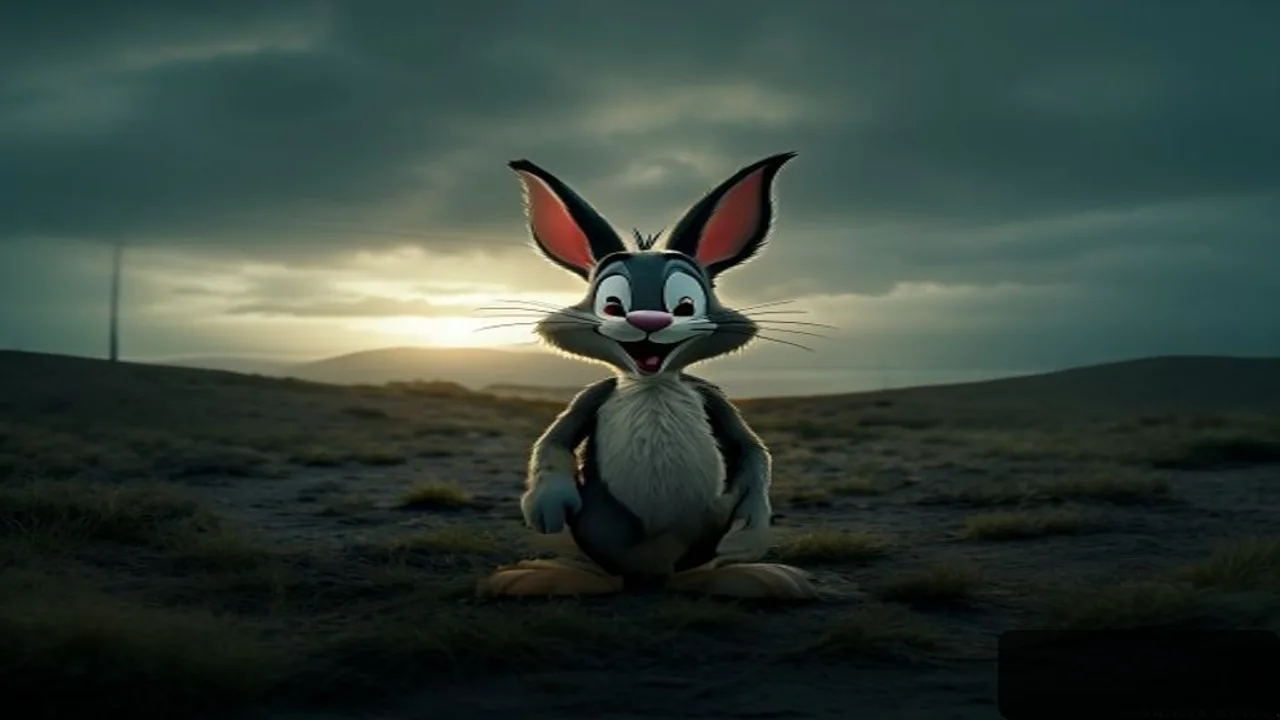
Daffy Season is the immediate story here. Directed by Todd Wilderman and Hamish Grieve, the short follows Daffy Duck discovering that Elmer Fudd has become obsessed with soccer. The timing isn't accidental—the 2026 FIFA World Cup is co-hosted by the US, Canada, and Mexico, giving the studio a genuine cultural hook to hang this on.
The short premieres at the Annecy International Animation Film Festival in June 2026. No theatrical release date has been announced yet.
Here's what we know:
- Title: Daffy Season
- Directors: Todd Wilderman, Hamish Grieve
- Format: Theatrical short
- Festival premiere: Annecy, June 2026
- Theatrical release: Not yet announced
- Streaming availability: TBD
Beyond that: a full animated Speedy Gonzales feature is in development with director Jorge R. Gutiérrez (The Book of Life). No timeline. Meanwhile, the studio's first major theatrical animation release under its rebranded banner is actually The Cat in the Hat, a Dr. Seuss adaptation with Bill Hader in the title role, coming November 2026.
The Franchise History That Makes This Risky
Here's why skepticism is warranted. Space Jam: A New Legacy—the most recent Looney Tunes theatrical film—pulled in $163 million worldwide in 2021. That sounds fine until you remember it had a $150 million budget and dropped simultaneously on HBO Max. Streaming cannibalization is real, and the numbers never recovered.
Before that, Looney Tunes: Back in Action (2003) tanked—$68 million globally against an $80 million budget. The franchise hasn't found its footing theatrically in nearly thirty years.
Then there's Coyote vs. Acme. Completed. Shelved. Sold off to Ketchup Entertainment for a summer 2024 release that barely anyone noticed. It became Hollywood's most visible example of a write-down strategy—and a reminder that WB's animation arm has struggled with execution. The uncomfortable comparison here is DreamWorks Animation circa 2014-2016, when that studio announced ambitious slate after ambitious slate only to cancel or delay half the projects and eventually sell itself to Universal. WB's animation division is making the same kind of promises from a weaker starting position, with fewer proven hits to cushion the inevitable misses.
The Damaschke era (he started in 2023) is a structural reset. According to Cartoon Brew's coverage of the open house, the studio is targeting seven features in three years. That's ambitious for any animation house, let alone one rebuilding from zero trust with audiences.
Why This Actually Matters Beyond Nostalgia
Here's the thing nobody mentions: this isn't really about nostalgia. It's about market positioning.
Warner Bros. has watched Universal's Illumination (Despicable Me, The Super Mario Bros. Movie) and Sony Pictures Animation (Spider-Man: Into the Spider-Verse, The Wild Robot) build genuine theatrical animation franchises while WB's animation division floundered. Consider the gap in concrete terms: Illumination's The Super Mario Bros. Movie grossed $1.36 billion worldwide in 2023, while WB's only animated theatrical offering that year was a shelved film it refused to release. That isn't a competitive gap. It's a chasm. And yet WB owns some of the most recognizable animated IP on the planet—Bugs Bunny, Daffy Duck, Tom and Jerry, Tweety. Characters with global recognition that took other studios decades to build. The problem isn't the brand. It's execution.
The streaming-versus-theatrical tension makes this harder, not easier. Audiences are comfortable watching animated films at home now, which means studios need a genuinely theatrical reason—visual scale, event-level marketing, something you can't replicate on a 55-inch TV—to bring families back to cinemas. A Daffy Duck short tied to the World Cup is a smart attempt at that. Whether it works is a different question.
The slate also includes original IP: Bad Fairies (Cynthia Erivo, musical, 2027), Margie Claus (Melissa McCarthy), The Lunar Chronicles, plus Dynamic Duo, Meerkat Manor, Hello Kitty, and Oh, the Places You'll Go!. On paper, it looks like a real strategy rather than a list of sequels. Most coverage frames this as a comeback story; the more honest read is that WB is attempting to build a functioning animation studio from scratch while pretending the brand continuity from the Chuck Jones era still counts for something. It doesn't. Not theatrically. The kids buying tickets in 2027 don't know who Chuck Jones is.
Where You'll Actually Watch These
For Indian audiences, Looney Tunes has real cultural weight—the characters ran on Cartoon Network India for years. The question is where these new releases will land.
The Cat in the Hat (November 2026) will almost certainly hit Max in the US after its theatrical run. In India, Warner Bros. theatrical releases typically move to JioCinema (which has a distribution deal with WB in India) or Amazon Prime Video, depending on the deal. Movie OTT tracks OTT availability across Netflix, Prime, JioCinema, Hotstar, SonyLIV, and Zee5 as release windows get confirmed.
For Daffy Season specifically? Theatrical shorts rarely get standalone OTT releases in India. They usually attach to a feature or surface on streaming platforms months later. No dubbed tracks (Hindi, Tamil, Telugu) have been announced—though those are standard for major WB animated features.
Current tracking status:
- India: No OTT platform confirmed yet for Daffy Season or the Speedy Gonzales feature
- US: Coyote vs. Acme via Ketchup Entertainment this summer; Cat in the Hat theatrical November 2026
- UK/Spain: No specific dates announced; theatrical windows expected to mirror the US
Check Movie OTT's release tracker as distribution deals crystallize.
What Actually Proves This Is Real
The Annecy debut of Daffy Season in June 2026 is the next real test. If the short lands well with festival audiences and critics, expect WB to accelerate its Looney Tunes messaging. A strong reception could unlock marketing spend on the Speedy Gonzales feature, which currently has zero announced production timeline.
The Speedy project is the more interesting long-term signal, honestly. Jorge R. Gutiérrez is Mexican-American and has spoken publicly about reclaiming Speedy Gonzales as a genuinely positive Latino character rather than a caricature. That's a meaningful creative bet ahead of a World Cup hosted partly in Mexico.
Box-office expectations for a standalone theatrical short are essentially unmeasurable—shorts don't usually play alone. Instead, watch for whether WB announces a full-length Looney Tunes feature by the end of 2026. That would be the real proof of commitment. A feature with a release date and marketing dollars behind it. Not a short. Not a concept. A movie.
The Skeptic's Closing Thought
Warner Bros. is saying the right things. The studio is naming actual directors, announcing actual festival premieres, committing to actual timelines. Bill Damaschke's seven-features-in-three-years plan sounds like strategy, not wishful thinking. And Daffy Season—a World Cup-timed Looney Tunes short with confirmed directors and a locked Annecy slot—is a real product, not a press release.
But this franchise has been "coming back" for twenty years. The Looney Tunes revival becomes real when there's a release date on a feature film with genuine marketing muscle behind it. Until then, Annecy will tell us whether Daffy Season is the genuine reset the studio's promising—or just a charming short that disappears quietly into a streaming library six months later.
Hard to say which way it goes.