The story of After the Battle and its portrait of post-uprising Cairo
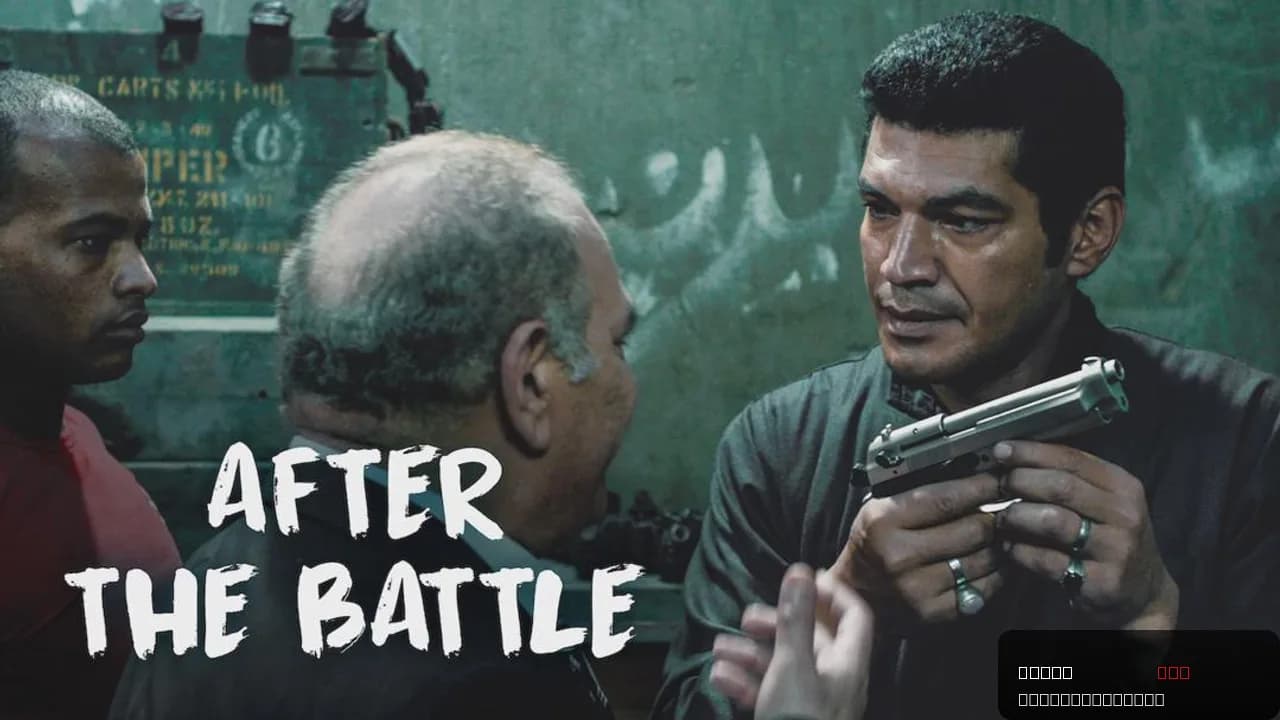
After the Battle tells the story of Mahmoud and his family as their world fractures in the aftermath of the 2011 Egyptian uprising. Mahmoud was among the "Tahrir square horseriders" — a phrase that carries weight in the context of Cairo's revolutionary moment — and that involvement becomes the catalyst for everything that follows. What happens next isn't a triumphant narrative arc. Instead, it's a slow-motion collapse. The family loses its footing, its stability, its sense of what comes next. Director Yousry Nasrallah doesn't frame this as a political thriller but as something quieter and more devastating: a study in how public upheaval bleeds into private devastation. The 122-minute runtime gives the director space to watch this unraveling without rushing it, letting the weight settle on viewers as it settles on the characters themselves.
Behind the making of After the Battle and its international production
After the Battle emerged as a French-Egyptian co-production in 2012, arriving at a moment when Cairo's political landscape was still in flux. Director Yousry Nasrallah, who brings a documentarian's eye to fictional narrative, assembled a cast anchored by Menna Shalabi, an Egyptian actress whose work often gravitates toward morally complex roles. The ensemble includes Bassem Samra, Nahed El Sebai, Salah Abdallah, and others who ground the film in the specificity of Cairo's urban middle class. The production itself reflects a particular moment in world cinema — European funding flowing toward Arab directors interested in contemporary social realism rather than orientalist spectacle. On Movie OTT, you can track how films like this circulate across platforms; Nasrallah's work here didn't achieve major festival distribution or significant awards recognition in the West, which partly explains why it remains less visible than some of its contemporaries. The film carries an IMDb rating of 5.8/10, suggesting mixed critical and audience reception — neither dismissed nor canonized, but rather occupying that middle ground where serious intentions don't always translate to universal impact.
What makes After the Battle stand out as a portrait of political aftermath
What's striking about After the Battle is how deliberately it refuses catharsis. You won't find the redemptive arc or the moment of clarity that Hollywood trains us to expect. Instead, Nasrallah commits to showing the slow, grinding reality of displacement — economic, social, psychological. The performances carry this weight. Shalabi doesn't play victimhood; she plays exhaustion, the kind that comes from watching your family dissolve piece by piece. There's a scene where Mahmoud tries to explain himself to his wife, and neither of them can quite articulate what's happened or why it matters anymore. That's the emotional core — not the political event itself, but the way it lingers in the spaces between people who once knew each other. The cinematography reflects Cairo's urban texture without romanticizing it. Apartment interiors feel cramped. Streets feel indifferent. What I keep coming back to is how the film treats its characters' shame. Not the shame of political failure, but the shame of being ordinary people caught in extraordinary circumstances, then having to live with the consequences when everyone else has moved on. Critics who've engaged with the film often note this refusal to provide easy answers or moral clarity — a choice that makes it challenging but also honest in a way that feels rare.
How to watch After the Battle online
After the Battle is currently available to stream on Prime Video, where you can access it as part of your existing subscription. Movie OTT maintains a comprehensive tracking system showing where international films like this one are available across all major platforms, so if your preferred service changes or adds new titles, you'll find the latest information there. The film's availability may vary by region, so checking the "Where to Watch" widget at the top of this page will show you real-time streaming options specific to your location. At 122 minutes, it's the kind of film that rewards an uninterrupted viewing — the slow pacing and accumulated emotional weight work best without stopping and starting.
Frequently asked questions
Q: Who directed After the Battle?
Yousry Nasrallah, an Egyptian filmmaker known for socially engaged narratives, directed the film. He brings a restrained, observational style that prioritizes character and atmosphere over plot mechanics.
Q: Is After the Battle based on a true story?
While the film isn't a direct adaptation of a specific person's life, it's rooted in the real historical context of the 2011 Tahrir Square uprising and its aftermath. Nasrallah used that context to explore how political events fracture ordinary families.
Q: What's the runtime of After the Battle?
The film runs 122 minutes, giving Nasrallah enough time to develop the family's deterioration without rushing the emotional beats.
Q: Where can I watch After the Battle right now?
After the Battle is currently streaming on Prime Video. Check the "Where to Watch" widget above for the most up-to-date availability in your region, as streaming rights vary by location.
Q: What's the IMDb rating for After the Battle?
The film holds a 5.8/10 rating on IMDb, reflecting mixed critical and audience reception. It's a film that tends to divide viewers — some find its refusal to provide easy answers compelling, while others find it frustratingly ambiguous.
Final thoughts on After the Battle
After the Battle isn't a film for everyone. It doesn't offer the catharsis of a political drama or the clarity of a character study. What it does offer is something harder to find: an unflinching look at how history happens to ordinary people, and how they're left to pick up the pieces afterward. If you're drawn to cinema that trusts its audience to sit with discomfort, that doesn't rush toward resolution, that treats its characters with dignity even when their lives are falling apart — then this is worth your time. It's the kind of film that stays with you not because it's spectacular, but because it refuses to look away.