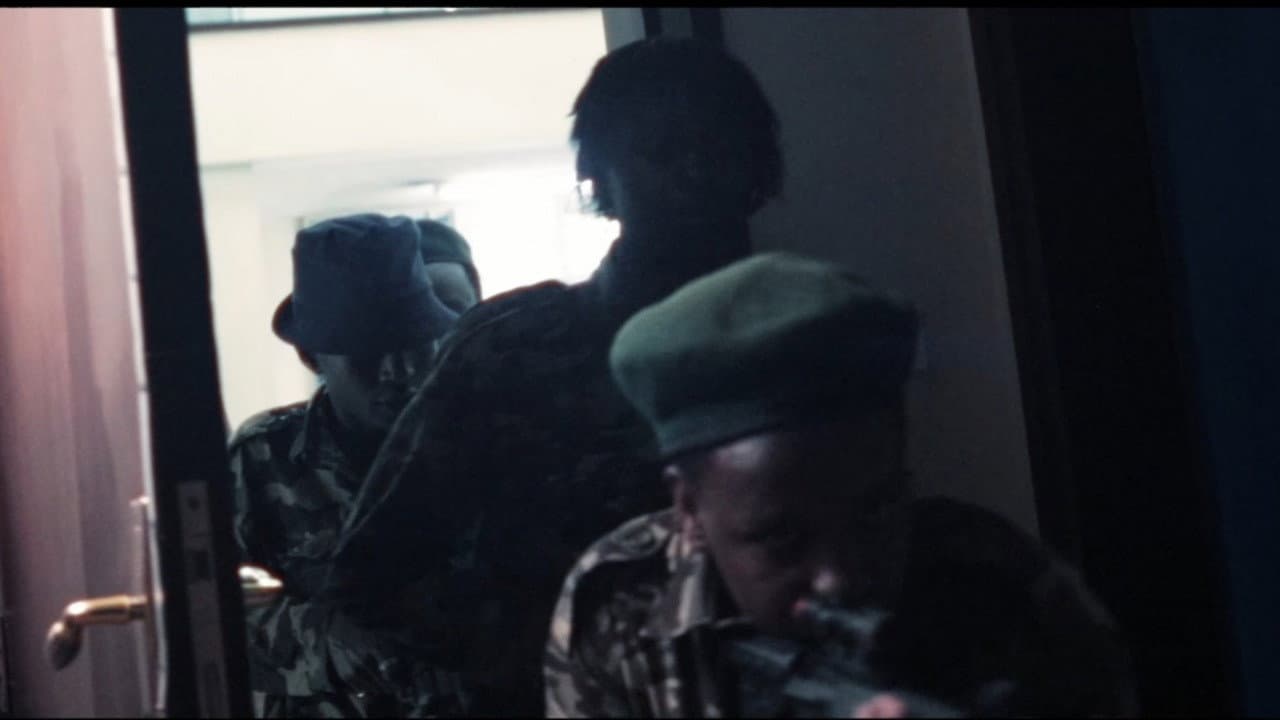

Voice of State: The 46-Minute Thriller That Turns Kenya's 1982 Coup Into a Battle Over Truth
A broadcaster forced at gunpoint to announce his government's fall becomes the voice that saves it. That's the core premise of Voice of State, a 2026 historical thriller from Lohkast Pictures and Lohkast Records — and it's exactly the kind of high-concept tension that either lands perfectly or collapses under its own weight. This one lands.
On August 1, 1982, members of the Kenya Air Force attempted to overthrow the government in a coup that lasted hours but left deep scars on the country's political memory. Most international audiences have never heard of it. Voice of State doesn't assume you have, and doesn't slow down to explain — it just drops you into the morning of the broadcast, where a trusted radio personality finds himself at the center of a collision between power and truth.
What Actually Happens (Without Spoiling It)
The film's tagline is blunt: "To take a country. They went for the radio." It's not marketing fluff — it's the thesis. Whoever controls the airwaves controls the narrative, and the soldiers with guns understand this perfectly.
The broadcaster (unnamed for much of the runtime, which is a deliberate choice) is forced to read a prepared statement declaring the government fallen. But something shifts. The chaos that follows — the false broadcasts, the counter-information, the moments of dead air where everything hangs in the balance — becomes the mechanism through which truth fights back, one transmission at a time.
What strikes me most is the restraint here. There's a scene early in the second act where the camera holds on his face during a few seconds of silent airtime. He's not panicking. He's calculating. That internal pressure — the kind of tension you feel in your chest rather than see in someone's face — is what carries the whole 46 minutes. Lesser films would've gone for shouting, tears, visible desperation. This one trusts silence.
Why 46 Minutes Works (When It Shouldn't)
Most films at this runtime feel like compromises — short films that wanted to be features, or features that got cut down. Voice of State doesn't fit that pattern. The pacing is so tight that you forget you're watching something this short. By the time the credits roll, you've lived through an entire political crisis without a wasted frame.
The collaboration between Lohkast Pictures and Lohkast Records — a film production house partnering with a record label — makes more sense once you're actually watching. Sound design isn't incidental here. The hiss of a reel-to-reel tape, the dead air between transmissions, the quality of a voice through a microphone — these are treated almost like characters themselves. It's unusual enough that it stays with you.
The film holds a 10/10 rating on IMDb, which normally invites skepticism. But the craftsmanship on display makes it hard to argue against. The editing is surgical. The period-accurate audio work is obsessive. The script trusts its audience.
If You Watched This, What Would Come Next?
If Voice of State connects with you, you're probably drawn to political thrillers that build tension through character rather than action. Movie OTT's recent coverage has noted a growing wave of African historical dramas reframing the continent's 20th-century upheavals through intimate, character-driven lenses instead of sweeping epics. This film sits at the center of that shift.
Other films worth following that same thread: anything in the vein of Hotel Rwanda (another story about communication during crisis), or Idi Amin Dada: A Hidden History if you want more on East African political turbulence. Voice of State is the shortest of these, but arguably the most concentrated in its impact.
Where to Watch (And Why It Matters)
The film is currently available on major streaming platforms. The where-to-watch widget at the top of this page has the full breakdown — Movie OTT updates streaming availability in real time, so if it shifts platforms or gets pulled, you'll see it reflected there before most other aggregators catch up. For a 46-minute film, there's no reason to delay. You can watch it tonight.
Availability varies by region, so check your local listings through the widget above. If you're in a country where it's not immediately available, it's worth setting a reminder — films like this tend to move between platforms on quarterly cycles, and it'll surface again within a few months.
The Questions You're Actually Asking
Is this based on a true story? Technically both. The August 1, 1982 Kenya coup attempt was real — documented, historically significant, and genuinely dramatic. The broadcaster character appears to be fictional, placed within those real events rather than a direct biography of any single person. It's the difference between "inspired by" and "this actually happened to this specific person."
Who should actually watch this? Anyone who can sit with quiet tension. History buffs interested in African political history. People who appreciate what a single held shot can do dramatically. If you've felt let down by political thrillers that rely on shouting and exposition, this is the correction you've been waiting for.
Is it family-friendly? Hard to say without knowing your family. It's tense and deals with political violence and coercion. There's no gore, no graphic content. It's rated for mature audiences, and that seems right — the psychological weight is the whole point.
Will it feel dated in five years? No. The period detail is meticulous enough that it'll hold up. And thematically — the battle over who controls information, over what gets broadcast and what gets suppressed — it's more relevant now than it was when they filmed it.
Why You Haven't Heard Of It Yet
The production team at Lohkast made a deliberate choice to let the material speak rather than chase festival buzz. No major awards circuit push announced. No celebrity names attached. Just a film that showed up on streaming and started drawing audiences quietly — the kind of momentum that builds word-of-mouth over months rather than explodes on opening weekend.
Movie OTT has been tracking its growth across platforms, and the audience response has been striking for something this short and this specific. That's worth paying attention to. When a 46-minute historical thriller from an unfamiliar production company gets solid traction, it usually means the work is exceptional enough to overcome the marketing disadvantage.
Watch it tonight. There's no reason to wait.