The story of Alice in Wonderland (1933)
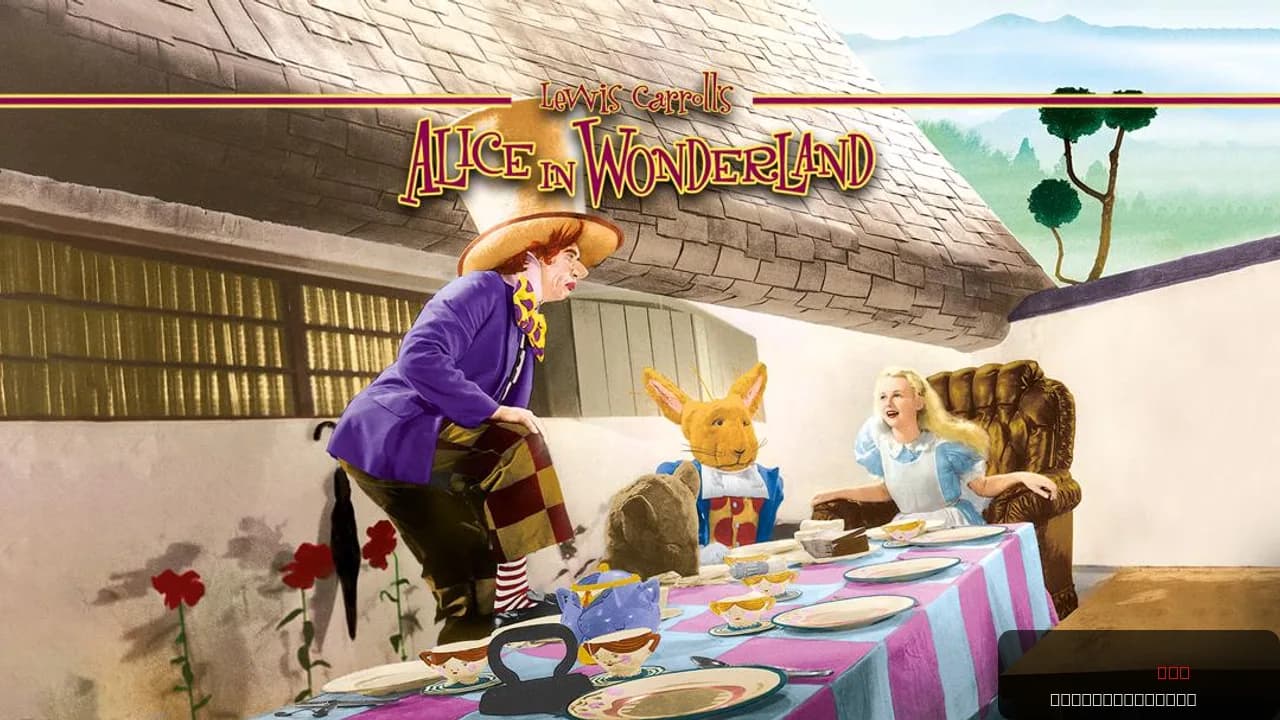
When Charlotte Henry's Alice tumbles into Wonderland, she doesn't land in the animated pastel world most of us imagine. She meets the Cheshire Cat, Humpty Dumpty, and a parade of other Carroll creations in a live-action fever dream that feels genuinely unsettling at times. The 76-minute film doesn't soften Carroll's source material — it leans into the strangeness, the logic puzzles, the anarchic humor that makes the original novels so disorienting. There's no cozy whimsy here. Instead, you get a world where nothing quite makes sense, and that's exactly the point.
Behind the making of Alice in Wonderland (1933)
Paramount Pictures assembled what was essentially an all-star cast for this 1933 adaptation, banking on the prestige of established Hollywood names to sell audiences on a story that, frankly, doesn't have a traditional three-act structure. Charlotte Henry carried the picture as Alice, but the supporting roster reads like a who's who of early sound cinema: Richard Arlen, Gary Cooper, Leon Errol, W.C. Fields, and others. It was a pre-Code production, meaning it arrived before the Production Code's strict moral guardrails reshaped Hollywood storytelling in the mid-1930s. The film is notable for being almost entirely live-action, except for one sequence — the Walrus and the Carpenter — which was animated by the Harman-Ising Studio, the same outfit that worked with Disney.
What's particularly striking is that Walt Disney himself saw this film, and it apparently lit a spark. Paramount's live-action approach didn't click with audiences the way the studio hoped, but Disney took the lesson differently — he'd prove that Carroll's world needed animation to truly sing. His 1951 animated adaptation would become the definitive screen version, yet it wouldn't exist without Paramount's earlier gamble. The 1933 film didn't set the box office on fire, but it planted seeds that would grow into one of Disney's most iconic features.
What makes the 1933 Alice in Wonderland stand out
Here's the thing about watching this film now: it's a historical artifact that's also genuinely weird. The performances are theatrical in a way that feels almost Brechtian — nobody's pretending you're not watching a movie. Henry's Alice is polite and bewildered in equal measure, and there's something unsettling about how the other characters treat her. They're not cruel, exactly, but they're indifferent to her confusion, which somehow makes it worse. The Cheshire Cat (Arlen) grins like he knows a joke nobody else gets, and that's the entire film in a nutshell.
The surrealism works because the production design commits to it. Rather than trying to make Wonderland feel like a coherent place, the sets emphasize dislocation — doors that don't lead anywhere, perspectives that don't quite track, conversations that loop back on themselves. I keep coming back to the fact that this was made in 1933, when visual storytelling was still figuring out its grammar. The film doesn't have the smooth editing or narrative clarity that audiences had learned to expect by the 1940s. That roughness isn't a flaw; it's the whole appeal. You're watching filmmakers struggle with material that resists easy adaptation, and that struggle is visible in every frame.
Audience reception has been mixed, which tracks. Some viewers find it a fascinating window into how differently cinema used to work. Others find it slow, stagey, and hard to connect with. The IMDb rating of 6.2/10 reflects that split — it's not beloved, but it's respected as a curiosity. What's striking is how the film captures Carroll's refusal to explain itself. Modern adaptations tend to psychologize Alice's journey, turning it into a metaphor for growing up or dealing with trauma. This version just lets her wander through nonsense and come out the other side.
Where to stream Alice in Wonderland (1933) online
If you want to see this pre-Code oddity for yourself, it's currently available on Prime Video. You can check the Where to Watch widget at the top of this page for real-time availability across platforms, since streaming rights shift constantly. Movie OTT tracks where classic films like this one are currently streaming, so you don't have to hunt across five different services. The 1933 Alice in Wonderland isn't the easiest film to find — it's not on every major platform — so if you spot it available, that's your window to catch it.
Frequently asked questions
Q: Who directed Alice in Wonderland (1933)?
Norman Z. McLeod directed the film. McLeod was a prolific Hollywood director who worked across comedy and drama, but this remains one of his most unusual projects — a surreal, faithful adaptation of Carroll that doesn't try to impose a conventional narrative structure.
Q: Is the 1933 Alice in Wonderland animated?
No, it's almost entirely live-action, which is part of what makes it so strange to modern viewers. The only animated sequence is the Walrus and the Carpenter bit, handled by Harman-Ising Studio. Everything else — Alice, the Cheshire Cat, Humpty Dumpty — is performed by actors on sets.
Q: How does the 1933 version compare to Disney's 1951 Alice in Wonderland?
They're completely different films. Paramount's version is live-action, theatrical, and committed to Carroll's darker absurdism. Disney's is animated, whimsical, and streamlined for family audiences. Disney's version became the cultural touchstone, but the 1933 film is arguably closer to the source material's actual tone.
Q: Did this film inspire Disney's Alice in Wonderland?
Yes. Walt Disney saw the 1933 Paramount film and it influenced his thinking about how to adapt Carroll, though he went in the opposite direction — animation instead of live-action, and a warmer, more accessible approach to the material.
Q: Where can I watch Alice in Wonderland (1933)?
It's currently streaming on Prime Video. Movie OTT's streaming guides will show you the latest availability, so check back if you don't see it listed right now.
Final thoughts on the 1933 Alice in Wonderland
This film won't be for everyone. If you're looking for cozy, whimsical Carroll, look elsewhere. But if you're curious about how Hollywood tackled literary adaptation in the pre-Code era — if you want to see actors genuinely grappling with material that doesn't fit neat narrative boxes — this is essential viewing. It's a window into a different moment in cinema history, when studios were willing to make strange, unmarketable films and hope for the best. That boldness alone makes it worth your time.