

The story of Harry Potter and the Philosopher's Stone
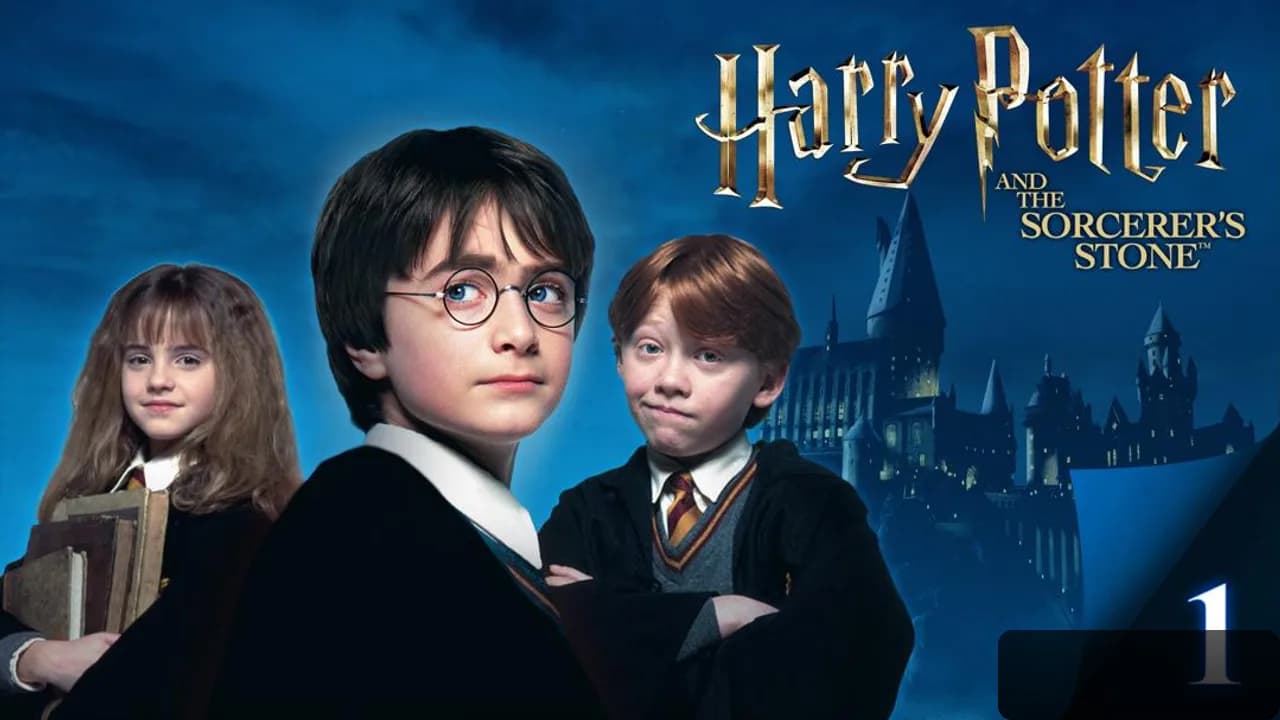
Harry Potter and the Philosopher's Stone follows an orphaned boy who lives a grey, unremarkable life with his aunt and uncle until an invitation arrives on his eleventh birthday—one that changes everything. Harry learns he's a wizard, and not just any wizard. He's famous. His parents were killed by the darkest wizard of all, and somehow, impossibly, Harry survived an attack that should have been fatal. Now he's being called to Hogwarts School of Witchcraft & Wizardry, a hidden castle where he'll learn magic, make friends, and discover that his past—and his destiny—is far more complicated and terrifying than he ever imagined. The film doesn't rush through this setup. It lingers in the mundane before the magic arrives, letting us feel Harry's isolation and yearning, which makes his entrance into Diagon Alley and then Hogwarts feel genuinely transformative rather than just spectacle.
Behind the making of Harry Potter and the Philosopher's Stone
When Chris Columbus took the director's chair for Harry Potter and the Philosopher's Stone in 2001, the pressure was immense. J.K. Rowling's novel had already become a global bestseller, and the fanbase was protective and passionate. Columbus, fresh off the Home Alone films and Mrs. Doubtfire, wasn't an obvious choice for a fantasy epic—yet he proved to be exactly what the material needed. Steve Kloves adapted the screenplay, capturing Rowling's voice while making smart cuts for cinema pacing. The film's 152-minute runtime allows space to breathe; it doesn't feel rushed, which is crucial for a world-building exercise of this scale.
The casting became the stuff of legend. Daniel Radcliffe, then virtually unknown, was cast as Harry Potter, alongside Rupert Grint as Ron Weasley and Emma Watson as Hermione Granger. The three child actors carried the emotional core, but Columbus surrounded them with heavyweight British talent—Richard Harris as Dumbledore, Alan Rickman's sardonic Snape, and Robbie Coltrane's lovable Hagrid. The film arrived in 2001 with unprecedented hype and went on to become a commercial juggernaut, eventually grossing over $1 billion worldwide across the franchise. It won numerous awards and nominations, including a BAFTA for Best Film, cementing its place not just as a successful adaptation but as a landmark in family cinema. Movie OTT tracks where you can stream this landmark film and others from the series across multiple platforms.
What makes Harry Potter and the Philosopher's Stone stand out
What's striking is how Columbus manages to honor Rowling's world without being slavishly literal. Yes, there's a faithful recreation of Diagon Alley and Hogwarts Castle—the production design is meticulous—but the film also has genuine warmth and humor. Watch the scene where Harry first enters the Great Hall and sees the ceiling enchanted to look like the night sky; it's a moment of pure wonder that works because Columbus trusts his audience to feel it rather than explain it. The child performances are often criticized for stiffness, and there's truth to that—Radcliffe, Grint, and Watson were inexperienced, and their line readings can feel wooden in places. But that's not entirely a weakness. Their earnestness, their lack of polish, actually grounds the film. They're discovering this world alongside us, and their genuine amazement (which often was genuine on set) transfers to the screen.
I keep coming back to Alan Rickman's performance as Severus Snape. He's given maybe five minutes of actual screen time in the first film, yet he's absolutely magnetic—contemptuous, mysterious, dangerous. Rickman understood something about the character that wouldn't fully pay off until later films, and he plants those seeds here with such precision that you can't look away. The film's plot is relatively straightforward—there's a mystery at Hogwarts, a hidden object, a threat—but it's not the plot that matters. It's the texture of the world, the relationships forming, the sense that this is just the beginning of something much larger. Some effects don't hold up perfectly by modern standards, and the pacing occasionally stutters, but these are minor complaints about a film that got the fundamentals right.
Where to stream Harry Potter and the Philosopher's Stone online
You can currently watch Harry Potter and the Philosopher's Stone on Prime Video. If you're a subscriber, you've got immediate access to the film that launched one of cinema's most successful franchises. Since streaming availability shifts periodically by region and licensing agreement, it's worth checking the "Where to Watch" widget at the top of this page for the most current information on which platforms are carrying it in your area. Movie OTT keeps that data updated so you don't have to hunt across five different apps to find what you're looking for.
Frequently asked questions
Q: Who directed Harry Potter and the Philosopher's Stone?
Chris Columbus directed the film. He brought a warm, human touch to the fantasy world that balanced spectacle with genuine emotion and humor, setting the tone for the early films in the series.
Q: Is Harry Potter and the Philosopher's Stone based on a book?
Yes, it's based on J.K. Rowling's 1997 novel of the same name (published as Harry Potter and the Sorcerer's Stone in the United States). Steve Kloves adapted the screenplay, making smart cuts while preserving the heart of Rowling's story.
Q: What is the runtime of Harry Potter and the Philosopher's Stone?
The film runs 152 minutes, which gives the story room to breathe and properly establish the wizarding world without feeling rushed.
Q: What's the IMDb rating for Harry Potter and the Philosopher's Stone?
The film holds a 7.7/10 rating on IMDb, reflecting strong audience appreciation despite some noting dated effects and uneven child performances.
Q: Who stars in Harry Potter and the Philosopher's Stone?
Daniel Radcliffe plays Harry Potter, with Rupert Grint as Ron Weasley and Emma Watson as Hermione Granger. The supporting cast includes Richard Harris, Alan Rickman, Robbie Coltrane, and Tom Felton, among others.
Final thoughts on Harry Potter and the Philosopher's Stone
Harry Potter and the Philosopher's Stone works because it understands that the best fantasy isn't about spectacle—it's about belonging. Harry's journey from a cupboard under the stairs to a four-poster bed in Gryffindor Tower is, at its core, about finding home and family. That emotional truth is what carries you through the film, what makes you want to follow Harry deeper into this world. It's not perfect. There are rough edges. But it's got heart, it's got magic, and it's got staying power. Nearly a quarter-century later, it remains the definitive entry point into Rowling's universe—a film that respects both the source material and the audience watching it.