

The Story of American Graffiti
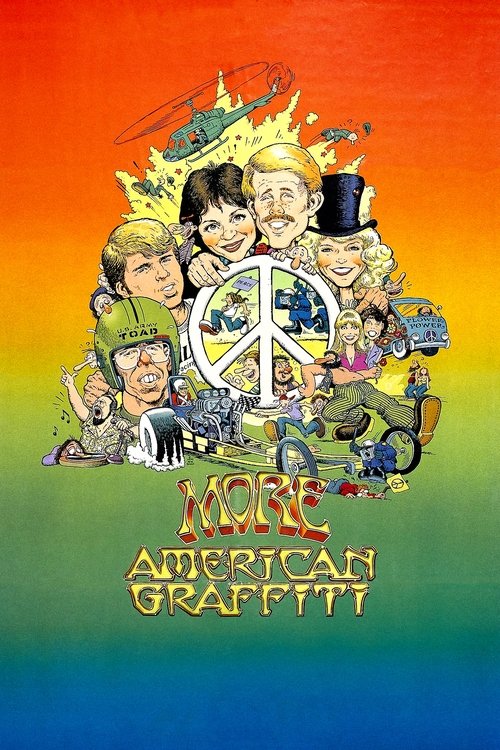
American Graffiti captures something that most films miss: the feeling of standing at the threshold. It's 1962 in Modesto, California, and four teenagers are about to scatter to different corners of the country — college, the military, the unknown. But first, there's one last night. One final lap around town. The film doesn't have a traditional three-act plot; instead, it's a series of interwoven vignettes that follow these kids as they cruise, flirt, fight, and dream under the California stars. There's no grand tragedy waiting. No redemption arc. Just the bittersweet recognition that childhood is ending, and they're not ready to let go.
Behind the Making of American Graffiti
George Lucas directed American Graffiti at just 28 years old, fresh off the success of THX 1138, with legendary producer Francis Ford Coppola backing the project. Lucas co-wrote the screenplay with Gloria Katz and Willard Huyck, mining his own teenage years in Modesto for authenticity — and it shows in every frame. The ensemble cast was stacked with talent on the cusp of stardom: Richard Dreyfuss, Ron Howard, Paul Le Mat, Charles Martin Smith, Candy Clark, Mackenzie Phillips, and Cindy Williams. Harrison Ford and Bo Hopkins rounded out the lineup. The film's modest $750,000 budget became a stunning return on investment; American Graffiti earned $115 million at the global box office, making it one of the most profitable films ever made relative to its cost.
The Academy took notice. The film received five Oscar nominations, though it didn't win in any major category (it lost Best Picture to The Godfather Part II that year). Still, American Graffiti collected nine wins and thirteen nominations across all award bodies, cementing its place in cinema history. Metascore rated it 97/100, and Rotten Tomatoes gave it a 95% Fresh rating — critics understood they were watching something special. The MPAA rated it PG, making it accessible to younger audiences while the film's rock-and-roll soundtrack and car culture spoke directly to them. With a runtime of 107 minutes, it's lean and propulsive, never overstaying its welcome.
What Makes American Graffiti Stand Out
Honestly, what's most striking about American Graffiti is how it refuses to judge its characters. These kids aren't heroes or villains. They're just people — anxious, hopeful, confused, cocky, lonely. Richard Dreyfuss plays Curt Henderson with a kind of intellectual restlessness that feels lived-in; you believe he's genuinely torn between staying home and escaping to the East Coast. Ron Howard's Steve Bolander is the everyman trying to hold onto something that's already slipping away. Paul Le Mat's John Milner is a drag racer clinging to a fading era of cool, and Charles Martin Smith's Terry Fields is the nerdy kid finally getting his shot at romance. The performances don't feel like acting — they feel like observation.
What I keep coming back to is the film's relationship with time and memory. Lucas frames the narrative with text cards that tell us what happened to each character, where they ended up, some of them tragically. It's a device that shouldn't work — it spoils the ending before the film even starts — yet it transforms everything you're watching into something bittersweet and elegiac. You're not just watching teenagers have fun; you're watching time pass. The soundtrack, built almost entirely around period-accurate rock and roll (Chuck Berry, The Beach Boys, Bill Haley), doesn't just set the mood — it becomes the emotional spine of the film. Every song carries weight.
The cinematography by Haskell Wexler bathes Modesto in a golden, hazy light that feels both authentic and dreamlike. There's a scene where John Milner's yellow '32 Ford coupe pulls up alongside Curt's car, and the two just look at each other — no dialogue, just this moment of recognition between two guys from different worlds. That's American Graffiti in miniature: small, specific, human.
Where to Stream American Graffiti Online
American Graffiti is currently available on Netflix, making it easy to revisit or discover Lucas's breakthrough film. The platform's streaming availability means you can watch this 1973 classic in high quality without hunting through physical media or waiting for cable airings. For the most up-to-date information on where American Graffiti streams, check the "Where to Watch" widget at the top of this page — Movie OTT tracks current availability across all major platforms so you don't have to. Netflix's catalog shifts regularly, so if you've been meaning to watch it, now's the time to dive in.
Frequently asked questions
Q: Who directed American Graffiti?
George Lucas directed American Graffiti in 1973. It was his second feature film and became a landmark coming-of-age drama that launched the careers of several young actors and cemented Lucas's reputation as a major filmmaker.
Q: Is American Graffiti based on a true story?
While not based on a specific true story, American Graffiti is deeply rooted in George Lucas's own teenage experiences growing up in Modesto, California. The film captures the authentic spirit of 1960s car culture and youth that Lucas lived through.
Q: What year is American Graffiti set in?
The film is set in 1962 in Modesto, California. This specific time and place are central to the film's nostalgic atmosphere and the cultural details that make it feel so lived-in and real.
Q: How long is American Graffiti?
American Graffiti has a runtime of 107 minutes, making it a lean, propulsive film that doesn't overstay its welcome despite covering so much emotional ground.
Q: What rating did American Graffiti receive?
The film is rated PG, making it accessible to younger viewers while still exploring mature themes of growing up, romance, and the end of innocence.
Q: How much money did American Graffiti make at the box office?
American Graffiti earned $115 million globally, making it one of the most profitable films ever made relative to its budget. It was made for less than $1 million and became a cultural and commercial phenomenon.
Final Thoughts on American Graffiti
American Graffiti works because it understands something fundamental about youth: it's not about the big moments. It's about the small ones — a song on the radio, a conversation in a car, the way someone looks at you across a parking lot. If you're in the mood for a film that captures genuine feeling without sentimentality, that trusts its audience to find meaning in the details, this is it. Whether you're revisiting it or discovering it for the first time, American Graffiti remains a masterclass in how to make a film that feels both intimately personal and universally true.