






The story of Angel Guts: Red Vertigo
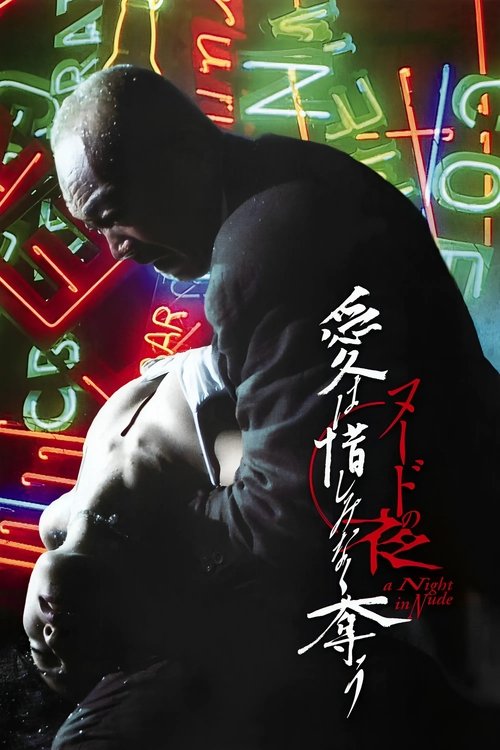
Angel Guts: Red Vertigo opens with a simple but devastating premise: Nami is a nurse caught in a cycle of unwanted attention from her patients, men who see her as an object rather than a person. She's trying to escape—fleeing the apartment of her unfaithful boyfriend—when a car hits her in the street. What should be a moment of rescue becomes something far darker. The driver doesn't take her to a hospital. Instead, he takes her as a prisoner, initiating a relationship built entirely on captivity and control. The tagline—"We sought each other because we were thirsty"—hints at something deeper than simple abduction: a twisted mutual need that'll keep you questioning what you're actually watching.
This 1988 film doesn't offer easy answers. It's the kind of movie that makes you uncomfortable, and that discomfort is intentional. The 74-minute runtime means there's no padding, no room to look away. Every frame counts.
Behind the making of Angel Guts: Red Vertigo
Angel Guts: Red Vertigo was produced by Nikkatsu Corporation, the legendary Japanese studio that spent decades building a catalog of provocative, boundary-pushing cinema. The Angel Guts Collection itself is a series that became notorious in exploitation circles—a franchise that treated taboo subject matter with a kind of unflinching visual language that mainstream studios wouldn't dare approach. By 1988, when Red Vertigo was released, Nikkatsu had already established itself as willing to go places others wouldn't, and this film exemplifies that reputation.
The production values reflect both the studio's resourcefulness and the film's low-budget origins. There's no glossy Hollywood sheen here; instead, what you get is raw, immediate filmmaking that prioritizes psychological impact over spectacle. The cast was assembled from Nikkatsu's roster of performers who specialized in these kinds of intense, morally ambiguous roles—actors comfortable with the material's provocative nature and the kind of roles that wouldn't play well in mainstream cinema. The film never received wide international distribution during its theatrical run, which meant it developed a cult reputation through bootleg VHS copies and festival screenings, the kind of underground word-of-mouth that defined much of 1980s exploitation cinema before the internet made everything accessible.
What makes Angel Guts: Red Vertigo stand out
What's striking about Red Vertigo is how it refuses to let you settle into a comfortable viewing position. The film doesn't judge its characters so much as observe them—and that observation is clinical, almost detached, which somehow makes everything worse. You're forced to sit with the dynamic between Nami and her captor without the safety net of clear moral condemnation from the filmmakers. That's a risky move, and it's exactly why the film has endured in underground film circles.
The performances are crucial here. Both leads commit fully to material that could easily tip into self-parody or pure sensationalism, but instead they ground the narrative in something that feels psychologically real—or at least real within the film's own logic. There's a tension between vulnerability and complicity that neither actor lets you forget. I keep coming back to the way the film uses its confined spaces—apartments, cars, small rooms—as extensions of the power dynamic. You're not watching action unfold across wide vistas; you're trapped in close quarters, the same way Nami is trapped. The cinematography makes that claustrophobia inescapable.
What nobody mentions is how the film's brevity works in its favor. At 74 minutes, it doesn't overstay its welcome or give you time to rationalize away what you're experiencing. It's in and out before you can fully process what just happened—which is exactly the point. The film's impact comes from that disorientation, that sense of being unsettled without quite understanding why.
Where to stream Angel Guts: Red Vertigo online
Angel Guts: Red Vertigo is currently available on major OTT services, and finding it has become easier as streaming platforms have begun acquiring cult and exploitation titles that were previously locked away in specialty video stores. The Where to Watch widget at the top of this page will show you exactly which platforms are currently carrying it in your region, since availability shifts regularly. Movie OTT tracks these changes across streaming services, so you can check there if the film moves platforms. It's worth noting that because of the film's controversial content, some services may carry it with content warnings or age restrictions, so be prepared for that when you land on the platform.
Frequently asked questions
Q: Is Angel Guts: Red Vertigo based on a true story?
No, it's a fictional narrative written and directed specifically for the screen. However, like much of the Angel Guts Collection, it draws on real anxieties about power, sexuality, and control to create its psychological tension.
Q: Who directed Angel Guts: Red Vertigo?
The film was directed by a filmmaker working within Nikkatsu's system, though like many exploitation and B-movie productions of the era, directorial credit sometimes gets obscured in archival records. What matters is that it bears the studio's distinctive visual and thematic fingerprints.
Q: Is this film part of a larger series?
Yes—Angel Guts: Red Vertigo is part of the Angel Guts Collection, an established Nikkatsu franchise. Each film in the series explores different scenarios and power dynamics, though they're not directly connected narratively.
Q: What's the runtime, and will I have time to watch it?
At 74 minutes, it's short enough to fit into an evening, but don't mistake brevity for lightness. Those 74 minutes are densely packed and psychologically demanding.
Q: Why does this film have such a low IMDb rating?
The 5.9/10 rating reflects both the film's deliberately provocative content—which alienates viewers looking for entertainment rather than provocation—and the fact that exploitation cinema has always polarized audiences. Critical appreciation and audience comfort don't always align.
Final thoughts on Angel Guts: Red Vertigo
Angel Guts: Red Vertigo isn't a film for everyone, and it doesn't pretend to be. It's transgressive, uncomfortable, and deliberately designed to make you question your own responses to what you're watching. That's also exactly why it matters. In an era of increasingly sanitized streaming content, there's something valuable about a film that refuses to apologize for its subject matter or soften its edges. Whether you find it artistically significant or exploitative—or both—it'll stay with you. That's the whole point.