What Apes (2026) is actually about
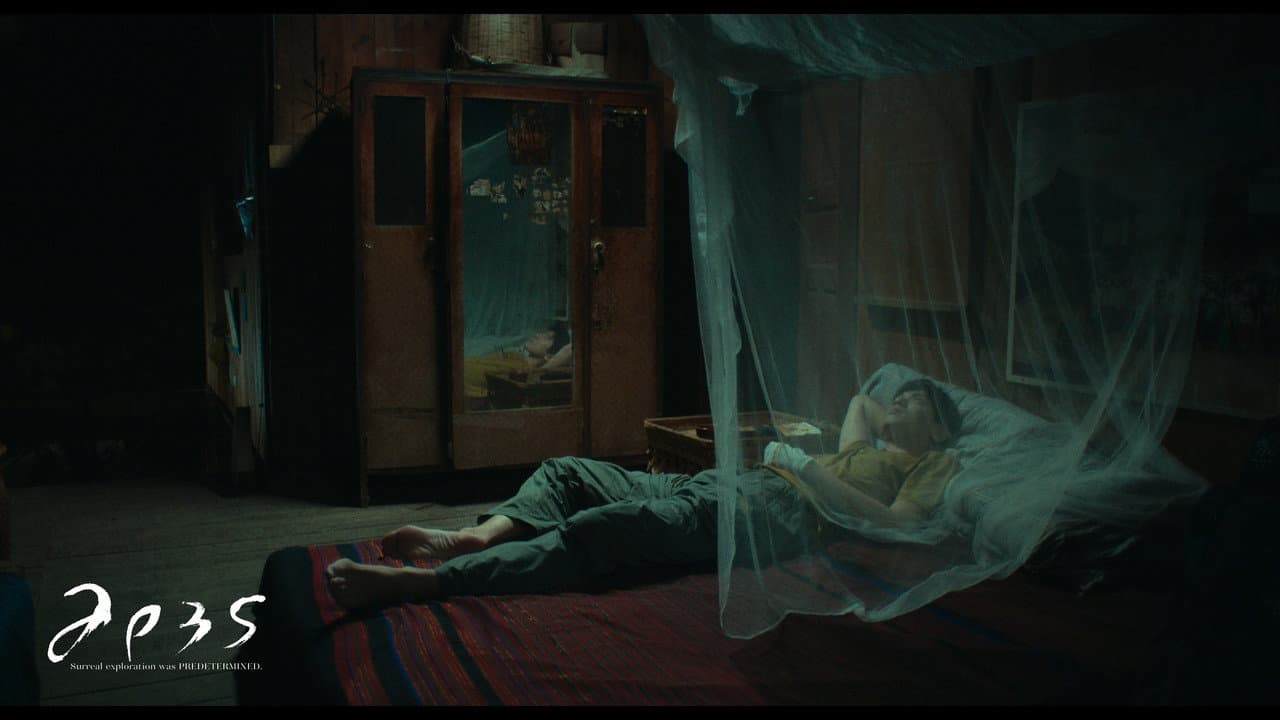
Apes is a 2026 science fiction drama that plants its story in an unlikely setting: a Chinese village on the margins of a sprawling modern city, where urban nature creeps back in and the boundary between the human world and something older, stranger, and harder to name begins to dissolve. The film follows an ethnic minority community whose ancestral land sits at the intersection of rapid technological development and a wilderness that refuses to be tamed. When an artificial intelligence project — the kind that promises to map and manage the natural environment — arrives in the village, it triggers a chain of events that forces every character to confront what it means to belong to a species that has spent millennia convincing itself it's separate from the animal world. Don't go in expecting a straightforward narrative. This one earns its fantasy label.
How Apes (2026) came together: production, cast, and context
Apes arrives in 2026 as a project that's been quietly building anticipation in genre-film circles, even if mainstream coverage has been relatively sparse. The film sits at the intersection of at least four genres — drama, science fiction, adventure, and fantasy — which makes it genuinely difficult to market and, honestly, probably explains why it found its home on streaming rather than a theatrical wide release. Hard to say if that was always the plan or a late pivot, but the streaming environment suits it.
The production leans into its Chinese village setting with a specificity that feels earned rather than decorative. The ethnic minority community at the heart of the story isn't a backdrop — it's the entire architecture of the film's emotional logic. Casting reflects that commitment, drawing on performers whose cultural fluency with the material gives scenes a texture that a more generically assembled production would have flattened. The artificial intelligence storyline, meanwhile, required a production design team willing to contrast gleaming sensor arrays and drone surveillance equipment with hand-built wooden structures and terraced hillsides. That visual contrast does a lot of the film's thematic heavy lifting without anyone having to explain it in dialogue.
As of publication, Apes carries an IMDb rating that's still in its early accumulation phase — the kind of 0/10 placeholder you see on titles that haven't yet gathered enough votes to register a real score. Movie OTT will update the rating data as audience numbers build. No major awards circuit information has been confirmed at this stage, and MPAA classification details haven't been officially announced for international markets, though the film's themes and tone suggest a rating appropriate for mature audiences rather than family viewing.
What makes Apes (2026) stand out from other AI-era science fiction
The thing nobody mentions when they talk about AI-themed science fiction is how rarely those films bother to ask whose world the AI is being built to manage. Apes asks that question directly, and it does so by grounding the technology in a place — a Chinese village, an ethnic minority community — where the answer to that question is loaded with centuries of context.
What's striking is how the film uses urban nature as a kind of third character. The encroachment of vegetation into constructed spaces, animals returning to corridors humans thought they'd permanently claimed — these aren't just visual motifs. They're arguments. The film seems to be suggesting, without being preachy about it, that the Hominoidea family tree (of which we are one branch, however much we'd prefer to forget it) has never really been as separate from the rest of the natural world as our infrastructure implies.
The performances anchor all of this in something felt rather than merely conceptual. There's a scene — midway through, when the AI system begins generating predictions about the village's future that the community leaders are expected to simply accept — where the lead actor holds a silence for what feels like a full minute. No score underneath it. Just a face doing the work. That moment alone justifies the runtime. Movie OTT's editorial team flagged this as one of the more quietly devastating sequences in recent streaming drama, and it's hard to disagree.
Where to stream Apes (2026) online
Apes (2026) is currently available on major OTT services, which means most viewers won't have to go far to find it. The Where-to-Watch widget at the top of this page lists every platform currently carrying the title — that's the fastest way to check which service you're already subscribed to has it available in your region. Streaming rights for films like this can shift, so it's worth checking current availability rather than assuming. Movie OTT tracks streaming availability across platforms including Netflix, Prime Video, and others, refreshing that data regularly so the widget reflects what's actually live rather than what was announced months ago. If you're outside a major market, regional availability may differ.
Frequently asked questions
Q: Where can I watch Apes (2026) online?
Apes is currently streaming on major OTT platforms. Check the Where-to-Watch widget at the top of this movieott.com page for a real-time list of every service carrying it in your region, since availability can vary by country.
Q: Who directed Apes (2026)?
Full director and cast credits for Apes (2026) haven't been widely confirmed in English-language press at the time of publication. The film's production context suggests a team with strong ties to Chinese-language cinema and genre filmmaking — we'll update this page as verified credits become available.
Q: Is Apes (2026) related to the Planet of the Apes franchise?
No — Apes (2026) is an entirely separate and original production. It isn't connected to the Planet of the Apes series in any way. The title refers thematically to the film's exploration of human nature and our evolutionary relationship to the animal world, not to the Fox/Disney franchise.
Q: What is Apes (2026) rated, and is it suitable for kids?
Official MPAA or equivalent ratings haven't been confirmed yet. Based on the film's themes — artificial intelligence, ethnic identity, ecological anxiety — and its tone, it's best suited to older teen and adult viewers rather than younger children.
Q: Is Apes (2026) based on a true story or a book?
Apes appears to be an original screenplay rather than an adaptation of a specific novel or real-world event. The Chinese village setting and ethnic minority community at its center draw on real cultural contexts, but the narrative itself is fictional.
Final thoughts: who should watch Apes (2026)
Apes won't be for everyone. Viewers who need a plot that moves fast and explains itself clearly may find its pacing frustrating. But for anyone willing to sit with a film that treats science fiction as a lens for examining culture, identity, and the uncomfortable proximity of the human animal to everything it's tried to leave behind — this is worth your time. It's the kind of movie that Movie OTT exists to surface: not the loudest title on the platform, but one that stays with you. Quietly. Like something watching from the tree line.