








The story of Autumn Ball
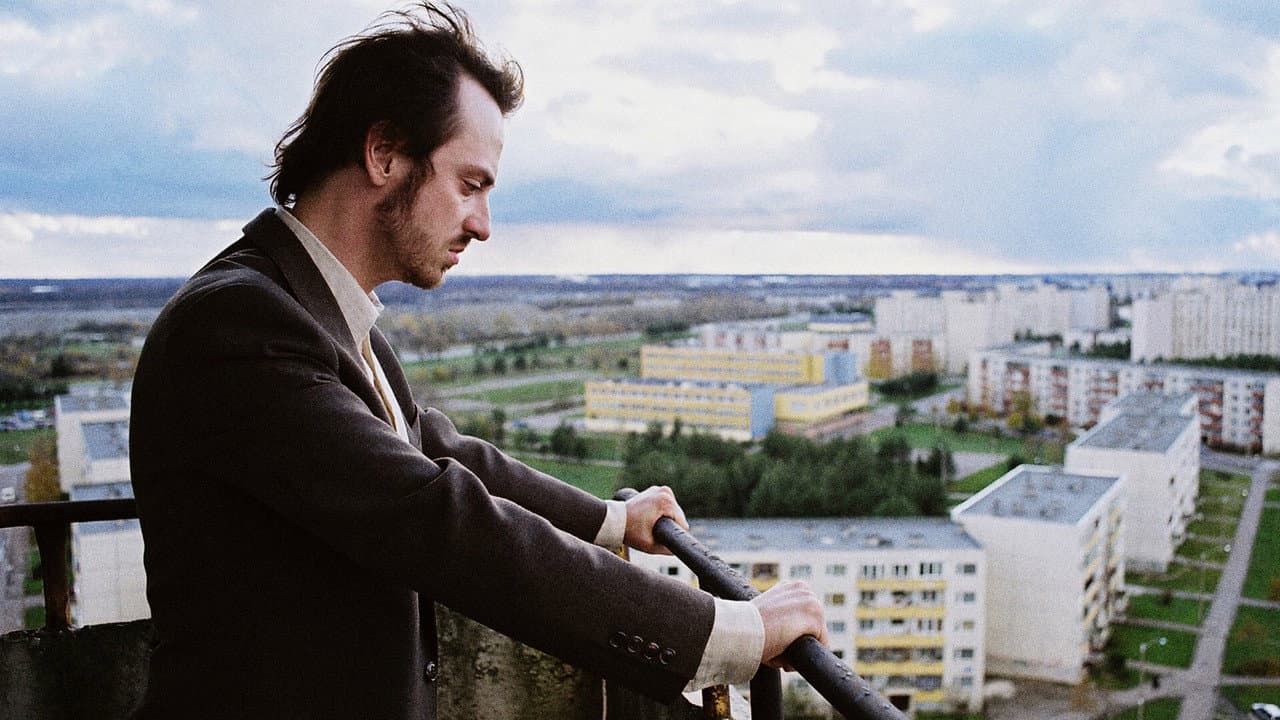
Autumn Ball is a 2007 Estonian drama that captures something most films miss: the particular loneliness of living alongside millions of people you'll never meet. Set in Tallinn during the autumn season, the film follows six separate characters—each imprisoned in their own way within the characteristically Soviet pre-fabricated housing units known as khrushchyovka. They're not connected by plot so much as by circumstance and desire. Each person in their own apartment, behind their own concrete walls, is searching for the same impossible thing: a ray of light in an ocean of gray. A film about solitude that somehow feels intimate rather than cold.
Director Veiko Õunpuu adapted this story from Mati Unt's 1979 novel, maintaining the book's fragmented structure and its refusal to offer easy redemption. What emerges is less a conventional narrative and more a portrait of six parallel universes, each one a prison of monotonous architecture and human need. The tagline says it best: "Film for all men with a gentle soul and a bad liver. For those who stand alone in the night. In their underwear." That's not marketing speak—that's an honest description of who this film is for.
Behind the making of Autumn Ball
Autumn Ball premiered at the 64th Venice International Film Festival in 2007, where it won the prestigious Horizon Award, a prize that recognizes innovative and daring cinema. The film was produced by Homeless Bob Production, Moonwalker Film, and Tugev Tuul Films—a collaborative effort that brought together Estonian and international talent to realize Õunpuu's vision. With a runtime of 123 minutes, the film takes its time. It doesn't rush. There's no ticking clock, no artificial urgency—just the slow accumulation of small moments that add up to something devastating.
The production design deserves particular mention. The khrushchyovka apartments aren't just set dressing; they're characters themselves, their beige walls and narrow hallways becoming almost claustrophobic as the camera lingers on them. Õunpuu shot the film in a way that makes these spaces feel simultaneously cramped and infinite—you're trapped but also completely alone. The Venice recognition helped establish Autumn Ball as a significant work of contemporary European cinema, though it never achieved widespread commercial distribution. That's partly by design; this isn't a film made for multiplexes or casual viewing. It's made for people who want to sit with discomfort, who don't mind ambiguity, who understand that sometimes the most important stories aren't the ones that wrap up neatly.
What makes Autumn Ball stand out
Honestly, what's striking about Autumn Ball is how it refuses sentimentality while remaining deeply compassionate. The characters aren't noble in their suffering. They're flawed, sometimes petty, occasionally cruel—but they're also desperately human. One scene that stays with you involves a character standing at a window, watching the city below, and you realize they're not looking outward so much as looking away from themselves. The performances are understated in a way that feels almost documentary-like, which is exactly the point.
The film works because it trusts the viewer to understand something without being told. There's no voiceover explaining the characters' backstories or their emotional states. Instead, Õunpuu lets you piece together their lives from small details—a photograph on a shelf, the way someone moves through a room, the hesitation before they speak. What I keep coming back to is how the film captures the specific texture of post-Soviet life: not poverty exactly, but a particular kind of grayness, a sense that the world has already happened and these people are living in its aftermath. The concrete blocks, the autumn light filtering through thin curtains, the sound design (or lack thereof—silence is used as a tool here)—it all accumulates into something that feels less like a movie and more like a memory you can't quite shake.
Critically, the film sits at 5.435 on IMDb, which tells you something important: this isn't crowd-pleasing cinema. It's divisive. Some viewers find it meditative and profound; others find it slow and punishing. Both reactions are valid. The film doesn't care which camp you fall into. It's doing its own thing, which is increasingly rare in an era of algorithmic filmmaking.
How to stream Autumn Ball online
Autumn Ball is currently available on major OTT services, and if you're looking for where to watch it, the "Where to Watch" widget at the top of this page will show you exactly which platforms are streaming it in your region right now. Availability shifts regularly, so Movie OTT tracks these changes across Netflix, Prime Video, and other major streaming services so you don't have to hunt. The film's slow burn and deliberately paced narrative make it perfect for home viewing, where you can pause, sit with a scene, and absorb it at your own speed. This isn't a film you'll want to half-watch while scrolling through your phone.
Frequently asked questions
Q: Who directed Autumn Ball?
Autumn Ball was directed by Veiko Õunpuu, an Estonian filmmaker known for his patient, observational approach to cinema. The film was adapted from Mati Unt's 1979 novel of the same name.
Q: What did Autumn Ball win at Venice?
The film won the Horizon Award at the 64th Venice International Film Festival in 2007, a prize that recognizes innovative and courageous cinema.
Q: How long is Autumn Ball?
The film runs 123 minutes, which allows Õunpuu to develop each of the six characters' storylines without rushing or compressing their emotional arcs.
Q: Is Autumn Ball based on a true story?
No, but it's adapted from Mati Unt's 1979 novel of the same name. The story is fictional, though it captures the emotional reality of Soviet-era urban life with documentary-like precision.
Q: Where can I watch Autumn Ball right now?
Autumn Ball is available on several major streaming platforms. Use the "Where to Watch" widget at the top of this page to check which services are currently offering it in your location, or visit Movie OTT to see the latest availability updates.
Final thoughts on Autumn Ball
Autumn Ball isn't for everyone, and it doesn't pretend to be. It's a film about loneliness made by someone who understands that loneliness isn't something to be fixed but something to be witnessed and acknowledged. If you're drawn to cinema that's willing to sit in uncomfortable spaces, that trusts silence and ambiguity, that believes audiences are smart enough to read between the lines—then this is essential viewing. It's a rare thing: a film that's genuinely about something, that has something to say about the human condition, and that says it without a trace of false hope or easy answers.