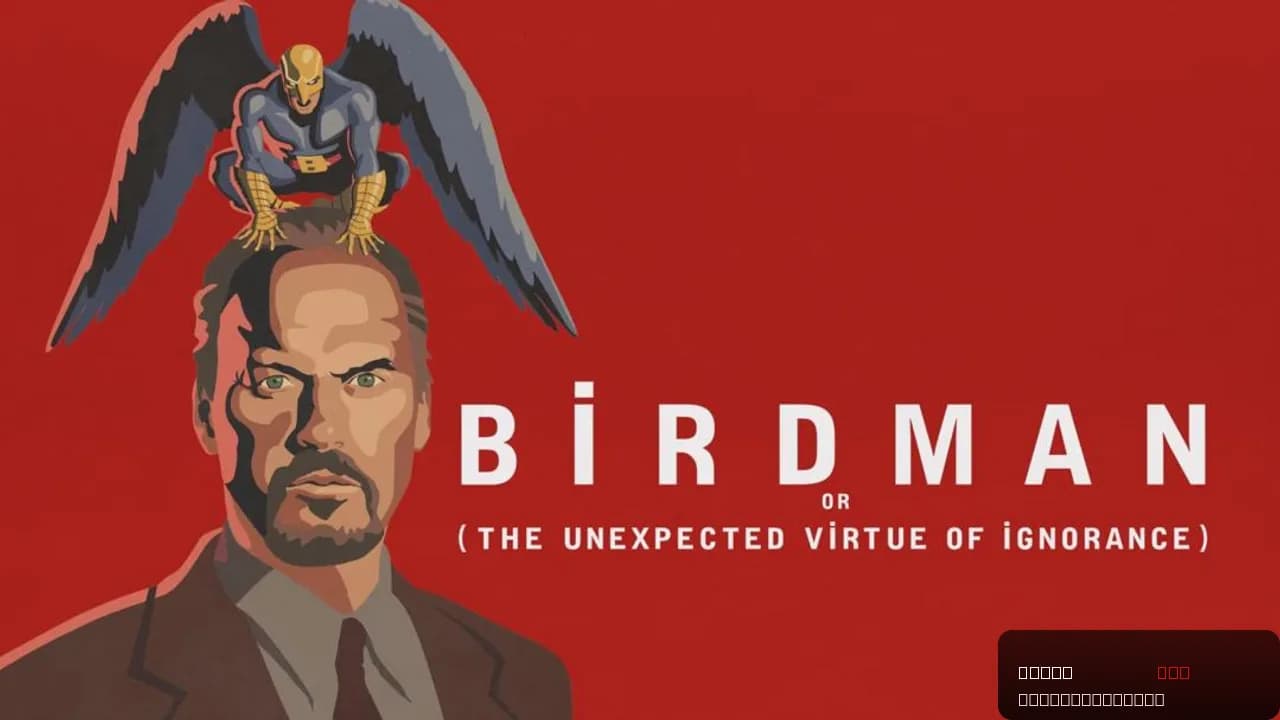




The story of Birdman or (The Unexpected Virtue of Ignorance)
Birdman or (The Unexpected Virtue of Ignorance) follows Riggan Thomson, a former Hollywood star best known for playing the titular superhero in a blockbuster film franchise, as he attempts one last shot at relevance. He's abandoned the safety of studio paychecks to write, direct, and star in a Broadway adaptation of Raymond Carver's short story "What We Talk About When We Talk About Love." It's an act of artistic desperation masked as ambition. The film tracks his journey through rehearsals, opening-night jitters, and the constant barrage of self-doubt that manifests as a voice in his head—the voice of Birdman itself, whispering that he's nothing without the suit. Caught in the chaos are his estranged daughter (a career-best Emma Stone), a pretentious method actor (Edward Norton) who threatens to derail the production, and the merciless New York theatre critics who hold his fate in their hands. What unfolds isn't a straightforward redemption arc. Instead, it's a descent into a fever dream where reality and fantasy become increasingly indistinguishable.
Behind the making of Birdman or (The Unexpected Virtue of Ignorance)
Director Alejandro González Iñárritu crafted this film as a technical and narrative gamble that paid off spectacularly. The production was designed to appear as a single, unbroken take—a two-hour continuous shot that actually required months of planning and invisible editing. Cinematographer Emmanuel Lubezki used long, flowing sequences that move through backstage corridors, dressing rooms, and the theatre itself, creating an immersive, almost suffocating sense of being trapped inside Riggan's deteriorating mind. The ensemble cast—Michael Keaton, Edward Norton, Zach Galifianakis, Naomi Watts, Andrea Riseborough, and Amy Ryan—all committed to this unconventional approach, performing scenes in real time without the safety net of traditional shot-reverse-shot editing. Released in 2014, the film became a critical sensation and awards juggernaut. It earned nine Academy Award nominations, including Best Picture, Best Director, Best Actor, and Best Supporting Actress (Stone). Though it didn't win the top prize—that went to Birdman's rival that year—the film's influence on cinema proved far more durable. Movie OTT now tracks where you can stream it, making this once-theatrical experience accessible from your couch.
What makes Birdman or (The Unexpected Virtue of Ignorance) stand out
What's striking about this film is how it uses formal technique not as showmanship but as storytelling. The relentless camera movement doesn't feel like a gimmick—it's the visual embodiment of Riggan's spiraling anxiety. You can't step back. You can't catch your breath. That's the point. Michael Keaton's performance is a masterclass in controlled chaos. He plays a man simultaneously desperate for validation and contemptuous of the very system that could grant it, and somehow we believe both impulses coexisting in the same character. Emma Stone, then relatively unknown, holds her own against the ensemble with a rawness that cuts through all the theatrical artifice. Edward Norton steals scenes as a self-absorbed actor who becomes a walking parody of "serious" method acting—though Norton himself gives the role surprising depth beneath the satire. The script balances dark comedy with genuine pathos; you'll laugh at the absurdity one moment and feel genuinely unsettled the next. The film's central insight—that we're all performing versions of ourselves, that the line between authenticity and artifice is basically nonexistent in modern life—feels more relevant now than when it premiered. Critics have consistently praised how Iñárritu refuses to make the ending neat or morally clear. There's no definitive answer to whether Riggan "wins" or what success even means anymore.
Where to stream Birdman or (The Unexpected Virtue of Ignorance) online
You can currently watch Birdman or (The Unexpected Virtue of Ignorance) on Prime Video. The film's 120-minute runtime means you're looking at a substantial commitment—no phone-scrolling through this one—but that's precisely what Iñárritu intended. The theatrical experience translates surprisingly well to home viewing, though if you can access it on a larger screen with decent sound, the immersive camera work hits harder. Check the "Where to Watch" widget at the top of this page to confirm current availability, as streaming rights shift frequently. Movie OTT keeps those listings updated in real time, so you won't waste time hunting for a platform that's dropped the title.
Frequently asked questions
Q: Who directed Birdman or (The Unexpected Virtue of Ignorance)?
Alejandro González Iñárritu directed the film. It was his third feature and marked a major turning point in his career, establishing him as a major auteur in contemporary cinema.
Q: Is Birdman or (The Unexpected Virtue of Ignorance) based on a true story?
No, it's an original screenplay by Iñárritu and Nicolás Giacobone. However, the Broadway play-within-the-film is an adaptation of Raymond Carver's short story "What We Talk About When We Talk About Love."
Q: How long is Birdman or (The Unexpected Virtue of Ignorance)?
The film runs 120 minutes, presented as what appears to be a single continuous shot, though it's actually a carefully constructed edit.
Q: What's the IMDb rating for Birdman or (The Unexpected Virtue of Ignorance)?
The film holds a 7.6/10 rating on IMDb, reflecting strong critical and audience appreciation, though some viewers find its experimental style divisive.
Q: Did Birdman or (The Unexpected Virtue of Ignorance) win any major awards?
Yes. The film earned nine Academy Award nominations, including Best Picture and Best Director. While it didn't win the top prize, it won the Golden Globe for Best Motion Picture – Drama and numerous other accolades at film festivals and critics' organizations.
Final thoughts on Birdman or (The Unexpected Virtue of Ignorance)
Birdman or (The Unexpected Virtue of Ignorance) is a film that demands your full attention and won't apologize for it. It's not comfortable viewing—the constant motion, the claustrophobic framing, the psychological unraveling—but that discomfort is the whole point. If you're drawn to cinema that takes risks, that uses technique as meaning, that refuses easy answers about art, ego, and survival in a media-obsessed culture, this is essential viewing. Even if you don't love it, you won't forget it. That's rarer than you'd think.