

The story of Breaking a Monster
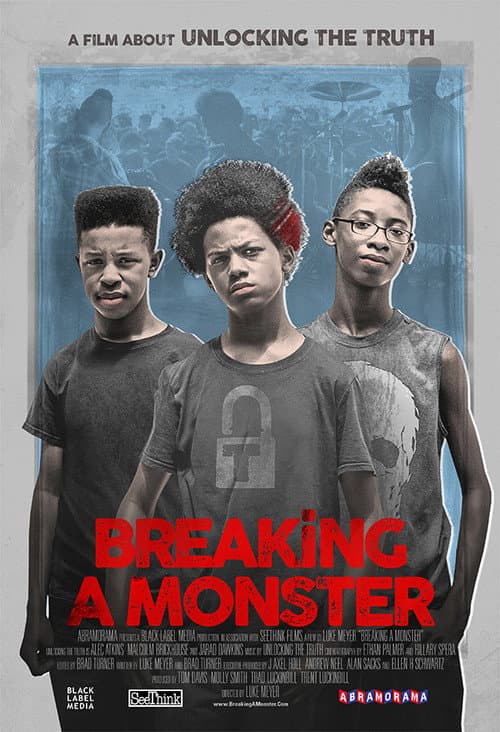
Breaking a Monster tells the story of Unlocking the Truth, a teenage heavy metal band that starts out playing weekends in Times Square and ends up signing a $1.8 million record deal with Sony Music. The three members—Alec Atkins, Malcolm Brickhouse, and Jarad Dawkins—were just seventh-graders when director Luke Meyer began following them through what would become one of the most transformative years of their lives. What begins as a feel-good narrative about kids pursuing their passion quickly morphs into something far more complicated: a hard look at how the music industry chews up young talent, the pressures of sudden fame, and what happens when childhood ambitions collide with adult expectations. The documentary doesn't shy away from the uncomfortable truths lurking beneath the headline.
Behind the making of Breaking a Monster
Breaking a Monster premiered in 2015 as a 92-minute observational documentary, made by production companies SeeThink Films and Black Label Media. What's striking about the film's journey is how much critical validation it received despite minimal box office penetration—it earned just $4,212 at the box office, a figure that speaks volumes about the gulf between critical acclaim and commercial viability in documentary cinema. Yet the film went on to win 2 awards and earn 4 nominations, signaling that industry gatekeepers recognized something genuinely important in Meyer's approach. The Metascore sits at a robust 72/100, while Rotten Tomatoes awarded it a perfect 100% Fresh rating—a rare consensus that critics found the film's examination of its subjects both fair and illuminating. The IMDb rating of 6.1/10 suggests a more mixed audience reception, which isn't surprising; this isn't a comfortable watch. The film carries no MPAA rating, having premiered on the festival circuit before finding its way to streaming platforms.
Meyer's observational style—the kind that hangs back and lets moments unfold rather than imposing a heavy-handed narrative—proves crucial to the film's power. He doesn't position himself as a savior or a judge; he simply documents. The production captures not just the euphoria of signing a record deal but the fractures that begin to show almost immediately. There's a moment where you can see the manager's influence seeping into decisions that should belong to the kids, and Meyer doesn't cut away. He lets it breathe. That restraint is what separates Breaking a Monster from the typical "kids chase their dreams" documentary.
What makes Breaking a Monster stand out
Here's what I keep coming back to: the film doesn't treat its teenage subjects as props in a redemption narrative. Instead, it examines how race, class, and the predatory nature of the music industry intersect in ways that most people don't want to talk about. Unlocking the Truth are Black kids from Brooklyn making metal music—a genre historically dominated by white musicians and audiences—and the documentary doesn't sidestep how that shapes their experience. The band members aren't icons; they're teenagers trying to figure out who they are while adults with financial interests circle them.
What's equally important is how the film captures the genuine artistry and hunger in these kids. They can play. They want it. That hunger is real—and that's what makes the subsequent complications so devastating. The documentary shows us the collision between authentic passion and industry machinery, between childhood dreams and the actual cost of achieving them. You're rooting for these kids, and then you're watching them get ground down, and the film doesn't resolve that tension neatly. It can't, because real life doesn't.
Critics have praised the film's refusal to offer easy answers or redemptive arcs. Instead of cutting to a title card explaining what happened to each band member, the film ends in ambiguity—which, paradoxically, feels more honest than any neat conclusion could be. The performances (if you can call documentary subjects' lives "performances") are raw because they're real. These aren't actors; they're actual teenagers navigating actual industry pressure, and that authenticity is something no script could manufacture.
Where to stream Breaking a Monster online
Breaking a Monster is currently available on major OTT streaming services. To find which platform is carrying it in your region right now, check the "Where to Watch" widget at the top of this page—streaming availability shifts frequently, and Movie OTT keeps that information updated across all major platforms. Since this is a documentary that benefits from undivided attention, you'll want to make sure you can watch it in full without interruption. The 92-minute runtime is lean enough that you can knock it out in one sitting, which is exactly how you should experience it. Don't half-watch Breaking a Monster while scrolling; it demands your focus.
Frequently asked questions
Q: Is Breaking a Monster based on a true story?
Yes—it's a documentary, so everything in it is real. The film follows the actual members of Unlocking the Truth as they navigate their genuine rise to a record deal with Sony Music. Director Luke Meyer filmed them over the course of a transformative year.
Q: Who directed Breaking a Monster?
Luke Meyer directed the film. He employs an observational documentary style that lets events unfold naturally rather than imposing a heavy narrative structure, which gives the film much of its power and authenticity.
Q: What happened to Unlocking the Truth after the documentary?
The film doesn't provide a neat conclusion, which is part of its integrity. You'll have to watch to see where things stand by the end, and the ambiguity is intentional—it mirrors the uncertainty the band members themselves face.
Q: Why does Breaking a Monster have a perfect score on Rotten Tomatoes but a lower IMDb rating?
Critics (who rate on Rotten Tomatoes) appreciated the film's unflinching examination of the music industry and its refusal to offer easy answers. General audiences on IMDb may have found it darker or less uplifting than they expected. It's not a feel-good documentary; it's a complicated one.
Q: How long is Breaking a Monster?
The documentary runs 92 minutes, which is a tight runtime that keeps the pacing sharp and prevents the narrative from sagging.
Final thoughts on Breaking a Monster
Breaking a Monster is the kind of documentary that sticks with you—not because it's flashy or manipulative, but because it trusts you to draw your own conclusions. It's a film about ambition, talent, and the machinery that grinds both of those things into dust. If you've ever wondered what really happens behind the scenes of a record deal, or if you're interested in a thoughtful examination of race and representation in music, this is essential viewing. Don't expect catharsis. Expect truth.