








The Story of Caterpillar
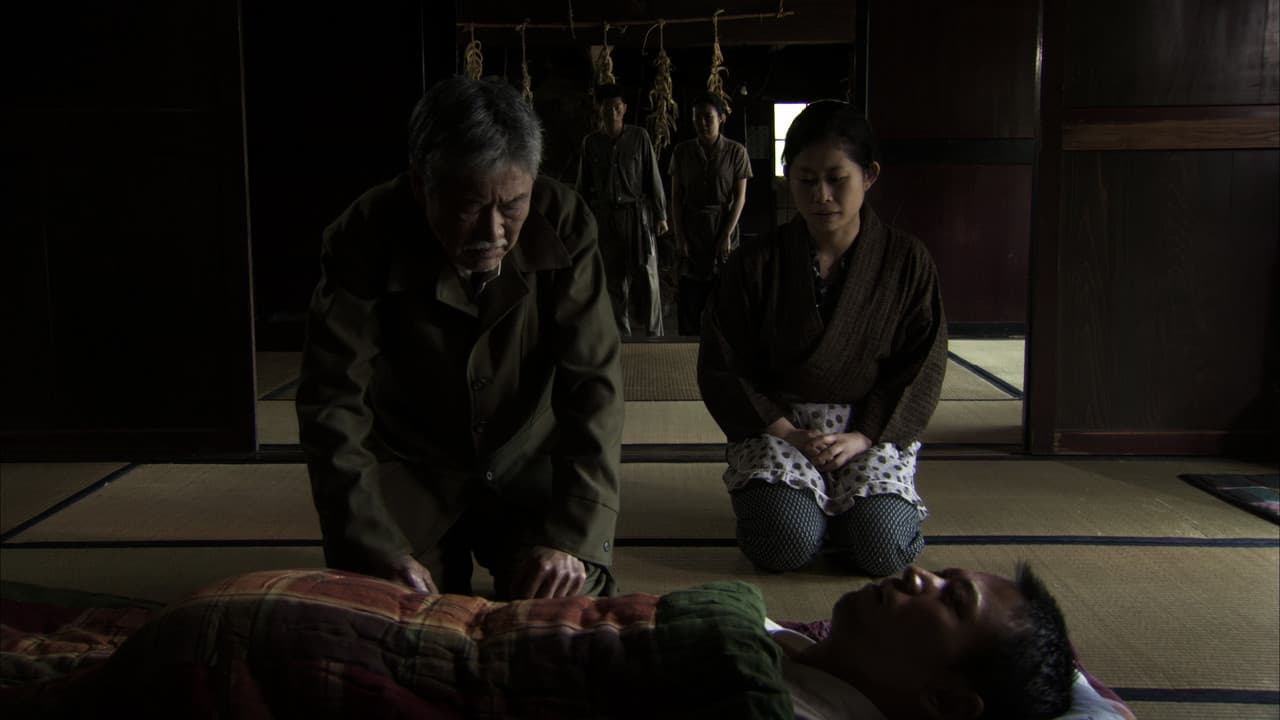
Caterpillar is set in the immediate aftermath of World War II, when Japan was collapsing into social and economic chaos. The film centers on a former soldier—a man who returns from the war as an amputee, stripped of his limbs and his ability to speak (he's deaf as well, adding another layer of isolation). His wife, bound by duty and circumstance, becomes his caretaker in their cramped home. What unfolds isn't a redemption narrative or a healing journey. Instead, it's a portrait of two people locked in a relationship corroded by resentment, dependency, and the unspeakable violence of war itself. The title's metaphor is deliberate: like a caterpillar that's lost the ability to transform, this man is trapped in a state of permanent stasis, and everyone around him pays the price.
Behind the Making of Caterpillar
Caterpillar was directed by Shohei Imamura and produced by Skhole Co. and Wakamatsu Production. It's a 2010 release with a runtime of 87 minutes—lean, unpadded, every frame purposeful. The film emerged during a period of renewed Japanese interest in unflinching examinations of the war period and its aftermath, though Imamura's approach was far more provocative than most contemporary war dramas. The cast anchors the film's emotional brutality: the performances are raw and unglamorous, eschewing the kind of dignified suffering you'd expect from prestige cinema. The film carries an IMDb rating of 6.333/10, which reflects its divisive nature—audiences and critics alike recognize its power, but not everyone comes away grateful for the experience. That's by design. This isn't a film made to comfort; it's made to confront. If you're tracking where Caterpillar is available across streaming platforms, Movie OTT keeps current listings updated as licensing shifts across major OTT services.
What Makes Caterpillar Stand Out
What's striking is how the film refuses the usual war-drama machinery. There are no heroic flashbacks, no scenes of battlefield glory to contextualize the protagonist's sacrifice. Instead, Imamura traps us in the domestic space—the kitchen, the bedroom, the narrow confines of a house that becomes a pressure cooker. The wife's face tells the real story. She's not a noble caregiver; she's a woman whose life has been stolen by circumstance and social obligation. There's a scene early on where she's trying to feed him, and the tenderness of the gesture curdles into something uglier as his disability prevents him from controlling his own body, and her frustration bleeds through. It's uncomfortable. That's the point. The film argues—without ever stating it outright—that war doesn't just maim soldiers; it poisons the people closest to them. The post-war chaos period isn't just historical backdrop; it's a mirror for the chaos inside this house. What nobody mentions enough is how the film uses sound (or the absence of it) to devastating effect. A deaf character in a silent film becomes something more than gimmick—it becomes a statement about isolation, about how some wounds can't be bridged by proximity alone. The performances don't reach for sympathy. They reach for truth, which is far more disturbing.
How to Watch Caterpillar Online
Caterpillar is currently available on major OTT services, and you can check the Where to Watch widget at the top of this page to see which platform has it in your region. Streaming availability shifts regularly, so Movie OTT tracks current streaming availability across major platforms to save you the hunting. Since the film is only 87 minutes, it's the kind of title you can commit to in a single sitting—though "commit" might be the wrong word. You'll need to be in the right headspace. It's not background viewing. It demands attention and stomachs a certain willingness to sit with discomfort.
Frequently asked questions
Q: Is Caterpillar based on a true story?
The film is inspired by the real historical experience of disabled war veterans in post-WWII Japan, though the characters themselves are fictional. Imamura used the documentary reality of the period—the chaos, the poverty, the social abandonment of wounded soldiers—as his foundation.
Q: Who directed Caterpillar?
Shohei Imamura directed the film. He was a legendary Japanese filmmaker known for provocative, socially conscious work that didn't shy away from depicting the darker aspects of human behavior and Japanese society.
Q: What does the title Caterpillar mean?
The caterpillar is a metaphor for the protagonist—a creature that's lost its ability to transform or escape its condition. It's trapped in a permanent state, unable to evolve or heal, much like the veteran himself and the marriage he's trapped in.
Q: How long is Caterpillar?
The film runs 87 minutes, making it a compact but dense meditation on trauma and domestic violence. There's no wasted time.
Q: Is Caterpillar appropriate for all viewers?
No. The film contains depictions of domestic violence, sexual coercion, and emotional cruelty. It's meant for adult viewers with a tolerance for difficult subject matter and cinema that doesn't flinch from ugliness.
Final Thoughts on Caterpillar
Caterpillar isn't a film you watch for comfort or catharsis. It's a film you watch because you need to understand something difficult about human nature—about the way war doesn't end when soldiers come home, about how trauma can poison even the most intimate bonds. It's deliberately provocative, sometimes hard to watch, and absolutely necessary. If you're drawn to cinema that doesn't flinch from ugliness, that treats its subjects with honesty rather than pity, this is essential viewing. It's not for everyone, but it's for anyone serious about what film can do when it stops trying to please and starts trying to tell the truth.