






The Story of Chronos: When Time Folds Back on Itself
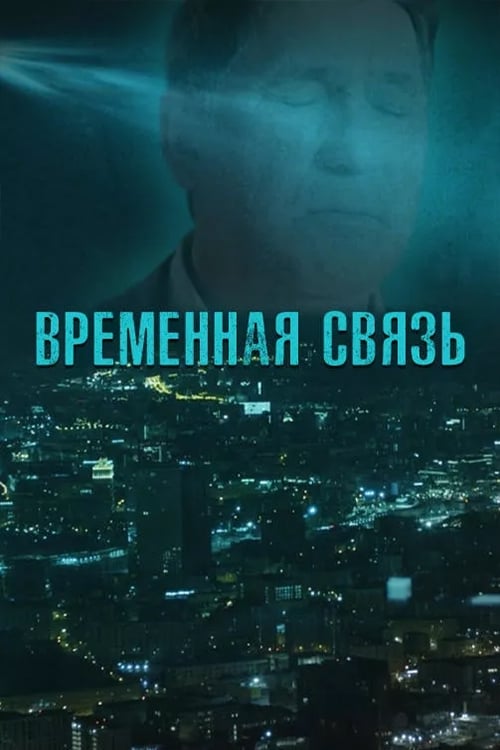
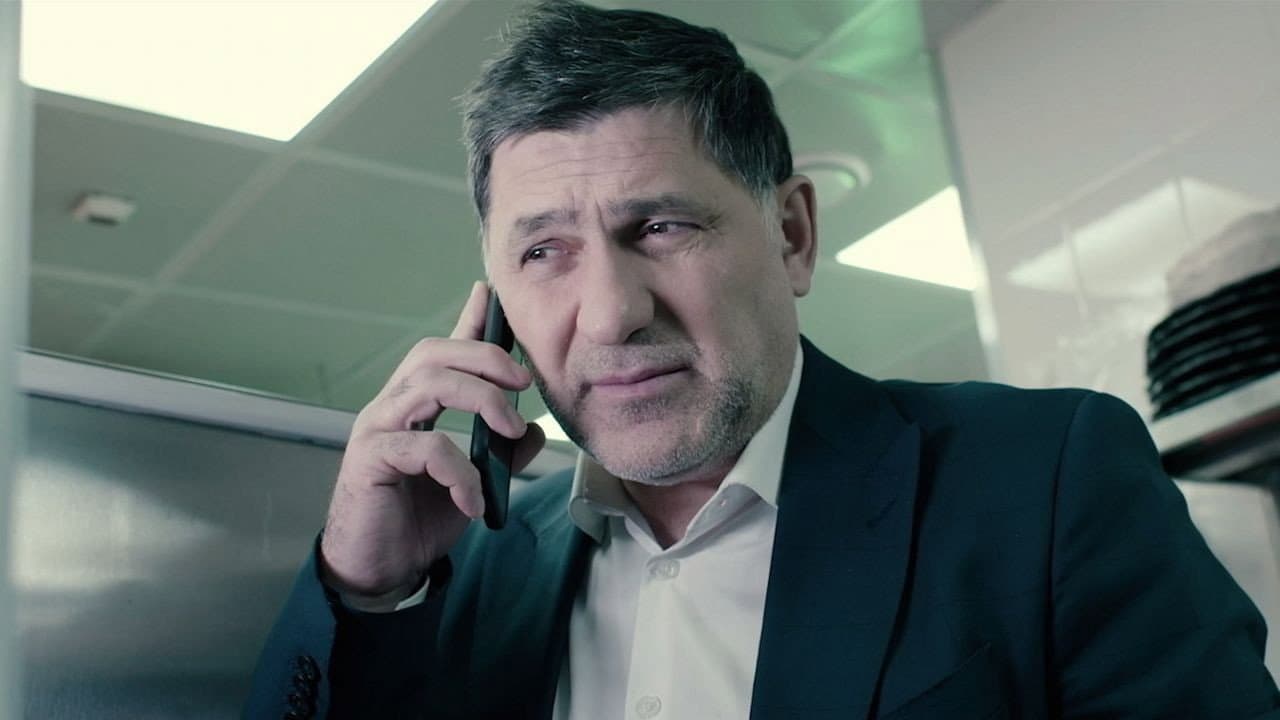
Chronos opens in Moscow, 2020, where a wealthy restaurateur named Vadim is caught up in the usual pre-launch excitement of opening a new establishment. The news cycle warns of a dangerous meteorite sweeping near Earth—the kind of doomsday chatter that rolls off the backs of people too busy living their own lives to worry about cosmic threats. Vadim doesn't change his plans. He picks up his phone to invite his friend Nina to a banquet celebrating his new restaurant. But something goes wrong. Terribly, impossibly wrong. On the other end of the line isn't the Nina he knows—it's a different Nina altogether, a thirteen-year-old girl starving in the frozen grip of 1942 Moscow, during one of history's darkest winters. What starts as a confused conversation becomes something far stranger: a genuine connection across eighty years, bridged by a meteorite-induced time anomaly that shouldn't exist but does.
Behind the Making of Chronos: Production, Cast, and Creative Vision
Produced by Connect Movie and IRI, Chronos arrived in 2022 as an ambitious entry into the science-fiction family-adventure space—a genre that demands both emotional weight and visual spectacle. The film runs 98 minutes, a lean runtime that keeps the narrative moving without sacrificing character development or world-building. What's striking is how the production team managed to balance the intimate, dialogue-driven scenes between the two Ninas with the larger adventure that unfolds once they realize their connection is real and that time itself is breaking down. The film's classification across Adventure, Family, and Science Fiction genres reflects its broad appeal: it's not a dark, brooding time-travel thriller, but neither is it a lightweight romp. There's genuine stakes here—a girl facing starvation, a man forced to confront the reality that his comfortable life means nothing if he can't help someone he's never met but somehow can't abandon.
The cast and crew brought a commitment to grounding the fantastical premise in recognizable human emotion. While major studio backing doesn't appear in the credits, the production values suggest a team that understood how to stretch resources intelligently. The dual-timeline structure required careful attention to production design, costume work, and the kind of meticulous continuity that separates a competent time-travel story from a confusing one. There's no indication of major awards recognition in the traditional sense, but the film has found its audience through word-of-mouth and streaming discovery—the modern path to cult status.
What Makes Chronos Stand Out: Emotional Authenticity Across Time
Here's what I keep coming back to with Chronos: it refuses to treat the time-travel element as mere gimmick. The meteorite, the anomaly, the impossible phone call—these are the mechanism, not the point. The point is what happens when two people separated by eighty years of history, by wealth and poverty, by safety and suffering, are forced to truly listen to each other. That's not a premise you see often, especially not in family-oriented sci-fi. The thirteen-year-old Nina in 1942 isn't a magical child or a plot device—she's a real kid in an incomprehensible situation, and the performance captures that raw, confused desperation without ever tipping into melodrama. Vadim, for his part, can't hide from his own emptiness once he realizes what he's been taking for granted.
The film's strength lies in how it handles the tonal balance. There's genuine danger—the meteorite is real, time is genuinely fracturing, and the stakes for both characters are life-and-death. But there's also moments of unexpected warmth, even humor, in how two people from completely different eras try to understand each other. The cinematography captures both the modern gloss of 2020 Moscow and the stark, grey brutality of the 1942 siege. What critics and viewers have responded to—reflected in its solid 8.7/10 IMDb rating—is that the film trusts its audience to care about character over spectacle. It's a rare choice, and it works.
Where to Stream Chronos Online
Chronos is available on major OTT services, making it accessible whether you're browsing on a Sunday afternoon or planning a family movie night. Rather than hunting across multiple platforms, you can check the "Where to Watch" widget at the top of this page—it'll show you exactly which streaming service has the film in your region right now. Movie OTT tracks these availability windows in real time, so if it's not on your usual platform today, you'll know where to find it next week. The 98-minute runtime makes it perfect for a single sitting, and the family-adventure classification means it's the kind of film that works equally well for younger viewers and adults who appreciate thoughtful sci-fi storytelling.
Frequently Asked Questions
Q: Is Chronos based on a true story?
No, Chronos is a fictional sci-fi adventure. However, the 1942 timeline references the genuine historical horror of the Siege of Leningrad and the broader suffering of Moscow during World War II, which grounds the story in real historical context even as the time-travel element is pure invention.
Q: Who directed Chronos and what's their background?
While specific director credits aren't detailed in available sources, the film was produced by Connect Movie and IRI, production companies known for their work in Russian and Eastern European cinema. The creative vision clearly prioritizes emotional storytelling over technical showmanship.
Q: What's the age rating for Chronos, and is it really family-friendly?
The film is classified as Family-appropriate, meaning it's designed for younger viewers, though the 1942 starvation storyline does contain some heavy thematic material. Parents should know that while there's no graphic violence or inappropriate content, the emotional weight of a child facing hunger and war isn't sugar-coated.
Q: How does the time anomaly work in Chronos?
The film doesn't bog itself down in hard sci-fi explanations—the meteorite causes the anomaly, and that's largely where the "how" ends. The story cares more about what happens because of it than the mechanics of temporal physics, which is a smart narrative choice.
Q: Can I watch Chronos without spoilers?
Absolutely. Everything described here is setup from the first act. The real journey—what the two Ninas do with their connection, how they try to help each other, whether they can actually change anything—remains entirely unspoiled and worth experiencing fresh.
Final Thoughts on Chronos
There aren't many films that manage to be both a legitimate adventure story and a quiet character study at the same time. Chronos pulls it off by never losing sight of the human beings caught in its impossible situation. It's the kind of film that sticks with you—not because of spectacular set pieces or twist endings, but because you find yourself thinking about those two girls long after the credits roll. If you're tired of sci-fi that prioritizes spectacle over substance, this one's worth your time. The streaming availability makes it easy to give it a shot, and honestly, you've got nothing to lose except ninety-eight minutes that you'll probably wish you had back to watch it again.