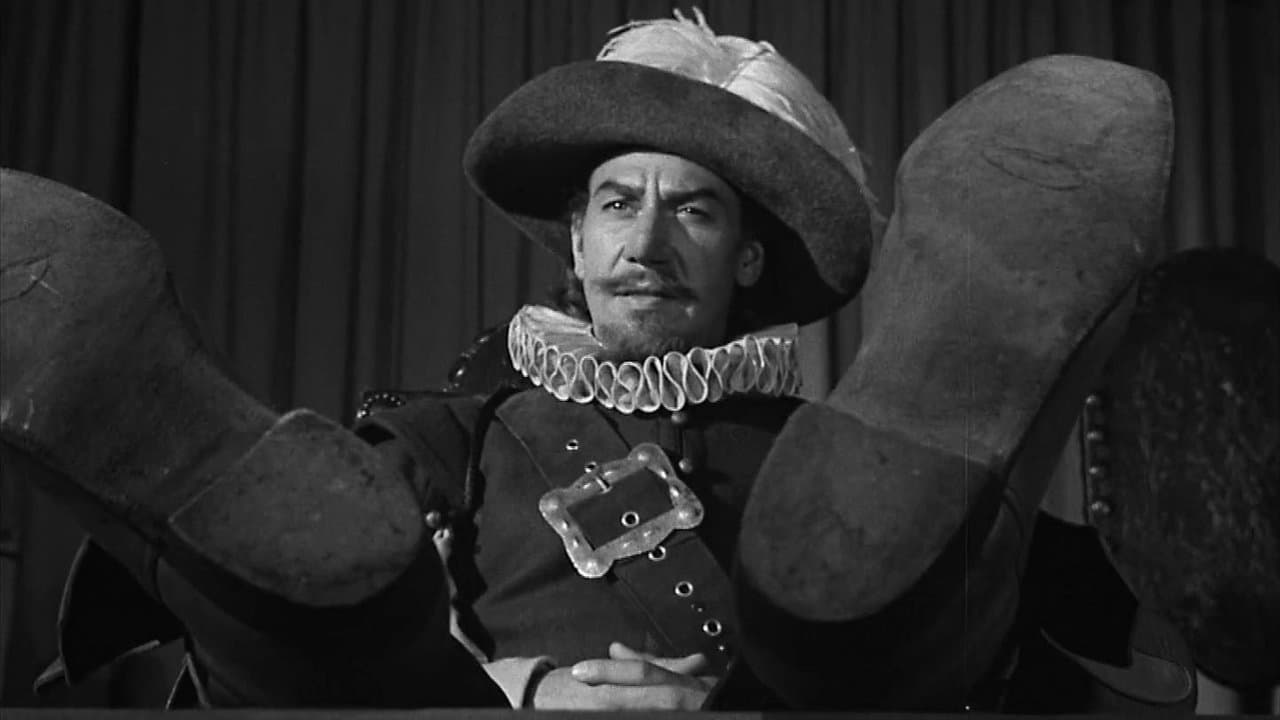
The Story of Cyrano de Bergerac
Seventeenth-century France, 1640—a world of aristocratic salons, dueling swords, and love letters written in the dark. Cyrano de Bergerac isn't your typical romantic hero. He's brilliant, acerbic, and desperately talented with both a quill and a blade. But there's a catch: his nose. That absurd, grotesque nose that becomes the physical manifestation of his deepest insecurity. When he falls hopelessly in love with the beautiful Roxane, he can't confess—not because he's a coward, but because he's convinced his appearance makes him unworthy. Instead, he becomes the secret architect of her happiness by ghostwriting love letters for the handsome but inarticulate Christian. It's a setup that sounds simple enough until it isn't, and what begins as chivalrous deception spirals into tragedy. The story works because it's about something deeper than looks: it's about the agony of loving someone while remaining invisible to them.
Behind the Making of Cyrano de Bergerac
Producer Stanley Kramer, working through Stanley Kramer Productions, made a deliberate choice with this 1950 adaptation: he'd be the first to bring Edmond Rostand's 1897 French alexandrine drama to English-language cinema. The screenplay, adapted by Carl Foreman, drew from Brian Hooker's 1923 English blank-verse translation—a text that had already proven itself as a bridge between Rostand's original poetry and American audiences. José Ferrer, who'd already made a name for himself on Broadway, was cast as Cyrano, and the decision paid off immediately. Ferrer's performance became so definitive that it won him the Academy Award for Best Actor, a recognition that reflected the film's broader critical embrace. William Prince played the earnest Christian, while Mala Powers brought glamour and intelligence to Roxane—no passive object of desire, but a woman with her own wit and agency. The film runs 113 minutes, giving Rostand's play room to breathe on screen without feeling padded. It wasn't a commercial juggernaut, but it established itself as the English-language standard-bearer for the material, a position it's held for over seven decades.
What Makes Cyrano de Bergerac Stand Out
There's something about watching José Ferrer inhabit this role that makes you understand why the character has survived so long in the cultural imagination. He doesn't play Cyrano as tragic from the start—that's the trick. Instead, Ferrer gives us a man who's genuinely funny, genuinely dangerous with a sword, genuinely alive in conversation. The tragedy sneaks up on you because you're too busy enjoying his company to notice you're watching someone destroy himself. What's striking is how the film captures the central paradox of the character: he's the most eloquent person in any room, yet he's rendered mute by self-doubt. His wit becomes both his greatest weapon and his greatest prison. The supporting performances anchor this beautifully—Prince's Christian isn't a dummy, just someone who hasn't been given the gift of language, which makes the deception feel less like mockery and more like a genuine attempt to bridge two people across an impossible gap. Critics have long noted that the film's strength lies in its refusal to make the love triangle feel cheap or manipulative. Instead, it's genuinely painful, because everyone involved is acting from a place of sincerity, even when they're lying to each other. The swordplay sequences carry real weight too; they're not just spectacle but expressions of character—Cyrano's blade moves the way his tongue moves, with precision and flair.
How to Stream Cyrano de Bergerac Online
Finding where to watch Cyrano de Bergerac has become easier over the years as classic films have migrated across streaming platforms. The film's currently available on major OTT services, and you can check the Where to Watch widget at the top of this page to see exactly which platforms are carrying it in your region right now. Since streaming rights shift seasonally, Movie OTT tracks availability across services so you don't have to hunt through multiple apps. At 113 minutes, it's a manageable evening watch—long enough to feel like an event, short enough that you won't need to split it across two nights. If you're a subscriber to one of the major streaming services, there's a decent chance you already have access without realizing it. The film's age actually works in its favor here; it's been in enough public-domain or licensed-catalog rotations that it tends to pop up regularly.
Frequently asked questions
Q: Who directed Cyrano de Bergerac (1950)?
Michael Gordon directed the film, bringing a theatrical sensibility to the screen adaptation that honors Rostand's stage play while taking full advantage of cinema's visual possibilities.
Q: Is Cyrano de Bergerac based on a true story?
No—Edmond Rostand's 1897 play was inspired by a real historical figure named Savinien de Cyrano de Bergerac, a 17th-century writer and duelist, but the plot of the play, including the love triangle and the deception, is entirely fictional.
Q: What's the IMDb rating for this version?
Cyrano de Bergerac holds a 6.875/10 rating on IMDb, reflecting solid critical appreciation, though it doesn't reach the stratospheric scores of some other classic adaptations.
Q: Did José Ferrer win any awards for this role?
Yes—Ferrer won the Academy Award for Best Actor for his performance, making this arguably the signature role of his career and cementing the film's place in cinema history.
Q: Why is Cyrano's nose such a big deal in the story?
His nose represents his deepest insecurity and becomes a metaphor for feeling fundamentally unlovable despite having every other quality that should make someone desirable—intelligence, charm, courage, and eloquence.
Final Thoughts on Cyrano de Bergerac
Cyrano de Bergerac works because it taps into something universal: the fear that we're not enough, that our outsides will always betray our insides, that love requires us to be perfect in ways we simply can't be. José Ferrer's performance captures that anguish without ever becoming self-pitying. The film's 1950 aesthetic—the costumes, the sets, the way light falls across a face—gives it a timeless quality that doesn't feel dated so much as deliberately classical. If you haven't seen it, you're missing one of the great romantic dramas of cinema's golden age. If you have seen it, it's worth revisiting.