
The Story of Django Unchained
Django Unchained opens with a simple but electrifying premise: a freed slave meets a German bounty hunter, and together they traverse the violent landscape of the antebellum American South. The film doesn't waste time with exposition—within minutes, you're riding alongside Django Freeman (Jamie Foxx) and Dr. King Schultz (Christoph Waltz) as they hunt wanted men across frozen Texas plains. What starts as a professional partnership becomes something more complicated when Schultz learns that Django's wife, Broomhilda, is enslaved on Candyland plantation, owned by the charming but sinister Calvin Candie (Leonardo DiCaprio). The mission shifts. No longer just about bounties, it's about freedom, love, and the brutal arithmetic of survival in a system designed to crush human dignity. Tarantino builds tension methodically—this is a 165-minute film that earns every second.
Behind the Making of Django Unchained
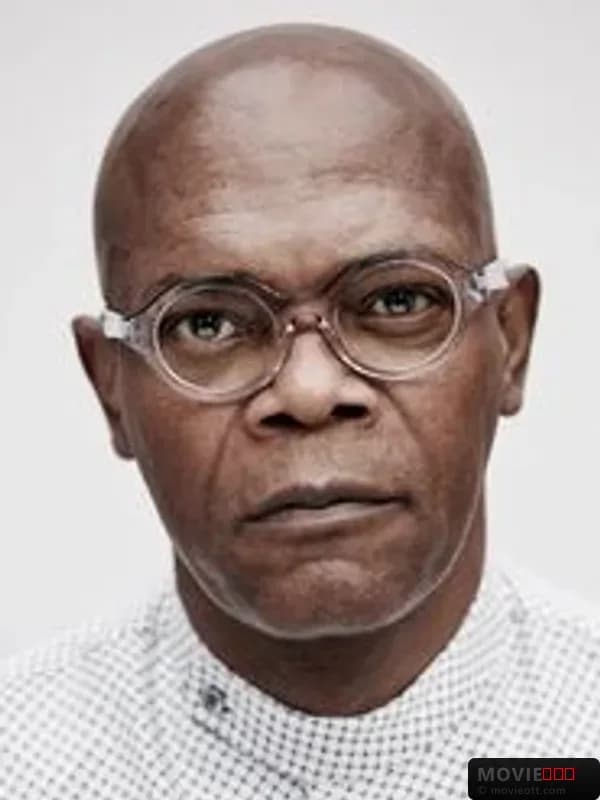
Django Unchained arrived in December 2012 as a major studio release from Columbia Pictures, produced through Tarantino's own A Band Apart production company. The director had been thinking about a Western for years, and his revisionist take draws inspiration from the 1966 Italian spaghetti Western Django by Sergio Corbucci—a nod that extends well beyond the title. The ensemble cast alone signals ambition: Foxx carries the film with quiet intensity, Waltz won the Golden Globe for Best Supporting Actor (and would go on to earn an Academy Award nomination), and DiCaprio—playing against type as a villain—delivered one of his most unsettling performances. Samuel L. Jackson rounds out the powerhouse cast as Stephen, Candie's house slave, a role that required Jackson to inhabit a character of genuine moral complexity and historical ugliness. The film earned $425 million worldwide, making it one of Tarantino's most commercially successful works. It received five Academy Award nominations, including Best Supporting Actor for Waltz, and holds an 8.4/10 rating on IMDb, reflecting strong audience engagement despite—or perhaps because of—its unflinching subject matter.
What Makes Django Unchained Stand Out
What's striking about Django Unchained is how Tarantino manages to be both entertaining and morally serious without sacrificing either impulse. The violence is stylized, kinetic, sometimes darkly funny—but it's never casual about the system it's depicting. Foxx's performance is the emotional anchor; he doesn't overplay Django's rage or pain, instead channeling them into deliberate action. You believe he's thought through every move. Waltz, meanwhile, brings an almost Shakespearean warmth to Schultz—he's charming, principled, and utterly doomed by his own decency (I won't spoil how). DiCaprio's Candie is perhaps the film's most brilliant stroke. He's not a cartoon villain; he's intelligent, cultured, and genuinely believes in the righteousness of his world. That makes him infinitely more dangerous. Jackson's Stephen is the wild card—a character who's internalized the logic of slavery so completely that he becomes its most vicious enforcer. The cinematography captures the American South as both beautiful and grotesque, landscapes of terrible history rendered in rich, saturated color. It's a film that doesn't let you sit comfortably. Tarantino refuses to make this easy—the dialogue crackles with menace, scenes linger just long enough to make you squirm, and the soundtrack (featuring everything from Tupac to period-appropriate strings) keeps you off-balance.
Where to Stream Django Unchained Online
If you're ready to watch Django Unchained, you can currently stream it on Prime Video. Movie OTT tracks real-time streaming availability across major platforms, so you can always check where titles are currently available in your region. The Where-to-Watch widget at the top of this page shows you exactly which services are carrying it right now—no need to hunt through five different apps. At 165 minutes, you'll want to carve out a solid evening; this isn't a film that rewards half-attention or multitasking. Settle in, commit to the runtime, and let Tarantino's particular vision take hold.
Frequently Asked Questions
Q: Who directed Django Unchained?
Quentin Tarantino wrote and directed Django Unchained in 2012. It's his only Western film to date, and it represents one of his most ambitious narrative undertakings—a revisionist take on the genre that's deeply engaged with American history.
Q: Is Django Unchained based on a true story?
No, Django Unchained is an original screenplay written by Tarantino. While it's set during the historical period of slavery in the antebellum South, the characters and plot are fictional. The film draws inspiration from spaghetti Westerns, particularly the 1966 Italian film Django, rather than from specific historical events.
Q: What's the runtime of Django Unchained?
The film runs 165 minutes (two hours and 45 minutes). It's a substantial commitment, but Tarantino uses the length to build atmosphere, develop character relationships, and let scenes breathe in ways that shorter films can't accommodate.
Q: Why does Django Unchained have such a high IMDb rating?
The film holds an 8.4/10 on IMDb, reflecting strong audience appreciation for its performances, direction, cinematography, and willingness to engage seriously with difficult historical material while remaining dramatically compelling. Viewers consistently praise the chemistry between Foxx and Waltz and DiCaprio's villainous turn.
Q: Where can I watch Django Unchained right now?
Django Unchained is currently available on Prime Video. Streaming availability varies by region and changes over time, so check the Where-to-Watch widget or visit Movie OTT for the most up-to-date information on where you can stream it.
Final Thoughts on Django Unchained
Django Unchained isn't a comfortable film, and it isn't meant to be. It's a Western that uses the genre's conventions—the lone gunslinger, the moral reckoning, the final confrontation—to tell a story about American slavery that refuses to look away. Tarantino's stylistic flourishes, his dialogue, his violence, they're all in service of something genuine: a film that wants you to feel the weight of history while also feeling the thrill of watching a wronged man fight back. If you haven't seen it, it's worth your time. If you have, it probably stays with you.