



The story of Edge of Tomorrow and its time-loop premise
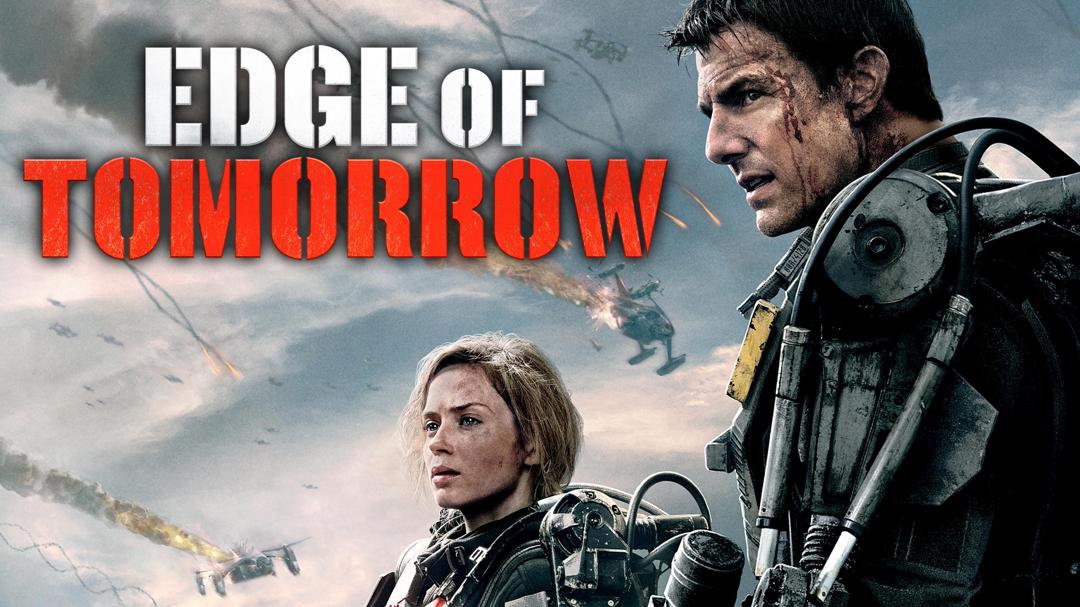
Edge of Tomorrow drops you into a future where most of Europe has fallen to an unstoppable alien race called mimics. Tom Cruise plays Major William Cage, a public relations officer with zero combat experience who gets conscripted into a massive landing operation against these creatures. Then everything goes sideways. Cage finds himself caught in a time loop—waking up on the same day, over and over, forced to relive the same brutal combat scenarios. Each cycle, he remembers everything that came before. Each cycle, he gets a little better at surviving. And each cycle, he gets closer to understanding how to actually defeat the enemy.
It's a premise that sounds familiar (Groundhog Day in a war zone, basically), but the film commits to it with genuine stakes. Cage isn't trying to win someone's heart or learn a life lesson—he's trying to stop an alien invasion. The repetition becomes training, becomes obsession, becomes something darker and more desperate the longer it stretches on.
Behind the making of Edge of Tomorrow and its critical success
Edge of Tomorrow arrived in 2014 as a collaboration between heavy hitters. Director Doug Liman—known for The Bourne Identity and Mr. & Mrs. Smith—brought kinetic, grounded action sensibilities to what could've been a bloated blockbuster. The script came from Christopher McQuarrie, Jez Butterworth, and John-Henry Butterworth, adapting the Japanese light novel All You Need Is Kill by Hiroshi Sakurazaka. That source material gave the film a framework that wasn't just another Hollywood rehash.
The cast elevated the material considerably. Cruise delivers a rare comedic performance early on—Cage is a coward, a PR guy in over his head, and Cruise plays the desperation and fumbling with genuine humor before the weight of repetition settles in. Emily Blunt, as Sergeant Rita Vrataski, steals nearly every scene she's in; she's the hardened veteran, the one who's already lived through this nightmare, and Blunt brings intelligence and physicality that makes her the film's emotional anchor. Bill Paxton and Brendan Gleeson round out the cast as military brass with real personality.
The numbers tell the story: Edge of Tomorrow earned $100.2 million worldwide against what was likely a substantial budget, making it a solid if not massive hit. Critics were kinder than audiences initially—it holds a 91% on Rotten Tomatoes and a 71 Metascore, with 11 awards wins and 38 nominations across its release cycle. The film was rated PG-13, keeping it accessible to a broader audience, and clocked in at a brisk 113 minutes. Movie OTT tracks these kinds of critical-versus-commercial splits across its database, and Edge of Tomorrow is a textbook example of a film that deserved more love at the box office than it got.
What makes Edge of Tomorrow stand out among time-loop action films
Here's what's striking: most action films are about escalation. More explosions, bigger stakes, faster cuts. Edge of Tomorrow does something weirder. It's about diminishing returns, about the exhaustion of repetition, about a man slowly coming to terms with the fact that he might be doing this forever. That's not typical blockbuster DNA.
The performances carry this weight. Cruise's arc from cocky to terrified to wearily competent is genuinely affecting—you watch his face as he realizes, again, that he's about to die. Blunt's performance is the counterpoint; she's already made peace with the loop, already weaponized her trauma, and watching Cage catch up to her understanding is where the film's emotional core lives. There's a scene late in the film where Vrataski explains what she's already done, what she's already sacrificed, and it lands harder than any explosions around it.
The action itself doesn't feel recycled even though, by definition, it is. Doug Liman keeps the combat sequences visceral and grounded—these aren't superhero battles, they're messy, brutal encounters with an alien enemy that doesn't follow action-movie rules. The mimics move like swarms of insects, unpredictable and terrifying. Each iteration of the battle plays slightly different because Cage's tactics change, his knowledge deepens, his desperation shifts. Some viewers found the repetition exhausting (hard to blame them—the film doesn't shy away from showing you the same moments multiple times), but that's partly the point. You're not supposed to be comfortable. You're supposed to feel the weight of it.
What audiences and critics both seemed to appreciate was the film's refusal to dumb down its premise. It doesn't explain the time loop with pseudo-scientific hand-waving until late in the game. It doesn't stop to explain the aliens' motivations. It trusts you to keep up, which is rare in a $200 million tentpole film.
Where to stream Edge of Tomorrow online
If you're ready to jump in, Edge of Tomorrow is currently available on Netflix. The 113-minute runtime means it's a commitment, but it moves fast enough that you won't feel the length. The film's visual effects and action sequences are best experienced on a decent screen—this isn't a movie that shrinks well on a phone, though streaming does give you the pause button for those moments when you want to catch your breath between loops.
For current streaming availability across all platforms, check the Where to Watch widget at the top of this page on movieott.com. Streaming rights shift, so if Netflix no longer carries it when you're reading this, Movie OTT will have the updated list of where it's landed.
Frequently asked questions
Q: Is Edge of Tomorrow based on a book?
Yes, it's adapted from the Japanese light novel All You Need Is Kill by Hiroshi Sakurazaka. The source material provided the time-loop framework, though the film expands and recontextualizes many elements for a Western action-movie audience.
Q: Who directed Edge of Tomorrow?
Doug Liman directed the film. He's known for The Bourne Identity and Mr. & Mrs. Smith, and brought that same kinetic, grounded sensibility to this sci-fi action story.
Q: What's the runtime of Edge of Tomorrow?
The film runs 113 minutes, which is lean for a modern blockbuster. It moves quickly enough that the length doesn't feel indulgent, despite the repetitive premise.
Q: Is Edge of Tomorrow appropriate for kids?
It's rated PG-13, so it's accessible to teenagers and older kids, though the alien violence is intense and some scenes are genuinely unsettling. Parental discretion applies.
Q: Why didn't Edge of Tomorrow perform better at the box office?
It earned $100 million worldwide, which is respectable but not blockbuster-level for its budget. The time-loop premise was a harder sell than a straightforward alien invasion film, and it came out in a crowded summer. Critics loved it more than audiences initially did, which happens sometimes—the film has aged very well in retrospective appreciation.
Final thoughts on Edge of Tomorrow
Edge of Tomorrow is the kind of film that sticks with you—not because of any single moment, but because of what it's willing to do with its premise. It's funny, brutal, exhausting, and genuinely moving. Tom Cruise and Emily Blunt have real chemistry, the action is inventive, and Doug Liman refuses to let it become just another explosion-fest. It's not perfect (some viewers really will find the repetition grating), but it's ambitious in ways that blockbusters rarely are. If you haven't seen it, it's worth your time. If you have, it holds up on rewatches—and there's something fitting about that.