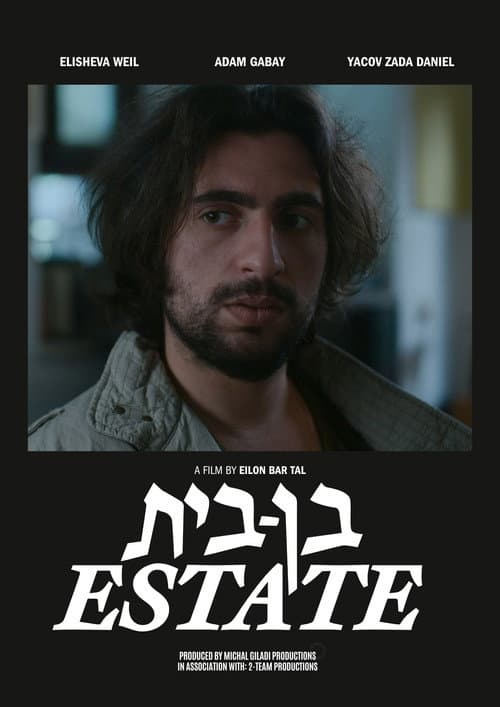




Estate (2026): A Stranger Arrives to Claim What He Never Knew He Owned
TL;DR: A man inherits his estranged father's estate and falls for a homeless woman living in the backyard—triggering family secrets that were meant to stay buried. 86 minutes. Drama/Thriller/Romance. Streaming now on major platforms (check Movie OTT's tracker for your region).
The Setup: Inheritance as Emotional Collision
Here's the premise in its starkest form: Assaf's father dies. He barely knew the man. Now he's standing in a room full of relatives who all have decades of shared history he wasn't part of—and he's the sole heir to everything. Not just money or property, but the weight of a family's resentment, unspoken grudges, and the kind of tension that only surfaces when a stranger shows up to claim what's legally his.
Then he finds Miriam.
She's homeless. Living in his backyard. And when Assaf falls for her, everything the family has kept buried starts to crack open. What Estate does—and this is the thing that actually works about it—is treat that inheritance plot as more than just a plot device. It's a mirror. Assaf was rejected by his own family. Miriam's been rejected by society. The backyard becomes the space where both of them might finally belong to something. Except belonging to each other might blow up everything else.
That's where the thriller kicks in.
Why the Three-Genre Blend Actually Matters Here
Most films that try to blend drama, thriller, and romance end up sacrificing one of them. Estate doesn't feel like it does—at least not on paper. The 86-minute runtime is telling. There's no filler. Every scene has to carry weight.
What's striking is how Miriam isn't just a love interest—she's a structural device that forces the whole inheritance story to reckon with itself. Once she enters the picture, the family's secrets start surfacing. It's not a twist-heavy plot in the conventional sense. More like pressure building until something cracks. I keep thinking about that backyard image: technically Assaf's property now, but Miriam's already made it her own. Ownership, the film seems to argue, is messier than a deed.
The 2026 release from Michal Giladi Productions and 2-Team Productions kept a relatively quiet profile leading up to launch—which makes sense for a smaller-scale dramatic thriller that relies on word-of-mouth rather than splashy marketing campaigns. Those films often find their real audience through festival circuits or streaming discovery months after release, not on opening weekend.
What You Need to Know Before Watching
Release Year: 2026
Runtime: 86 minutes
Genres: Drama, Thriller, Romance
Production: Michal Giladi Productions, 2-Team Productions
The lean runtime is a creative choice—don't mistake it for a short film or a pilot. This is a deliberately focused story. It doesn't waste time on exposition or secondary characters. Every moment exists to tighten the pressure.
As for where to actually watch it: streaming rights vary by country, which is why Movie OTT's where-to-watch widget is genuinely useful here. You can see in real time what's available on which platform in your region. No guessing. No clicking through five different apps before you find it.
The Performances: What Assaf Has to Carry
Nobody talks enough about how much emotional work the lead actor has to do in inheritance stories. Before any dramatic reveal lands, you need to feel Assaf's disorientation—grieving a man he never met, surrounded by family members who have decades of shared history he wasn't invited to, expected to step into a role he never auditioned for. That's a lot to carry in 86 minutes.
The thing that works is how the film trusts you to understand the symmetry without spelling it out. Assaf was never claimed by his father. Miriam's been discarded by society. So when they find each other in that backyard—a space that's legally his but feels like hers—there's a quiet inevitability to it. The film doesn't need to explain why they're drawn to each other. You already know.
What's less clear—and this is where the thriller machinery kicks in—is what happens when the family realizes what's happening. That Pandora's box doesn't open because of a single shocking revelation. It opens because Assaf starts asking questions about why his father was never part of his life. And the answers people have been hiding don't stay hidden.
Where to Stream Estate Right Now
The film's available on major OTT platforms across most regions. Since licensing deals shift constantly, your best move is checking the where-to-watch widget at the top of Movie OTT's page—it updates automatically as availability changes by country.
Honestly, with an 86-minute runtime, the last thing you want is to lose half of that searching for where it streams. Find it, hit play, you're done. The film earns every minute.
Frequently Asked Questions
Q: Where can I watch Estate?
Check the where-to-watch widget on Movie OTT to see what's available in your region. Streaming rights vary by country.
Q: How long is it?
86 minutes. No padding.
Q: Is Estate based on a true story?
No. The premise—estranged son inherits from a father he never knew, falls for a homeless woman on the property—reads as original fiction, though it draws on universally recognizable emotional territory.
Q: What's the genre mix really like?
Drama forms the spine. The thriller builds through family tension and buried secrets. The romance is what triggers everything. They don't feel bolted together—they build on each other.
Q: Who should watch this?
If you want a drama that earns its tension through character rather than plot mechanics, this is worth your time. If you need clear answers and tidy endings, maybe skip it. Estate leaves room for interpretation.
Final Word
This is a film that doesn't announce itself loudly. It works quietly—building pressure through character, through what people don't say, through the weight of a family's secrets. The backyard romance, the hostile relatives, the inheritance that comes with strings nobody warned Assaf about. It all adds up to something that sticks with you after the credits roll.
Watch it. See where it's streaming this week. You've got 86 minutes. Use them.