




The Story of Match Point
Match Point opens in London's upscale tennis world, where Chris Wilton—a washed-up professional player turned instructor—is angling for a foothold in the city's moneyed circles. He teaches at an exclusive club, navigates the social hierarchies of the affluent, and eventually catches the eye of Chloe Aldin, the daughter of a wealthy family. Their courtship is swift, almost transactional, and soon Chris finds himself married into privilege. But marriage to Chloe isn't the real prize. That arrives when he meets Nola Rice, his brother-in-law's seductive fiancée—a woman who awakens something raw in him that his wife never could. What unfolds isn't a simple love triangle. It's a descent into obsession, infidelity, and the kind of moral quicksand where every choice seems to lead deeper into darkness. Allen builds the tension methodically, letting the audience watch Chris rationalize increasingly indefensible behavior, all while the stakes keep climbing.
Behind the Making of Match Point
Match Point marks a pivotal moment in Woody Allen's career—one born partly from frustration. After struggling to secure financing in New York, Allen made the unconventional decision to relocate production to London, where a co-production deal with British and Luxembourg investors made the project viable. He rewrote the entire script to fit its new setting, transforming what was originally a Manhattan story into something distinctly English and upper-class. The film was shot on location across London, giving it an authentic backdrop of privilege and constraint that a studio set could never replicate.
The cast reflects Allen's ambitions for the project. Jonathan Rhys Meyers, then rising in profile, carries the film with a performance that's simultaneously charming and deeply unsettling—you're never quite sure if you're meant to root for him or recoil from him. Scarlett Johansson, in a role that became one of her most talked-about performances, brings a dangerous allure to Nola; she's not just a temptress but a mirror reflecting Chris's own moral decay. Emily Mortimer, Matthew Goode, and the veteran ensemble—including Brian Cox and Penelope Wilton—ground the film in a world of old money and old expectations.
The film earned $23.1 million at the global box office, a respectable return for a psychological drama. More significantly, it garnered substantial critical recognition: a Metascore of 72, a 77% Fresh rating on Rotten Tomatoes, and an IMDb score of 7.6 from over 237,000 voters. It received one Oscar nomination and racked up 12 wins and 32 nominations across various award bodies, establishing it as one of Allen's most acclaimed works of the 2000s. The R rating reflects its frank treatment of sexuality and violence—this isn't a film that looks away from the consequences of desire.
What Makes Match Point Stand Out
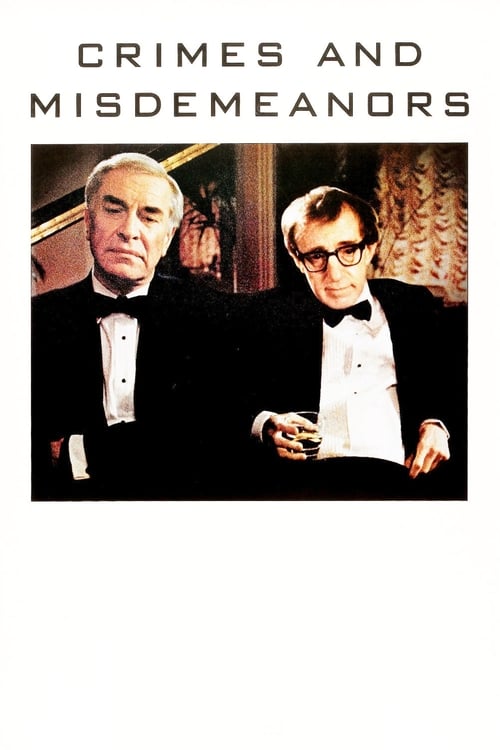
What's striking about Match Point is how deliberately it echoes Allen's own 1989 masterpiece, Crimes and Misdemeanors—a film about a man who commits murder to preserve his comfortable life and gets away with it. Allen isn't reinventing the wheel here; he's circling back to a theme that clearly haunts him: the terrifying possibility that morality is contingent, that luck matters more than virtue, and that the universe doesn't care about justice. Some viewers bristle at this recycling. Others recognize it as the mark of an artist working through an obsession.
The performances sell what could otherwise feel like a schematic exercise. Rhys Meyers doesn't play Chris as a villain—that's the trap. He plays him as a man who wants everything and convinces himself that wanting it badly enough justifies taking it. There's a scene midway through where he's alone in a room, and his face cycles through panic, calculation, and resignation in the span of seconds. That's the whole film right there. Johansson, meanwhile, doesn't soften Nola into a victim or a romantic ideal. She's manipulative, self-interested, and fully aware of her power over him—and yet there's a vulnerability underneath that makes her sympathetic without making her likable.
The film's structure is meticulous. Allen uses the tennis metaphor throughout—the idea that life is a match determined partly by skill and partly by luck, that a ball can hit the net cord and bounce either way, and that you don't control which side it lands on. It's not subtle, but it's effective. The dialogue is characteristically talky—some viewers find this energizing, others exhausting—but it serves the purpose of letting us inside Chris's head as he rationalizes his choices. By the final 15 minutes, when the suspense kicks into high gear, you're locked into his perspective, which makes the ending genuinely unsettling. The thing nobody mentions is how much the film asks you to sit with moral ambiguity. It doesn't offer catharsis or comeuppance in the way mainstream thrillers do.
Where to Stream Match Point Online
Match Point is currently available to stream on Netflix, making it accessible for subscribers looking to revisit Woody Allen's thriller catalog or discover it for the first time. Movie OTT tracks current streaming availability across platforms in real time, so you can confirm where the film is live in your region before you hit play. The 124-minute runtime means you can settle in for a complete viewing without interruption. Given the film's narrative momentum—especially that final act—you'll want to watch it in one sitting anyway. Check the Where to Watch widget at the top of this page for the most up-to-date platform information and any rental or purchase options that may also be available.
Frequently asked questions
Q: Who directed Match Point?
Woody Allen wrote and directed Match Point in 2005. The film represents his attempt to relocate after financing difficulties in New York, resulting in a production shot entirely in London with a primarily British and European crew.
Q: Is Match Point based on a true story?
No, Match Point is an original screenplay written by Woody Allen. However, it draws thematic inspiration from his earlier film Crimes and Misdemeanors, exploring similar questions about morality, luck, and consequences.
Q: What's the runtime of Match Point?
Match Point runs 124 minutes, giving the narrative room to build tension and develop its characters without feeling rushed.
Q: Why did Woody Allen set Match Point in London instead of New York?
Allen relocated the production to London after struggling to secure financing in New York. A co-production deal with British and Luxembourg investors made the project viable, so he rewrote the script to fit its new English setting.
Q: What's the rating for Match Point?
Match Point is rated R for sexuality, language, and some violence. The film doesn't shy away from depicting the physical and emotional consequences of its characters' choices.
Final Thoughts on Match Point
Match Point isn't comfortable viewing—and that's precisely why it matters. It's a film that trusts you to sit with moral ambiguity, to recognize yourself in a protagonist you wouldn't want to know, and to accept that the universe doesn't always balance the scales. Woody Allen's 2005 thriller remains one of his most provocative works, a meditation on luck, desire, and the fragility of the lives we build on foundations of dishonesty. Whether you're returning to it or discovering it for the first time on Netflix, it's worth your time—just don't expect to feel good about it afterward. That's not the point. The point is to feel something true.