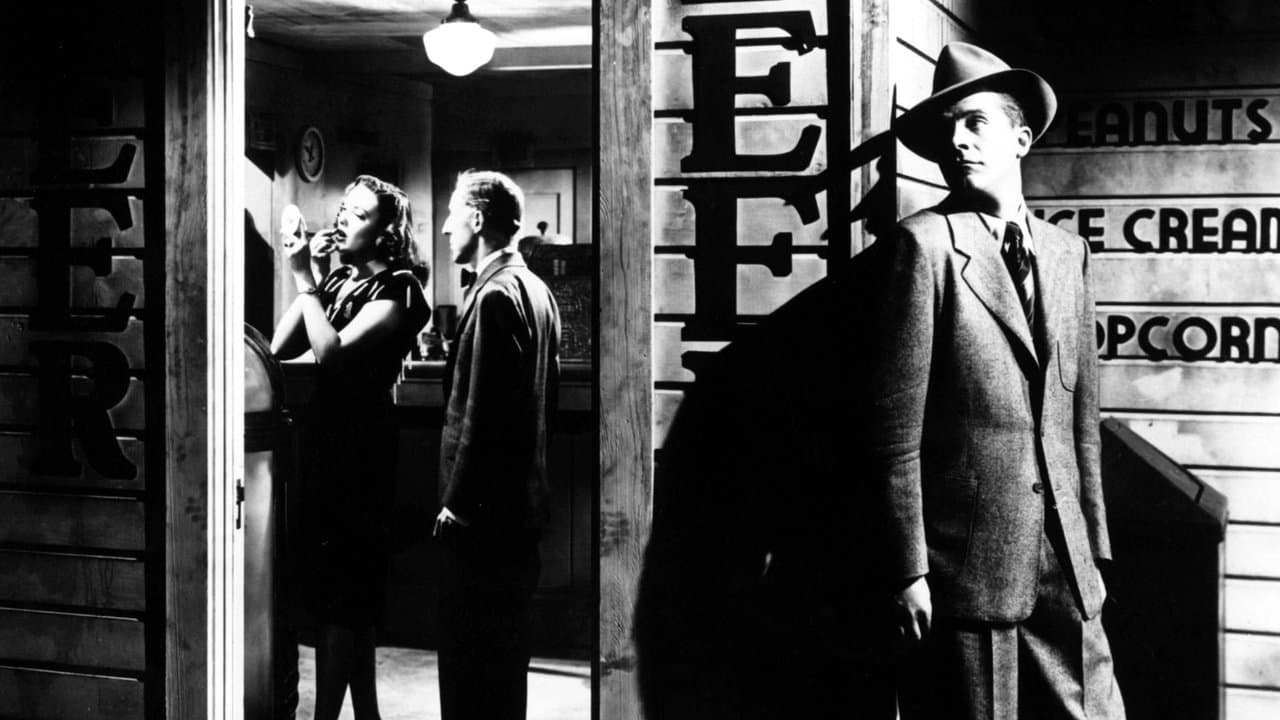
The Story of Fallen Angel
Fallen Angel opens with Eric Stanton — broke, charming, and utterly adrift — tumbling out of a Greyhound bus into a sleepy California coastal town with nothing but his wits and his hunger. He heads straight for the local diner, where he spots Stella, a waitress who's beautiful, mercenary, and entirely uninterested in a guy without money. That's where the trouble starts. Eric's not the type to accept rejection quietly. Instead, he spots June Mills, a quiet, well-to-do woman with genuine affection for him, and hatches a scheme: romance June, win her trust, maybe even her money — and use it all to finally impress Stella. It's a classic noir setup: desperation, desire, and the kind of moral compromise that always ends badly. Before long, a murder works its way into this tangled love triangle, and suddenly Eric's small con becomes something far darker and far more dangerous.
Behind the Making of Fallen Angel
Fallen Angel arrived in 1945 as Otto Preminger's follow-up to the hugely successful Laura, which had premiered just a year earlier. Preminger reunited with cinematographer Joseph LaShelle, whose moody, shadow-drenched work on Laura had helped define that film's visual language — and LaShelle brings the same sophisticated lighting and composition to this new project. The film was adapted from Marty Holland's novel and shot across various California locations, giving it an authentic small-town atmosphere that feels lived-in rather than constructed. The cast assembled around Dana Andrews (fresh off Laura itself) included Alice Faye as June Mills, Linda Darnell as Stella, Charles Bickford, Anne Revere, and John Carradine — a solid ensemble of character actors who understood the noir register. 20th Century Fox, riding high on Laura's critical and commercial success, gave Preminger the resources to make something ambitious. The film ran 98 minutes, a brisk runtime that keeps the plot moving without sacrificing character work. While it didn't achieve Laura's cultural footprint, Fallen Angel found its audience among noir enthusiasts and remains a key entry in Preminger's filmography, even if — as the legend goes — Preminger himself later claimed not to remember making it.
What Makes Fallen Angel Stand Out
What's striking about Fallen Angel is how it refuses to let you settle into comfortable sympathy for anyone. Dana Andrews' Eric Stanton is handsome, yes, and there's a boyish charm to him that makes his schemes almost forgivable — but he's also a liar and a manipulator, and the film never lets you forget it. He doesn't deserve either woman, and the narrative knows it. There's a real moral ambiguity here that doesn't feel like it's trying too hard; it just emerges naturally from the characters' choices. The supporting performances anchor the whole thing: Darnell's Stella has a hardness to her that's almost tragic — she's not evil, just pragmatic in a way that's almost cruel. June, played by Faye, is the quiet heart of the film, and watching her slowly realize what Eric is doing to her becomes genuinely painful. LaShelle's cinematography is where the film truly sings. There's a scene early on in the diner where the lighting catches the angles of the characters' faces in a way that feels almost painterly, and you can see exactly why Preminger wanted to work with him again. The thing nobody mentions is how funny the film can be, in a dark, uncomfortable way — Eric's schemes have a slapstick quality that makes the eventual violence feel all the more jarring. It's a film that knows how to shift tones without feeling disjointed, which is harder than it sounds.
Where to Stream Fallen Angel Online
Fallen Angel is available on major OTT services, and you can check the Where to Watch widget at the top of this page to see exactly which platforms currently carry it in your region. Streaming availability shifts regularly, so Movie OTT tracks these changes across services to help you find where titles are available right now. Whether you're a noir completist or just discovering Preminger's work beyond Laura, it's worth hunting down — the 98-minute runtime means you can fit it into an evening without a huge commitment, and the payoff is absolutely there.
Frequently asked questions
Q: Who directed Fallen Angel?
Otto Preminger directed Fallen Angel in 1945, the same year he was riding high on the success of Laura. He'd reunite with cinematographer Joseph LaShelle for this project, bringing the same visual sophistication to a slightly darker, more morally ambiguous story.
Q: Is Fallen Angel based on a true story?
No, Fallen Angel is adapted from Marty Holland's novel, not a true story. That said, the small-town setting and the very human moral failings of the characters give it a naturalistic feel that makes it seem almost plausible.
Q: What's the runtime of Fallen Angel?
The film runs 98 minutes, which is a brisk pace for a noir — long enough to develop character and atmosphere, but short enough that the plot never drags.
Q: Where was Fallen Angel filmed?
The film was shot in various California locations, which gives it an authentic small-town atmosphere that you can feel throughout. It's not a studio picture masquerading as reality; it actually looks like California.
Q: How does Fallen Angel compare to Laura?
Both films reunite Preminger and cinematographer Joseph LaShelle, and both are excellent noirs, but Fallen Angel is darker and more morally ambiguous. Where Laura has a kind of romantic elegance, Fallen Angel is grittier and more cynical about human nature.
Final Thoughts on Fallen Angel
Fallen Angel doesn't get the attention it deserves — even Preminger seemed to dismiss it later in his career. But watching it now, it's hard to understand why. It's a perfectly constructed noir with strong performances, gorgeous cinematography, and a story that doesn't offer easy answers. If you're already familiar with Preminger's work or you're just getting into classic noir, this one's worth seeking out. It's the kind of film that rewards attention and doesn't apologize for its moral messiness.