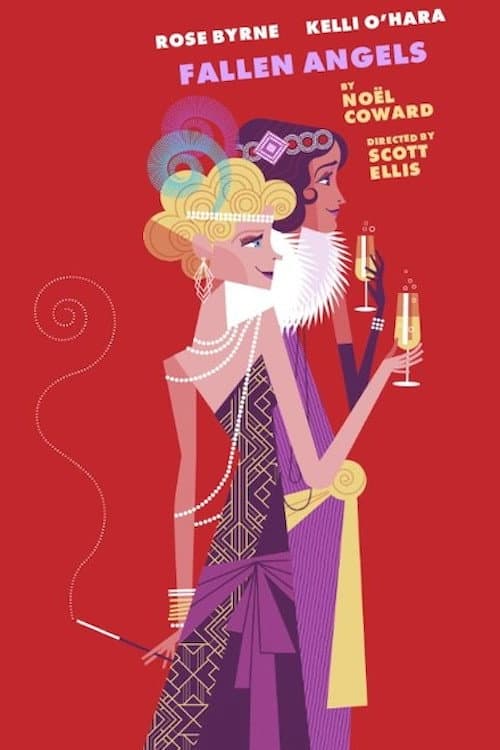
Fallen Angels
What you need to know upfront
Fallen Angels is a 2026 Broadway comedy where two upper-class wives spend an afternoon alone together—with wine, old memories, and a shared ex-boyfriend possibly en route from France. It's a revival of Noël Coward's 1925 play, running through June 7, 2026 at the Todd Haimes Theatre with Kelli O'Hara and Rose Byrne in the lead roles. Runtime: approximately 90–100 minutes, no intermission. Critics have called it "slow to start but worth the wait," and honestly? That's accurate.
The plot: Two women, one skeleton in the closet
Julia Sterroll and Jane Banbury are respectable wives with respectable marriages. Their husbands are conveniently out for the day. What follows is an afternoon of toasts, champagne, and the gradual excavation of a shared past—specifically, a charming Frenchman named Maurice who, before their respective marriages, was romantically entangled with both of them. The comedy builds on a simple pressure cooker: the women alone, the possibility that Maurice is actually arriving from France today, and the slow-motion implosion of their composure as old rivalries resurface. It's less about what happens and more about watching two people's surfaces crack—which is where the real comedy lives.
Why the casting matters more than you'd expect
O'Hara brings serious theatrical credentials here (she's a Tony winner, which matters on a stage this intimate), while Byrne arrives with the kind of physical comedy instinct that makes her stage presence feel loose and alive—almost like she's not thinking about being watched, which is exactly what you want from farce. There's a sequence in the second half where Jane's composure collapses in layers. Byrne plays it with controlled unraveling—each stage funnier than the last—without tipping into pure slapstick. O'Hara holds the straighter line, which makes the moments when Julia cracks land even harder.
The supporting cast (Mark Consuelos, Aasif Mandvi, Christopher Fitzgerald, and Tracee Chimo) rounds out the domestic world these two are so desperate to escape, if only for an afternoon.
The history: Why Coward wrote this in the first place
When Noël Coward premiered Fallen Angels in 1925, it was genuinely scandalous—two women openly discussing pre-marital affairs wasn't exactly drawing-room approved. Coward wrote it anyway. The play works as satire on upper-class manners and marital restlessness, a look at what happens when propriety and actual desire collide. Nearly a century later, director Scott Ellis has staged this version for the Roundabout Theatre Company (opened April 19, 2026), and what's interesting is how little has needed to change. The scandal has aged out, but the tension—the gap between what women are supposed to feel and what they actually feel—remains sharp.
What critics actually said (and what it tells you)
The New York Stage Review called the production "merely amusing," which sounds like a put-down until you realize it's a real observation: the play can feel curiously insubstantial, a soufflé that tastes wonderful while you're eating it and leaves you puzzled afterward about what, exactly, you consumed. On the other end, 1 Minute Critic awarded it 4 out of 5 stars, calling it "slow to start but worth the wait"—which tracks with how the play actually operates. The first twenty minutes are deceptively gentle. Two women being polite in a sitting room. Then something shifts. The drinks flow. Suddenly you're watching something much funnier and stranger than you anticipated.
What's striking is how much critical response focuses on the two leads rather than the material itself. That's either a testament to their work, or a quiet admission that Coward's play—charming as it is—isn't quite the revelation some hoped it would be. Probably both.
Where to actually watch it
Fallen Angels is currently playing in New York at the Todd Haimes Theatre through June 7, 2026. For streaming availability after the theatrical run closes, check Movie OTT's where-to-watch tracker for real-time listings across Netflix, Prime Video, and other platforms by region. The widget updates constantly, so availability can shift depending on licensing windows—worth checking directly rather than assuming a platform that had it last month still does.
Who should watch this (and who shouldn't)
If you need plot momentum or emotional stakes, Coward's breezy comedy of manners might feel like elegant wheel-spinning. But if you're drawn to sharp dialogue, committed physical comedy, and two performers clearly having the time of their lives—this one delivers. Think of it as the theatrical equivalent of a martini: precisely constructed, deceptively simple, and best enjoyed without overthinking it. Fans of classic theatrical wit and anyone who enjoys watching extremely well-dressed people make extremely poor decisions will find a lot here. If you liked Private Lives (another Coward gem about marriage and desire), you'll recognize the DNA.
The thing nobody mentions is how much of this comedy depends on timing between two people—and these two have it. That's rarer than it should be.
FAQ
Where can I watch Fallen Angels? Through June 7, 2026, it's playing at the Todd Haimes Theatre in New York. After the run closes, check Movie OTT for streaming options across major platforms.
Who stars in it? Kelli O'Hara and Rose Byrne play Julia Sterroll and Jane Banbury. Supporting roles include Mark Consuelos, Aasif Mandvi, Christopher Fitzgerald, and Tracee Chimo.
How long is it? 90–100 minutes, no intermission. The tight runtime suits the escalating tension.
Is this based on a true story? No—it's based on Noël Coward's 1925 stage comedy. Coward wrote it as satire, not autobiography.
Who directed this version? Scott Ellis, for the Roundabout Theatre Company.
Is it family-friendly? It's a comedy about marital infidelity and adultery. There's drinking, flirtation, and adult situations—not appropriate for young kids, but fine for teenagers and adults.
Bottom line: Fallen Angels won't change how you think about Coward or comedy. But it doesn't need to. It's the kind of show that rewards patience—slow warmup, sharp payoff, and two performers who clearly understand that the best comedy comes from watching people lose control. Worth catching if you're in New York before June, or keeping an eye on Movie OTT's listings if you're waiting for it to stream.