






The Story of For One Night: A Town Divided Over One Dance
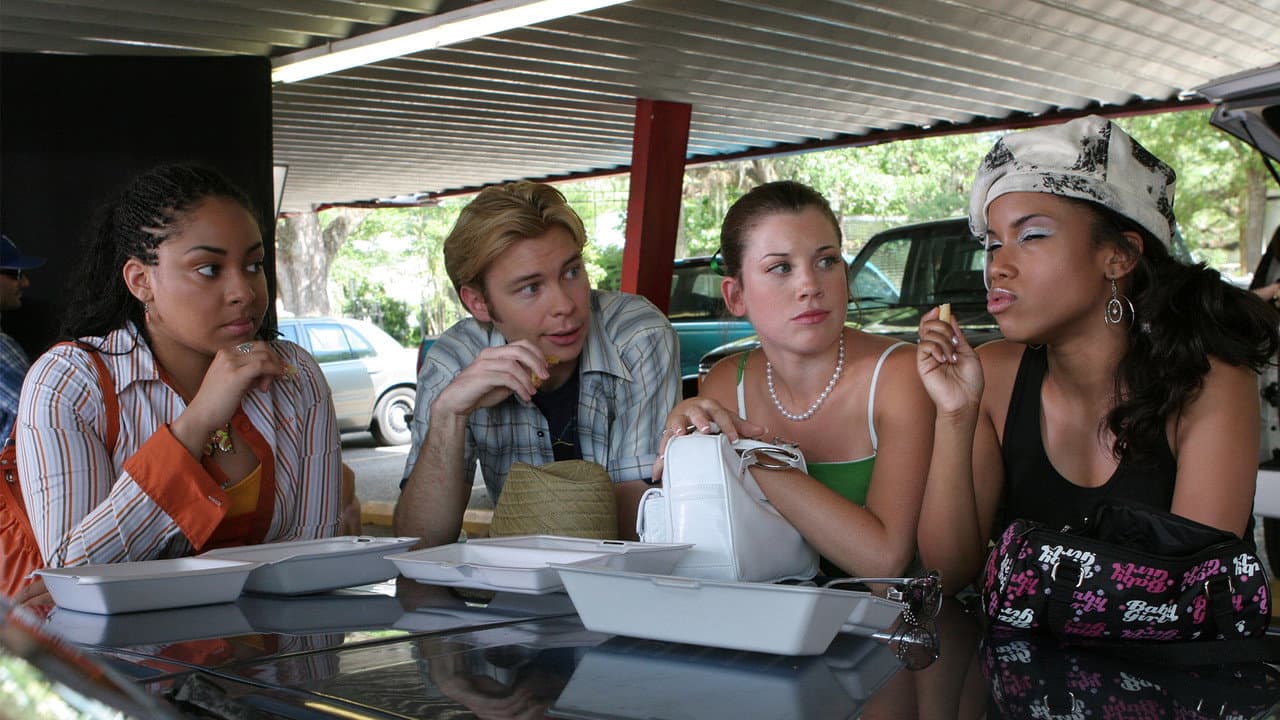
For One Night tells the story of a small town with a long-standing tradition — two separate proms, one for white students and one for Black students. When Brianna McCallister, a white student, proposes combining the proms to save money on decorations and secure a better DJ, she sets off a chain reaction that forces her entire community to confront decades of unspoken racial division. The premise sounds almost quaint until you realize the film is based on actual events that happened in 2002, in Butler, Georgia, where a real teenager named Gerica McCrary made headlines by pushing for exactly this kind of change. What begins as a practical suggestion becomes something far more consequential — a test of whether a town can actually move past the segregation practices that've defined it for over three decades.
What makes For One Night compelling isn't just the novelty of the premise. It's the ripple effects. When a white student commits the same infraction as a Black student but receives a lighter punishment, the hypocrisy becomes impossible to ignore, and tensions that were simmering beneath the surface suddenly boil over. The film doesn't shy away from showing how these decisions — the prom, the unequal discipline — expose the deeper structural inequities that nobody wants to talk about in polite conversation.
Behind the Making of For One Night: Production, Cast, and Lifetime's Drama Legacy
Directed by Ernest Dickerson, a filmmaker known for his work in television and his collaborations on prestige projects, For One Night arrived in 2006 as part of Lifetime's push toward socially conscious made-for-TV dramas. The network, often dismissed for melodrama, occasionally lands on stories with real weight — and this is one of them. Dickerson brought a steady hand to what could've easily become heavy-handed or preachy; instead, the film maintains a documentary-like restraint that serves the material well. The screenplay by Denetria Harris-Lawrence drew directly from the McCrary case and the real experiences of students and families in that Georgia community, lending authenticity that you can feel throughout the 89-minute runtime.
Casting Raven-Symoré as Brianna was a smart choice. She was already well-known from her Disney Channel work, which gave the film visibility, but she brings genuine vulnerability to a character who's not trying to be a martyr — she just wants a better party and stumbles into activism. Aisha Tyler, as her friend Desiree Howard, provides a counterweight, playing someone whose family is directly affected by the racial inequities the prom represents. The supporting cast includes real community members and local actors, which grounds the film in authenticity rather than letting it drift into Hollywood artifice. The production design captures the specific geography of a small Southern town — the high school hallways, the community spaces where these conversations happen — without exoticizing or condescending to rural Georgia.
While For One Night didn't generate major box-office numbers (it's a TV movie, after all), it found an audience on Lifetime and has maintained a respectable IMDb rating of 7.6/10, suggesting it resonated with viewers who appreciate stories about ordinary people doing the right thing, even when it's costly. The film's modest success speaks to a hunger for narratives about racial reconciliation that don't require a big Hollywood budget or A-list stars to feel urgent.
What Makes For One Night Stand Out: Performance and the Uncomfortable Middle Ground
Here's what's striking about For One Night: it doesn't make anyone a pure villain. The parents who defend segregation aren't cartoons. They're people defending a way of life, even as that way of life becomes indefensible. Dickerson's direction allows space for that complexity — the film sits in the uncomfortable middle ground where good intentions clash with ingrained habits and fear of change. That's harder to pull off than simple good-versus-evil storytelling, and it's what elevates the film beyond an after-school special.
Raven-Symoré's performance is the emotional core. She plays Brianna as someone who isn't naturally a crusader — she's just a teenager who suggested something practical and got swept up in something bigger. There's a scene where she's confronted by both white and Black students who feel betrayed or disappointed by her, and you see her realize that good intentions don't protect you from consequences. That moment of dawning awareness is where the film does its best work. Tyler, meanwhile, brings quiet dignity to Desiree, a character dealing with the fact that her community has been literally segregated from her school's social life, and who has to decide whether to trust Brianna's commitment to real change or write it off as performative.
What I keep coming back to is how the film treats the adults. Teachers, administrators, and parents all struggle with the decision to integrate the prom. Some resist out of genuine bigotry, sure, but others resist out of fear — fear of losing control, fear of the unknown, fear that their children won't understand why they're changing rules that have always existed. That psychological realism, rather than moral certainty, is what makes For One Night feel grounded. It's not a film that pretends change is easy or that good people always do the right thing immediately.
Where to Stream For One Night Online
Finding For One Night is straightforward thanks to Movie OTT, which tracks where this title streams across major platforms. The film is available on several major OTT services — check the "Where to Watch" widget at the top of this page for current availability in your region, as streaming rights shift regularly. Because it's a Lifetime production, it occasionally cycles through Lifetime's own streaming service and affiliated platforms, so if you don't see it on your usual service today, there's a decent chance it'll show up in the coming weeks. Movie OTT keeps that information updated, so you're not hunting through five different apps trying to remember where you saw it advertised.
Frequently asked questions
Q: Is For One Night based on a true story?
Yes. The film is inspired by the real story of Gerica McCrary, a student at Taylor County High School in Butler, Georgia, who in 2002 successfully pushed for the integration of her school's prom after 31 years of racial segregation. The film dramatizes that event and the community reactions surrounding it.
Q: Who directed For One Night?
Ernest Dickerson directed the film. He's a seasoned television and film director known for bringing nuance and restraint to socially conscious material, which serves this story well.
Q: How long is For One Night?
The film runs 89 minutes, making it a compact drama that doesn't overstay its welcome or dilute its central conflict with unnecessary subplots.
Q: What are the main themes in For One Night?
The film explores racial integration, institutional racism, the cost of challenging tradition, and how change happens — or doesn't — in communities where segregation is normalized. It also examines how young people can push back against inherited prejudice, even when adults around them resist.
Q: Where can I watch For One Night right now?
Check the "Where to Watch" widget at the top of this page for current streaming availability. Movie OTT aggregates all platforms carrying the title, so you'll see exactly which service has it in your region.
Final Thoughts on For One Night
For One Night won't blow your mind with technical virtuosity or innovative storytelling. It's a straightforward drama about a specific moment in American history — the moment a small Georgia town had to decide whether to keep doing things the way they'd always been done or try something different. What it does do is honor that moment with seriousness and empathy, treating both the teenagers pushing for change and the adults resisting it as fully human. If you're looking for a film that tackles race and tradition without preaching, or if you're interested in the real stories behind social change, it's worth your 89 minutes. It's the kind of film that doesn't demand to be your favorite, but it'll stay with you.