The Story of Ghost in the Shell
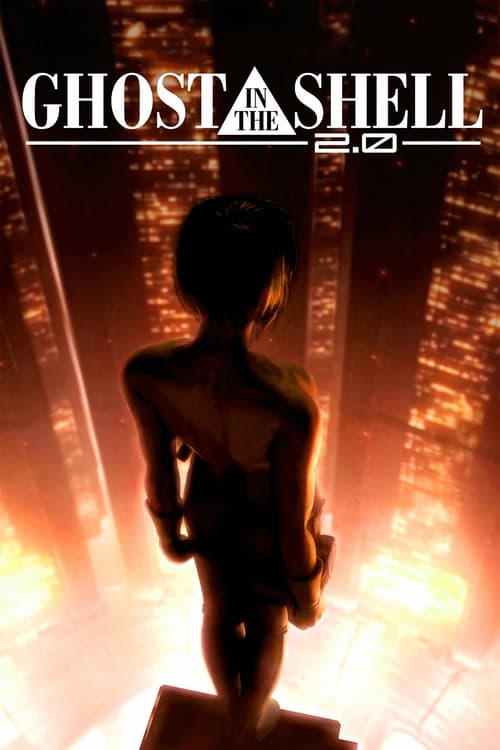
Ghost in the Shell opens in the year 2029, a future where the line between human and machine has become nearly invisible. Our protagonist is Major Motoko Kusanagi, a cyborg operative working for an elite counter-terrorism task force, and she's hunting someone called the Puppet Master—a mysterious and powerful hacker who's figured out how to rob people of their memories and control their minds through the digital networks wired directly into their brains. It's a premise that sounds like pure sci-fi fantasy, except that when you watch it now, nearly thirty years later, it doesn't feel quite so fantastical anymore. The Major and her partner Batou navigate a neon-soaked, rain-slicked Tokyo where corporate power and government surveillance blend seamlessly into one another, where cyborgs are standard issue for law enforcement, and where the boundary between the digital and the physical—between the ghost and the shell—has become a question worth killing for.
What makes the film's world-building so effective is how casually it presents technological nightmare as everyday life. Nobody stops to explain what cybernetic augmentation is, or why half the police force has synthetic bodies. The film trusts you to keep up, to absorb the details from dialogue, from background visuals, from the way characters interact with their environment. This isn't a world that's been retrofitted for exposition—it's lived in, worn, real in a way most sci-fi films struggle to achieve.
Behind the Making of Ghost in the Shell
Ghost in the Shell began as a manga by Masamune Shirow in 1989, a work that established many of the cyberpunk visual and thematic conventions that would influence the entire medium for decades. Director Mamoru Oshii adapted it into an anime feature through a Japanese-British co-production involving Kodansha, Bandai Visual, and Manga Entertainment, with animation handled by the legendary studio Production I.G. The film's 82-minute runtime is lean and efficient—there's not a frame of fat on it. The voice cast, anchored by Atsuko Tanaka as the Major and Akio Otsuka as Batou, brings genuine gravitas to what could have been one-dimensional action roles, giving the characters philosophical weight that matches the film's intellectual ambitions.
The production design and animation work here is extraordinary. Oshii and his team created a visual language that blends traditional hand-drawn animation with early computer graphics in ways that feel integrated rather than jarring. The film's aesthetic—all rain-slicked streets, industrial architecture, and neon reflections—became the template for how cyberpunk would look in anime for the next two decades. What's striking is that the film didn't arrive as a massive commercial success in Japan initially. It took international distribution, particularly through Manga Entertainment in the UK and North America, to establish it as the canonical cyberpunk text. By the time the Matrix came out in 1999, Ghost in the Shell was already being recognized as a major influence on how filmmakers were thinking about artificial intelligence, consciousness, and the digital future.
Why Ghost in the Shell Stands Out as Prescient Science Fiction
There's something almost eerie about watching Ghost in the Shell now, in an era when AI has actually started to become part of everyday life. The film's central question—what happens when a consciousness can be copied, edited, or transplanted into a different body?—doesn't feel like pure speculation anymore. Ray Kurzweil's Singularity theory, which imagines a future when human and machine consciousness merge entirely, was being written about in the mid-1990s when this film was made, and Ghost in the Shell feels like a visual argument for exactly that kind of future. The Major herself embodies this anxiety: she's so heavily augmented that she's not sure where her original consciousness ends and the synthetic implants begin. She's got a ghost—a soul, a self—but it lives in a shell that's almost entirely mechanical. That's not just a clever title; it's the entire film's preoccupation.
What makes it work as entertainment rather than just as a philosophy lecture is that Oshii never lets the ideas overwhelm the story. The action sequences are genuinely thrilling—there's a particular moment early on where the Major goes invisible and takes down a room full of armed opponents that's become iconic in anime action cinema. The pacing keeps you moving even as the dialogue is wrestling with heavy concepts. The voice performances, particularly Tanaka's portrayal of the Major as someone simultaneously hypercompetent and deeply uncertain about her own nature, ground everything in emotional reality. I keep coming back to the scene where the Major sits on a bridge, legs dangling, talking to Batou about whether she even has an original self anymore, whether her memories are real or implanted. It's quiet, almost mundane, and it's where the film's real power lives—not in the hacking sequences or the shoot-outs, but in the existential vertigo of not knowing who you are.
Where to Stream Ghost in the Shell Online
If you're ready to experience this landmark film, you can find Ghost in the Shell currently streaming on Prime Video. The platform's got a solid catalog of classic anime, and this is essential viewing if you're interested in the history of the medium or just want to understand where so much of modern sci-fi cinema got its visual language and thematic DNA. Movie OTT tracks where titles like this are currently available across all the major streaming services, so you can always check there if you're wondering where to catch it on any given month—streaming rights shift, after all. For now, Prime Video is your destination. The film's 82-minute runtime means you can knock it out in a single sitting, which is honestly how it's meant to be experienced.
Frequently asked questions
Q: Who directed Ghost in the Shell?
Mamoru Oshii directed the 1995 film, adapting it from Masamune Shirow's 1989 manga. Oshii's distinctive visual style and philosophical approach to science fiction storytelling became the template for how the material would be understood by international audiences.
Q: Is Ghost in the Shell based on a true story?
No, Ghost in the Shell is entirely fictional science fiction. It's based on Masamune Shirow's manga, which itself was created as an original work exploring themes of artificial intelligence and consciousness rather than adapted from real events.
Q: How long is Ghost in the Shell?
The film runs 82 minutes, making it a tight, efficient narrative that doesn't waste time but still manages to explore complex philosophical questions about identity and consciousness.
Q: What's the IMDb rating for Ghost in the Shell?
Ghost in the Shell holds a 7.7 out of 10 rating on IMDb, reflecting its status as a critically respected and influential work that continues to find new audiences decades after its release.
Q: Why is Ghost in the Shell considered important to anime and sci-fi?
The film established visual and thematic conventions for cyberpunk anime that persisted for decades. Its exploration of AI consciousness, surveillance, and transhumanism proved remarkably prescient, and it influenced major works like The Matrix. Movie OTT's editorial team regularly returns to it as a reference point for understanding how science fiction has grappled with technology's impact on identity.
Final Thoughts on Ghost in the Shell
Ghost in the Shell isn't a film that answers its own questions—it's one that lives inside them, turning them over, examining them from every angle, and then asking you to sit with the uncertainty. That's part of what makes it endure. It doesn't feel dated even though it's nearly thirty years old, which is remarkable for a science fiction film. If you're interested in cyberpunk, in AI, in philosophical questions about consciousness and identity, or just in watching beautifully crafted anime action, this is essential. Watch it once, and you'll probably want to watch it again—there's always something else hiding in the frame, another layer of meaning in a piece of dialogue you half-caught the first time.