






The story of Half Human: The Story of the Abominable Snowman
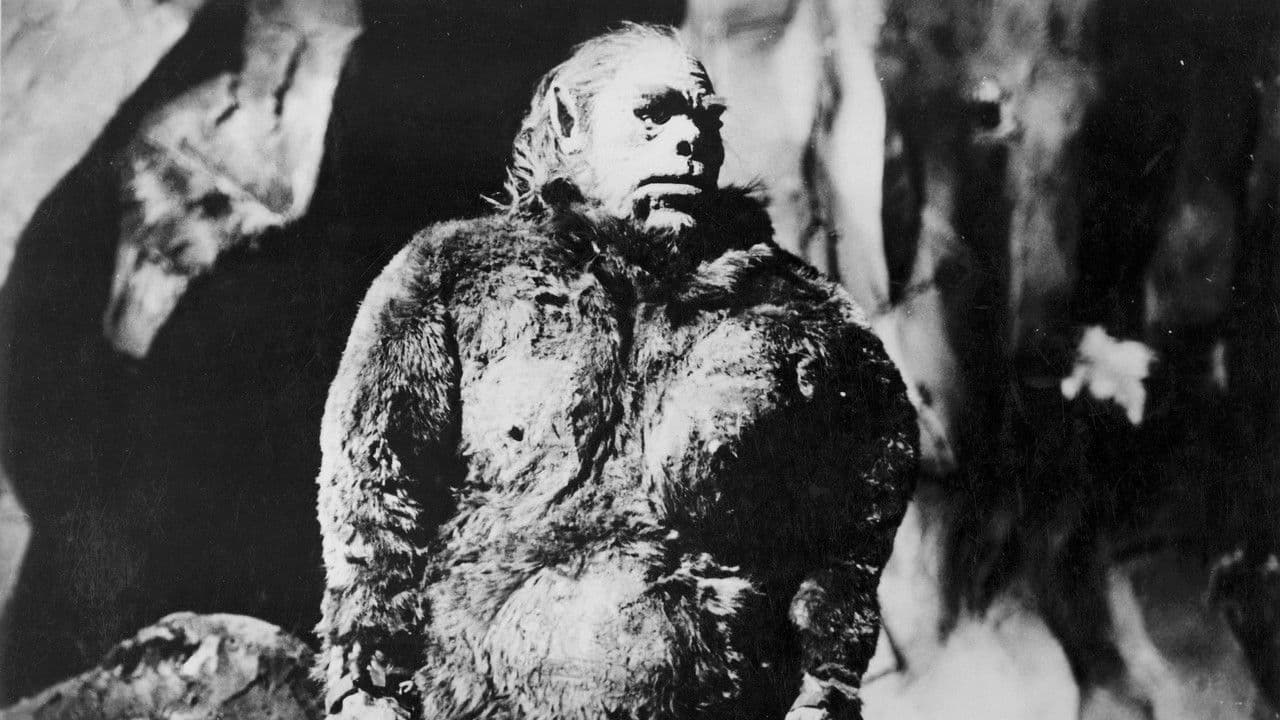
Half Human: The Story of the Abominable Snowman opens with an American scientist recounting a discovery that sounds like pure legend—the existence of a living, breathing abominable snowman in the Japanese Alps. The creature, described in the film's unforgettable tagline as "1400 pounds of frozen fury that moves like man," becomes the focal point of a narrative that's part scientific investigation, part adventure yarn, part cautionary tale about mankind's hubris. What makes the setup compelling isn't just the monster itself, but the cultural collision: a remote tribe has worshipped this creature as a god for generations, and their world—their entire belief system—comes crashing down when the modern world arrives with cameras, weapons, and certainty. The film follows the scientist's colleagues as they piece together how the creature was discovered after an avalanche drove it to raid a skiers' shelter, with tragic consequences. It's a creature feature that works hardest when it's asking uncomfortable questions about progress and civilization, even if it doesn't always know it's doing so.
Behind the making of Half Human: The Story of the Abominable Snowman
Half Human: The Story of the Abominable Snowman has a genuinely unusual pedigree. The film began as a 1955 Japanese production titled Jūjin Yuki Otoko (literally "Half-Human Snow Man"), directed by the legendary Ishirō Honda—the man who'd given the world Godzilla just two years earlier. Honda's original film featured special effects by Eiji Tsuburaya, the same genius who designed Godzilla's suit and would become the architect of the entire Toho monster-movie universe. The cast included Akira Takarada and Momoko Kōchi, both recognizable faces from Honda's earlier work. But here's where it gets weird: when Distributors Corporation of America acquired the rights for a U.S. release in 1957, they didn't simply distribute Honda's original film. Instead, they recut it, added new American-made footage, inserted dubbed narration, and spliced in a new musical score—essentially creating a hybrid creature that was neither fully Japanese nor fully American. The result premiered on May 22, 1957, as the lower half of a double feature alongside The Monster from Green Hell, positioning it squarely in the B-movie marketplace where it would live out its theatrical run. Movie OTT tracks availability of these kinds of genre curiosities across multiple streaming platforms, making it easier to hunt down films that might otherwise remain buried in the archives. The 63-minute runtime suggests DCA's aggressive editing—what was lost in translation and cutting room decisions remains one of cinema's minor mysteries.
What makes Half Human: The Story of the Abominable Snowman stand out
What's striking about Half Human: The Story of the Abominable Snowman, despite its rocky reception (it currently holds a 3.5 rating on IMDb), is that it's genuinely trying to do something interesting with the monster-movie formula. The creature itself—performed by Sanshiro Sagara in what must have been an uncomfortable suit—moves with an unsettling, almost human gait that Honda and Tsuburaya clearly wanted to exploit for psychological effect rather than just spectacle. There's a melancholy to the film's core idea: this ancient being, neither fully man nor fully beast, has existed in isolation for centuries, revered and protected by people who understand it's not a thing to be conquered but a presence to be respected. When that equilibrium shatters, the film doesn't celebrate humanity's victory—it mourns the loss of something irreplaceable. The American-inserted footage and narration do dilute this thematic clarity, and you can feel the tonal whiplash between Honda's more contemplative approach and DCA's desire for action and spectacle. Still, if you're willing to meet the film on its own terms—as a time capsule of how 1950s Hollywood and Japanese studios approached the same material differently—there's real value in watching it work against itself. The performances, particularly from Takarada, carry a sincerity that keeps the melodrama from tipping into unintentional comedy, even when the monster design looks distinctly man-in-suit by modern standards.
Where to stream Half Human: The Story of the Abominable Snowman online
Half Human: The Story of the Abominable Snowman is currently available on major OTT services—check the "Where to Watch" widget at the top of this page for real-time platform availability in your region. The film's status has shifted over the years as streaming rights have changed hands, but it's become more accessible in recent years as classic genre films have found renewed interest among collectors and critics. Whether you're hunting it down on a dedicated classic-horror platform or stumbling across it on a broader streaming service, the key is knowing what you're getting: this is the Americanized 1957 cut, not Honda's original Japanese version (which has its own distribution history). Movie OTT keeps tabs on where these kinds of cult films land, so if you're having trouble locating it, the streaming widget will point you in the right direction. The 63-minute runtime makes it an easy addition to any monster-movie marathon, and it pairs well with other 1950s creature features if you're in the mood for a double feature of your own.
Frequently asked questions
Q: Who directed Half Human: The Story of the Abominable Snowman?
The original 1955 Japanese film was directed by Ishirō Honda, with special effects by Eiji Tsuburaya. The 1957 American release included additional footage and reshoots from Distributors Corporation of America, creating a hybrid version that blended both production approaches.
Q: Is Half Human: The Story of the Abominable Snowman based on a true story?
No, it's a fictional creature feature. However, it draws on the real-world mythology and folklore surrounding the abominable snowman legend, and the film uses that cultural context to ground its monster-movie narrative.
Q: What's the difference between the 1955 Japanese version and the 1957 American release?
The 1955 original, titled Jūjin Yuki Otoko, was directed by Ishirō Honda. The 1957 American version added new footage, dubbed narration, and a new score. The American cut is significantly shorter and restructures the narrative to appeal to U.S. audiences—essentially creating two different films from the same source material.
Q: How long is Half Human: The Story of the Abominable Snowman?
The 1957 American release runs 63 minutes, making it a brisk creature feature that doesn't overstay its welcome. The original Japanese cut was longer before DCA's editing.
Q: Where can I watch Half Human: The Story of the Abominable Snowman?
The film is available on major OTT streaming services. Use the "Where to Watch" widget on this page to see current availability in your region, as streaming rights vary by location and change over time.
Final thoughts on Half Human: The Story of the Abominable Snowman
Half Human: The Story of the Abominable Snowman deserves a second look—not because it's a misunderstood masterpiece, but because it's a genuinely weird artifact that captures a moment when Japanese and American monster-movie sensibilities collided and didn't quite merge. It's flawed, it's choppy, and the IMDb score reflects genuine quality issues. But there's something oddly touching about a film that can't quite decide what it wants to be, and that uncertainty becomes part of its charm. If you're a monster-movie completist or someone fascinated by how different cultures approached genre filmmaking in the 1950s, it's worth the hour of your time.